Best crypto card for cross-border wealth in 2026

You earn in one country, hold value in another, and spend in a third. A crypto card is a payment card funded by crypto balances; it converts to fiat at the point of sale. In 2026, tighter MiCA-style rules, more non-custodial options, and mature cashback programs reshape your choices. Finding the best crypto card serves cross-border wealth, not just spending.
Key Takeaways
Compare fees and exchange rate spreads first. These costs drain your money faster than cashback rewards can refill it.
Choose between custodial and self-custodial cards. Custodial offers convenience, while self-custodial gives you full control of your keys.
Check 2026 regulations for your region. Licensed cards provide better protection, but they may limit where you can use the card.
What Makes a Cross-Border Crypto Card Work
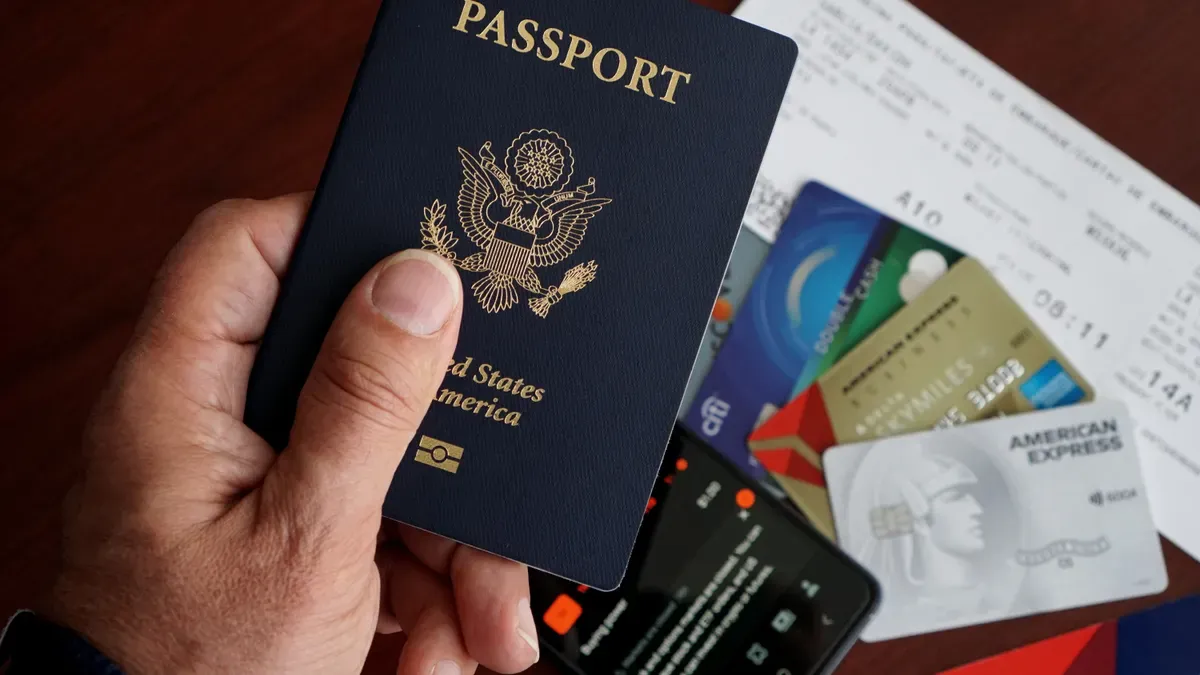
A crypto card acts as a bridge between digital assets and everyday spending. You load cryptocurrency, and the card converts it to fiat currency at the purchase moment. Most cards follow a debit model, pulling funds directly from your balance. A smaller set works as credit cards, letting you spend against your holdings. For cross-border wealth, the real questions are who holds your private keys and which regulations shape the conversion.
Custodial vs. Non-Custodial
Exchange-issued cards dominate the market. You deposit your crypto into the exchange's wallet, and they control the keys. This custodial model gives you convenience. Lose your card, and the exchange can freeze and replace it. But custody also means counterparty risk. If the exchange faces insolvency or regulatory action, your funds may freeze too. That risk amplifies when you move wealth across borders. You might live in a different country than the exchange, making legal action impractical.
Non-custodial cards solve this using smart contracts. You keep control of your private keys. The contract only triggers when you authorize it, converting assets at the point of sale. Cards from Ether.fi and Gnosis Pay operate this way. Self-custody eliminates exchange-level risk entirely. The cost: you bear full responsibility. Lose your seed phrase, and no support team can recover your funds.
Why 2026 Rules Changed the Game
The European Union's MiCA regulation took full effect in 2025, reshaping card markets by 2026. Card issuers now require licenses in each jurisdiction they serve. You see fewer unlicensed cards in the EU. Fewer choices, but also fewer unstable providers. Compliance costs have risen, and some of that passes to you through higher conversion spreads.
These licensing rules create geographic fragmentation. A card approved in Europe may not function in Asia or the US. That creates a problem for cross-border users who need one card that works reliably across multiple regions. The upside: regulated cards offer stronger consumer protections. Frozen accounts now have clearer recourse paths. Know your customer checks take longer, but you face fewer fraud disruptions once you hold the card.
Five Factors That Decide Your Card
Fees, Spreads, and FX Markups
Conversion fees and foreign transaction markups drain cross-border wealth faster than any cashback program can refill it. Every time you spend in a currency different from your card's base currency, the issuer converts your crypto and often adds a markup on top. A card that advertises "no foreign transaction fees" saves you money on every purchase abroad. That single feature matters more for cross-border users than any reward tier.
Watch the spread too. Some issuers bury costs in an unfavorable exchange rate rather than a visible fee. Compare the rate your card gives you against the mid-market rate on the same day. A wide spread costs you silently. UUPAY waives card top-up fees entirely, which removes one layer of that cost stack.
Cashback, Staking, and Availability
Reward structures fall into three groups. Flat cashback pays the same rate on everything. Tiered programs pay more in certain categories. Staking-gated rewards require you to lock tokens for the top rate.
Card | Advertised Rewards |
|---|---|
Nexo | 2% |
Spend Visa | 6% |
Crypto.com Midnight Blue | 1% |
KAST | Up to 6% |
RedotPay | None |
Ether.fi Cash | Up to 3% |
Gnosis Pay | 1–5% |
Plasma One | Up to 10% |
Geographic availability decides whether you can use the card at all. Visa and Mastercard reach the widest network, but regional licensing still restricts who qualifies. Staking requirements vary widely, and some programs lock substantial balances before unlocking top tiers. Custody model remains the fifth factor, and it ties back to the risk you carry when an exchange holds your keys.
Best Crypto Cards Compared for 2026
The table below lines up the leading options on the five factors that matter most. Read it as a starting filter, not a final answer.
Comparison Table
Card | Custody Model | Conversion Fee | Cashback | Staking Requirement | Regional Availability |
|---|---|---|---|---|---|
MetaMask Card | Self-custodial, Mastercard | Not disclosed | 1% | None | Europe, US, UK, Canada, LatAm |
OKX Card | Custodial | Not disclosed | Tier dependent | None | Select regions |
Bybit Card | Custodial | Not disclosed | Tier dependent | None | Select regions |
Coinbase One Card | Custodial, Amex | Not disclosed | 2–4% BTC (5% travel) | None; $49.99/yr membership | US |
Nexo Card | Custodial, Mastercard | Not disclosed | 0.5–2% NEXO | None | Europe, UK |
Crypto.com Visa Card | Custodial, Visa | Not disclosed | Tier dependent (0% free tier) | Tier dependent | 180+ countries via Visa |
KAST Card | Custodial, Visa | Not disclosed | 1.5% free / up to 3% paid | None | Europe, LatAm, APAC |
RedotPay | Custodial | Not disclosed | None | None | Select regions |
Ether.fi Cash | Self-custodial, smart contract | Not disclosed | Up to 3% | Staking-linked | Select regions |
Tria | Self-custodial | Not disclosed | Not disclosed | None | Select regions |
Gemini Card | Custodial, Mastercard | Not disclosed | 1–4% by tier | None | US, Puerto Rico |
Kripicard | Custodial | No cross-border fee | Not disclosed | None | Select regions |
Amulets | Custodial, Visa | Not disclosed | Not disclosed | None | International travel |
Gnosis Pay Card | Self-custodial, Visa | Not disclosed | 1–5% GNO | None | Europe, UK, Iceland, Norway |
Blofin | Custodial | Not disclosed | $10,040 reward program | VIP tiers | Select regions |
Crypto.com stands out for raw reach, since its Visa acceptance spans more than 180 countries. Gemini suits everyday spending in the US. The Coinbase One Card rewards heavy crypto users who already pay the membership. Ether.fi Cash pairs up to 3% rewards with smart-contract custody. Kripicard settles stablecoins instantly with no cross-border fee. Gnosis Pay ties rewards to GNO, and Blofin bundles a $10,040 reward with a VIP program.
Where UUPAY Fits
UUPAY targets the cross-border user directly. The card settles stablecoins across borders and charges no cross-border fees, which keeps your cost stack thin on every foreign purchase. New users open a virtual card for 1U and receive 1U back immediately. Every user pays zero top-up fees. The physical card has launched with global spending and rebates reaching 50%. A referral program pays tiered commissions up to 50%.
That combination makes UUPAY a strong candidate for the best crypto card if you move value between countries often. It trades maximum cashback for predictable, low-friction settlement. For a frequent traveler, that trade usually wins.
Choosing the Best Crypto Card for Your Profile
Your location, spending habits, and asset mix all shape which card works best for you. No single option wins across every scenario. The right choice depends on where you live, what you value most, and how you hold your crypto.
By Location
Where you live determines which cards you can legally access. In the European Union, Bybit and OKX lead the pack. Bybit offers up to 10% cashback through loyalty points with no staking required, a 0.9% conversion fee, a 0.5% FX fee, and free ATM withdrawals up to 100 EUR or GBP monthly. OKX charges zero transaction fees and zero FX markup, with a 0.4% conversion spread and promotional cashback reaching 20% at launch. Both cards operate under EEA licensing.
Asia-Pacific users have broader options. Bybit serves Australia. Crypto.com reaches over 180 countries with 0–5% cashback in CRO, though higher rates require staking. RedotPay supports high spending limits of $100K per transaction and $1M per day. Tria covers 130+ countries with up to 6% cashback, up to 15% on-chain yield, and a $20 virtual card issuance fee.
Card | Region | Key Features |
|---|---|---|
Bybit Card | EEA and Australia | Up to 10% cashback, 0.9% conversion fee, 0.5% FX fee |
OKX Card | EEA | Zero FX markup, 0.4% conversion spread, up to 20% launch cashback |
Crypto.com | 180+ countries | 0–5% CRO cashback, staking-dependent |
RedotPay | Global | $100K per transaction, $1M daily limit |
Tria | 130+ countries | Up to 6% cashback, up to 15% on-chain yield |
US users face tighter restrictions. Gemini and Coinbase One Card dominate there. Emerging markets see growing but uneven access.
By Priority
Your top priority narrows the field fast. If you want the lowest fees, OKX and UUPAY stand out. UUPAY waives all card top-up fees and charges no cross-border fees. If maximum cashback drives you, Bybit and Crypto.com offer the highest advertised rates. For self-custody purists, Ether.fi Cash and Gnosis Pay keep your keys in your hands.
Your asset type matters too. Stablecoin holders benefit most from cards with low conversion spreads and no FX markups, since stablecoins already track fiat values. Long-term crypto holders may prefer cards that let them spend without selling, using credit models or smart-contract loans. Staking-heavy users should compare lock-up requirements against reward tiers.
UUPAY fits users who prioritize multi-currency flexibility. The card settles stablecoins across borders with no cross-border fees. New users open a virtual card for 1U and receive 1U back immediately. The physical card has launched with global spending and rebates reaching 50%. A referral program pays tiered commissions up to 50%. UUPAY holds a US MSB license, registers in Hong Kong, holds a Swiss license through a subsidiary, and has a Brazil application pending. It also carries PCI DSS Level 1 certification and offers 24/7 global support. For cross-border users, that compliance stack matters as much as the cashback rate. Finding the best crypto card means matching these factors to your own profile, not chasing the highest headline reward.
Tax and Compliance Realities
How Card Spending Is Taxed
Every card purchase that converts crypto to fiat can trigger a taxable event. The rules depend on where you live, not where you spend. Germany treats cryptocurrency as a private asset. Hold your coins for over one year, and you pay nothing on the gain. Sell or swap within that window, and the profit counts as personal income. Gains under €1,000 stay excluded, and profits become fully tax-free after a 365-day holding period.
France takes a different path. The flat tax system, known as Prélèvement Forfaitaire Unique, applies a 31.4% rate that covers income and social contributions. Low-income investors may choose progressive income tax instead. France triggers the tax event only when you sell crypto for fiat currency or buy goods and services.
Country | Tax Classification | Rate on Crypto-to-Fiat Conversion (2026) | Holding Period Rule | Taxable Event Trigger |
|---|---|---|---|---|
Germany | Private asset | 0% if held over 1 year; otherwise personal income | Gains under €1,000 excluded; tax-free after 365 days | Sale or swap within 1 year |
France | Flat tax (Prélèvement Forfaitaire Unique) | 31.4% | Low-income option for progressive tax | Selling for fiat or buying goods |
Reporting, KYC, and Travel
Card issuers must verify your identity before issuing a card. Expect to submit a passport, proof of address, and sometimes a tax identification number. If a card freezes abroad, contact support immediately and keep your transaction records. UUPAY holds a US MSB license, registers in Hong Kong, holds a Swiss license through a subsidiary, and has a Brazil application pending. It also carries PCI DSS Level 1 certification and offers 24/7 global support.
ATM access varies by card. Crypto.com's Midnight Blue tier gives you $200 per month free, then charges roughly 2%. Bybit charges 0% foreign transaction fees. Every withdrawal still incurs an ATM operator surcharge of $1.50–$3.50 and a spread of 0%–2% on conversion.
Real-World Fee Calculation (International Withdrawal, Above Free Tier)
Scenario B: Crypto.com Ruby Steel card, $200 withdrawal abroad
Card issuer fee (2% above free tier): $4.00
ATM operator surcharge: $2.50
Spread (1% on BTC conversion): $2.00
Foreign transaction fee: $0 (waived on Ruby Steel; verify current policy)
Total additional cost: $8.50 (4.25% of withdrawal amount)
Keep every receipt and conversion record. You need them at tax time.
No single best crypto card serves every cross-border user. Your choice depends on custody preference, location, and spending pattern. Run the five criteria—fees, cashback, geography, staking requirements, and custody model—before applying. UUPAY-style cards win when you prioritize multi-currency flexibility over maximum cashback. Re-evaluate fee changes, new licensing rules, and staking terms in 2027.
FAQ
Which card charges the least for cross-border spending?
UUPAY waives card top-up fees and charges no cross-border fees. New users open a virtual card for 1U and get 1U back. Kripicard also settles stablecoins with no cross-border fee.
Does spending crypto on a card trigger a tax event?
Yes, in most jurisdictions. Germany taxes gains on sales within one year. France applies a flat rate when you convert crypto to fiat or buy goods.
Should you pick a custodial or self-custodial card?
Choose custodial for convenience and easy card replacement. Choose self-custodial if you want full control of your keys. Ether.fi Cash and Gnosis Pay use smart-contract custody.
See Also
Five Premier Crypto Lifestyle Cards To Boost Your 2026 Spending
Best Multi-Currency Crypto Cards For Global Travel Flight Booking
Seven Essential Crypto Top-Up Cards You Must Know For 2026
A Comparison Of Layer2 Crypto Cards For The Year 2026
Multi-Currency Crypto Cards To Handle Thailand Cross-Border Buying
