Best crypto card for Southeast Asia in 2026
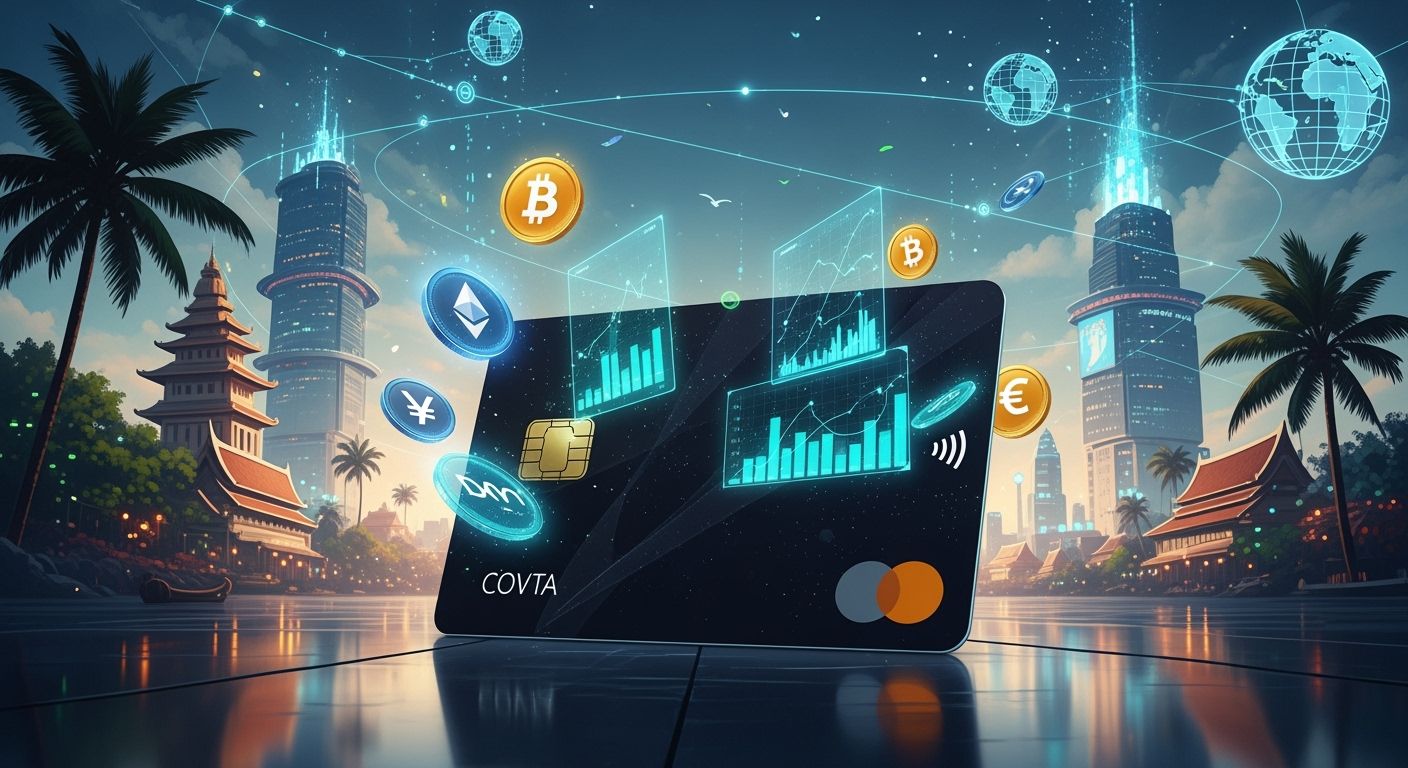
Selecting the best crypto card in 2026 requires low foreign exchange fees, multi-currency conversion, and mobile wallet support. You can instantly spend funds using the UUPAY Card, RedotPay, Kripicard, or Crypto.com across Southeast Asia. These top options handle SGD, THB, PHP, VND, and IDR effortlessly while connecting directly with Apple Pay and Google Pay.
Key Takeaways
Top crypto cards like UUPAY, RedotPay, and Kripicard help you spend digital money easily in Southeast Asia.
You can lower costs by choosing cards with low conversion fees and zero top-up charges.
Connecting your crypto card to Apple Pay or Google Pay allows fast shopping at local stores.
Top Crypto Cards for Southeast Asia in 2026
UUPAY Card Features and Local Accessibility
You can easily manage your daily expenditures using modern payment solutions in Southeast Asia. The UUPAY Card offers incredible promotional incentives for modern travelers and locals. You can create a virtual card for a $1 fee and receive an immediate $1 rebate. The card provides 0% card recharge fees, saving you substantial funds on every top-up. A lucrative referral program gives you up to 50% commission when you invite friends. Furthermore, UUPAY simplifies multi-currency handling for residents moving between various ASEAN countries. You can fund your account quickly without navigating complicated banking bureaucracy.
Mobile wallet compatibility makes this option seamless for daily shopping. You can connect your card to Apple Pay and Google Pay effortlessly. This integration lets you tap and pay at millions of retail stores across the region. Consequently, the platform stands out as a Best crypto card contender for everyday transactions in Southeast Asia.
RedotPay, Kripicard, and Global Alternatives
Other regional contenders provide unique advantages depending on your location and account status. RedotPay lets you spend BTC, ETH, and USDT across the Asia-Pacific region. A virtual RedotPay card costs $10, while a physical card costs $100. It charges no annual or monthly fee. However, RedotPay imposes a 1% crypto conversion fee and a 1.2% foreign exchange markup on cross-currency trades. Note that RedotPay does not support Singapore as a billing address.
Kripicard supports major Asian markets without requiring local bank accounts or country-specific KYC documents. You do not need regional Visa partnerships to start spending. Instead, Kripicard uses a tiered KYC system. The system matches verification levels directly to your spending limits. This flexible verification model allows dynamic travelers to access card services without domestic residency proofs. You can initiate the sign-up process on your smartphone to confirm regional eligibility in real time.
You can compare fee structures across major providers using the table below:
Card | Issuance fee | Monthly fee | Top-up fee |
|---|---|---|---|
Crypto.com (Singapore residents) | Midnight S$4.99; Ruby S$39.99 for some Level Up monthly subscribers | No general fee; S$5 inactivity fee after 12 months, rising to S$6 on 1 Sep 2026 | Debit 0%; credit 1%; Apple Pay 2% |
Kripicard | One-time card issuance fee | 0% | Low percentage top-up fee |
RedotPay | Virtual $10; physical $100 | No annual or monthly fee | 1% crypto conversion fee plus 1.2% FX markup |
Global platforms like Nexo, KAST, and Crypto.com expand your options further. Nexo provides direct mobile wallet integration through Apple Pay and Google Pay for instant payments. Crypto.com charges Singapore residents a Midnight issuance fee of S$4.99 and a Ruby fee of S$39.99 for select Level Up subscribers. It charges 0% for debit top-ups, 1% for credit top-ups, and 2% for Apple Pay top-ups. Evaluating these options ensures you select the Best crypto card for your travel or living needs.
Evaluating the Best Crypto Card Criteria
Foreign Exchange Fees and Currency Conversion
You must analyze hidden transaction costs carefully when selecting a payment card for cross-border spending in Southeast Asia. Many issuing platforms apply heavy markups when converting your underlying cryptocurrency into regional fiat currencies like SGD, THB, IDR, or PHP. For instance, RedotPay imposes a 1% crypto conversion fee along with a 1.2% foreign exchange markup on cross-currency settlements.
You can reduce these overall operational expenses significantly by choosing payment platforms with fully transparent fee structures. The UUPAY Card provides a 0% card recharge fee, which eliminates extra top-up overhead for active cardholders. Minimizing foreign exchange spreads ensures your digital assets retain maximum purchasing power across various Asian retail markets. Making smart fee comparisons helps you secure the Best crypto card option during international travel.
ATM Cash Withdrawals and Spending Limits
You still need physical cash in several Southeast Asian destinations because traditional merchants and street vendors often accept only local paper currency. Card issuers enforce strict daily withdrawal thresholds and overall spending limits based on your personal account verification tier. Entry-level accounts restrict your daily ATM access, whereas fully verified accounts grant much higher daily transaction caps for active travelers.
You should evaluate the underlying financial security of any card platform before transferring large digital asset balances. Reliable payment networks protect your expanded spending limits by adhering strictly to PCI DSS Level 1 certification standards and operating under official credentials like a US MSB license. These robust regulatory frameworks safeguard your funds while you execute high-value store purchases or routine ATM withdrawals abroad.
Regulatory Compliance and Usage Restrictions
Regional Financial Laws in ASEAN Nations
You must navigate complex legal frameworks when using crypto cards across Southeast Asia. The Monetary Authority of Singapore requires digital payment token service providers to hold a license under the Payment Services Act. MAS Notice PSN02 enforces FATF travel-rule information sharing for transactions exceeding SGD 1,500. Secure platforms like the UUPAY Card maintain high safety standards with PCI DSS Level 1 certification, a US MSB license, a Swiss license, a Hong Kong registration, a pending Brazil license, and 24/7 global support. Conversely, Thailand's SEC prohibits direct stablecoin payments, forcing card providers to convert assets before local settlement.
Other ASEAN nations also enforce strict boundary lines between digital asset ownership and retail payments. Vietnam legalized digital asset ownership under Law 71/2025/QH15, but Resolution 05/2025 requires all domestic card settlements in VND. Indonesia regulates stablecoins as digital financial assets under Law 4/2026 through the OJK, but bans them as direct payment instruments. Meanwhile, the Philippines evaluates payment cards under the general VASP regime established by BSP Circular 1108.
Cross-Border Tax Considerations and KYC Rules
You trigger a taxable disposal event whenever you buy goods or services with cryptocurrency. International tax authorities automatically exchange your exchange account records across borders under Crypto-Asset Reporting Framework guidelines. Furthermore, payment providers verify your personal identity under mandatory customer due diligence rules before issuing active cards. High-volume transfers outside self-custody wallets attract heightened regulatory scrutiny from regional financial intelligence units.
Tax obligations vary significantly depending on your primary country of residence. Singapore levies no general capital gains tax on personal cryptocurrency appreciation unless you conduct regular commercial trading. In contrast, the Philippines taxes individual crypto gains at progressive rates from 5% to 32% and corporate gains at 15%. The Bureau of Internal Revenue introduced streamlined reporting forms to simplify your cross-border compliance obligations.
You can easily select your ideal provider today. Choose the UUPAY Card for zero recharge fees and regional integration. Pick RedotPay for daily USDT spending. Select Kripicard for non-resident access.
Follow this decision checklist:
Confirm your ASEAN residence status.
Check local currency fees.
Select the Best crypto card for daily spending.
FAQ
How do you choose the Best crypto card for daily spending in Southeast Asia?
You should compare foreign exchange fees, top-up costs, and mobile wallet support. UUPAY offers zero percent recharge fees and seamless Apple Pay integration for instant regional payments.
Can you use a crypto card in Southeast Asia without local bank accounts?
Yes, platforms like Kripicard use tiered KYC systems. You can spend digital assets across major Asian markets without opening domestic bank accounts or submitting local residency documents.
Which card offers the lowest top-up fees for regional travelers?
The UUPAY Card provides a zero percent recharge fee for all users. You also receive a one-dollar rebate when creating a new virtual card for one dollar.
See Also
Top Cryptocurrency Cards Available For Residents In Thailand This Year
Leading Digital Currency Debit Cards For Filipino Users In 2026
Ultimate Web3 Card Guide For Spending Crypto In Southeast Asia
