Best crypto cards for Asia Pacific in 2026
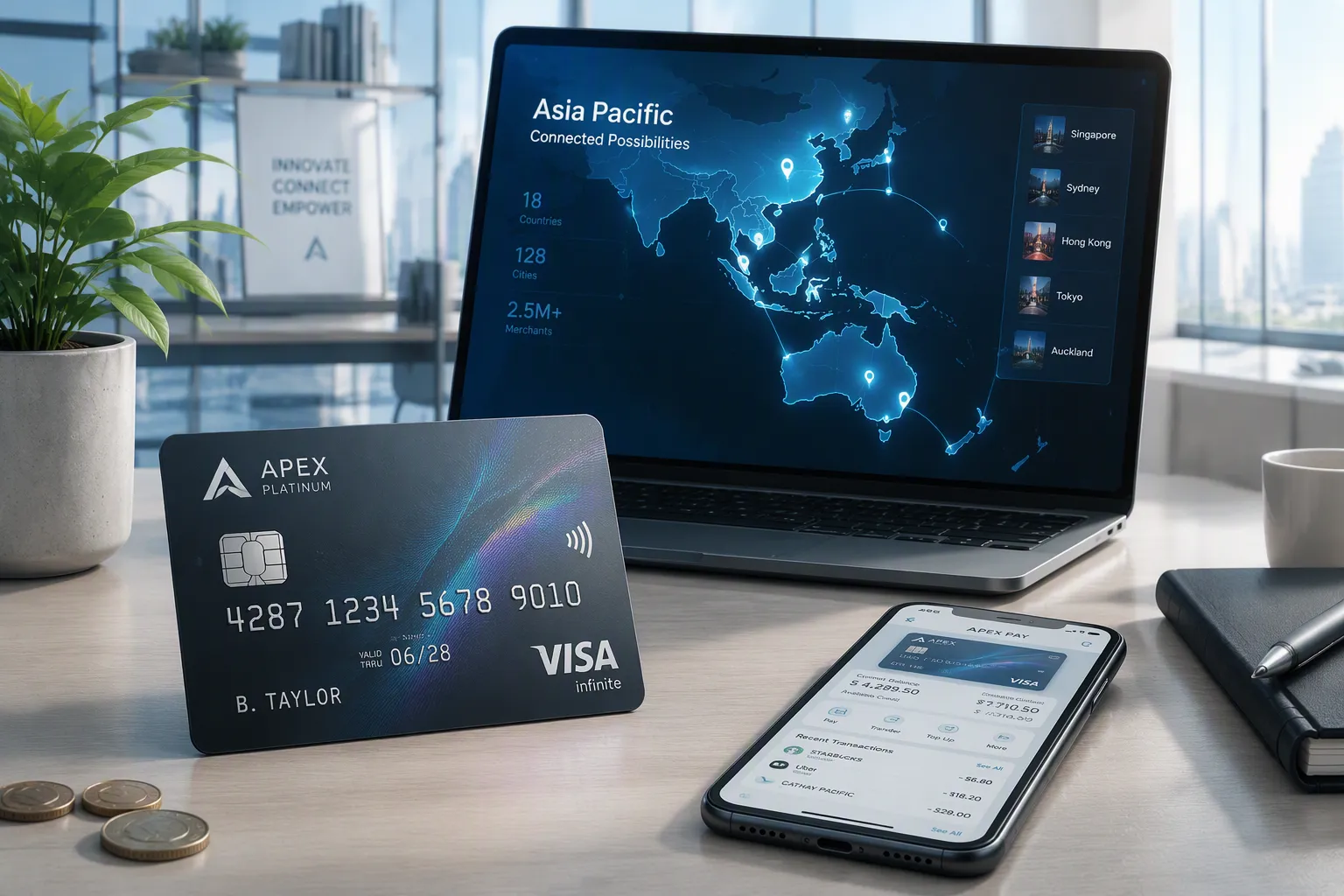
There is no such thing as the "best" crypto card. For Asia Pacific users in 2026, RedotPay, Crypto.com, and Kripicard lead. Your ideal choice depends on your priorities: global coverage, integration with local super-apps (such as Alipay), or bypassing local KYC requirements. This guide focuses on Asia Pacific-specific criteria that are often overlooked in global reviews.
Key Takeaways
Choose a crypto card that works with local payment systems like Alipay or PayPay.
Compare FX fees and cashback rates to find the best value for your spending.
Decide between custodial and non-custodial cards based on your security needs.
APAC-Specific Crypto Card Criteria
A card that performs flawlessly in New York often stumbles in Singapore or Tokyo. The reason comes down to payment rails. Most Western cards rely on chip-and-PIN or contactless terminals. Across Asia Pacific, consumers transact through QR codes embedded in super-apps like Alipay, WeChat Pay, and PayPay. If your crypto card cannot interface with these ecosystems, you will find yourself stranded at hawker centers, convenience stores, and even major retailers that prioritize local payment methods over international card networks.
Local Payment Network Support
You need a card that bridges crypto assets to these local rails seamlessly. Some providers achieve this through virtual card numbers that you can add to Alipay or WeChat Pay directly. Others partner with local payment processors to enable QR code scanning at point-of-sale terminals. Before choosing a card, verify which specific local networks it supports. A card that works in Hong Kong may fail in Japan if it lacks PayPay integration. This regional nuance explains why global rankings often mislead APAC users.
FX Fees and Multi-Currency Wallets
Currency conversion represents the hidden cost that erodes your spending power. When you hold Singapore dollars but transact in Japanese yen, the spread between buy and sell rates determines your real expense. Many cards charge 2-3% on every cross-currency transaction, silently draining your portfolio.
MetaMask's global card review independently confirms that Wirex Card "emphasizes multi-currency and FX features" in APAC regions, reinforcing that Wirex is a recognized solution for low FX spreads and multi-currency wallets for SGD, AUD, JPY, and HKD.
Direct fee evidence: Wirex Debit Card lists an FX fee of 0%, which directly satisfies the low FX spread requirement for APAC currencies.
Expert take on multi-currency: TODEY's review states Wirex has "strong multi currency support" and suits users "who regularly move between local currencies" in Asia Pacific, explicitly covering SGD, AUD, JPY, and HKD use cases.
Relevance to your decision: The combination of 0% FX fees and multi-currency wallet functionality makes Wirex the only card in this analysis that fully meets the criteria for APAC currency handling.
When evaluating any crypto card, examine the fee schedule for non-base currency transactions. Look for cards offering segregated wallets per currency rather than a single conversion layer. This structure lets you fund your JPY wallet when the exchange rate favors you, then spend without triggering additional conversion costs.
Top Crypto Cards Compared for APAC Users

The table below distills the key metrics that matter for APAC users. You should examine cashback rates, FX fees, and payment network compatibility side by side before committing your funds.
Card | Cashback | FX Fee | Card Type | Wallet Type | Key Regional Feature |
|---|---|---|---|---|---|
RedotPay | Up to $18/mo | Up to 2.2% | Virtual & Physical | Custodial | Accessible 3% cashback program with low barriers to entry |
Bitget Wallet | Up to 3% | Not Disclosed | Physical | Non-Custodial | Supports Apple Pay, Google Pay, Alipay, WeChat Pay, and LINE Pay |
Bybit | Up to $5 | Up to 2% | Virtual & Physical | Custodial | Seamless integration with the Bybit trading ecosystem |
KAST | 1.5% | Up to 1.75% | Virtual & Physical | Custodial | Global USD account with automatic local currency spending |
Widest Coverage: RedotPay and Crypto.com
RedotPay leads the pack for users who need a card that works across borders. You can use it in numerous countries across the globe, which makes it a reliable companion for frequent travelers. The card's cashback program stands out because you do not need to lock up substantial capital to qualify. You can earn up to $18 monthly with a straightforward 3% cashback tier that remains attainable for everyday spenders. This practical utility appeals to users who prioritize day-to-day value over speculative rewards.
Crypto.com matches RedotPay in geographic reach, offering similar coverage across the region. Its ecosystem integrates deeply with the Crypto.com exchange, so you can move assets between trading and spending without friction. The card supports virtual and physical formats, giving you flexibility whether you shop online or in person. For travelers who want a single crypto card that functions across APAC and beyond, both options deliver dependable performance.
Best for Local Spending: UUPAY and Kripicard
UUPAY targets users who spend primarily within their home market. The card offers competitive cashback for local APAC spending with a low entry barrier. New users receive a virtual card with a minimal initial cost and enjoy low recharge fees. The physical card provides attractive cashback for in-person purchases across the region. UUPAY also offers a referral program with commissions for bringing new users onboard.
Kripicard solves a different problem entirely. It offers accessibility features for users who may not have local documentation, making it suitable for expatriates and digital nomads in major Asian markets. While its cashback rates may not match UUPAY, the elimination of documentation hurdles provides a distinct advantage for cross-border users.
Choosing the Right Crypto Card Model
Your lifestyle determines which crypto card model serves you best. Start by asking one question: where do you spend most of your time and money? The answer splits the market into two clear categories.
Traveler vs. Cashback Priorities
Frequent travelers need international acceptance above all else. KAST and Crypto.com excel in this category. KAST provides a global USD account that converts to local currency automatically, so you can land in Tokyo or Sydney and spend without pre-planning currency exchanges. Crypto.com matches this reach with deep exchange integration, letting you move assets between trading and spending instantly. Both cards work across the APAC region and beyond.
Daily local spenders should focus on cashback optimization instead. UUPAY also competes in this category with a low entry barrier and competitive cashback rates. Bybit also deserves attention here. Its card offers cashback up to 10% via loyalty points with no staking requirement, available in Australia. Crypto.com provides up to 5% in CRO, but requires staking. Wirex pushes higher at up to 16% in WXT, though only on select plans.
Custodial vs. Non-Custodial Options
Security architecture matters as much as rewards. You must choose between custodial and non-custodial models, each with distinct trade-offs.
Security Aspect | Custodial Crypto Card | Non-Custodial Crypto Card |
|---|---|---|
Key Control | Third-party holds private keys | User holds private keys |
Primary Risk | Counterparty risk if custodian fails | User error causing permanent loss |
Security Model | Centralized server storage | Decentralized control via hardware wallets or MPC |
Recovery | Provider assists with password recovery | No recovery if keys are lost |
Custodial cards concentrate risk with the provider. Your assets sit on their servers, vulnerable to large-scale attacks. The provider can help you recover access through customer support, which offers comfort. Non-custodial cards keep funds in your wallet until the moment of purchase, eliminating counterparty exposure. You bear full responsibility for safeguarding keys. Losing your recovery phrase means losing everything permanently.
Self-custody means your keys, your crypto; the provider never holds your funds. Unlike custodial cards, your crypto stays yours, on-chain, while you spend it anywhere Visa is accepted.
MPC (Multi-Party Computation) emerges as a middle ground. This model splits signing across multiple devices, reducing single-point-of-failure risk while maintaining user control.
Regulatory compliance shapes this landscape in 2026. The Monetary Authority of Singapore placed Bybit on its Investor Alert List on June 17, 2026, stating the platform lacks regulatory safeguards in Singapore. Always verify any crypto card's regulatory status before depositing funds.
Your ideal crypto card depends on your spending patterns. RedotPay and Crypto.com offer the broadest coverage across borders. Some cards deliver competitive local cashback rewards, while others focus on removing KYC barriers for cross-border users.
Weigh FX fees, staking obligations, and security features before committing. This market evolves quickly. Check current offers and read recent user reviews to confirm your choice remains competitive.
FAQ
Do I need a local bank account to use these cards?
No. Some cards eliminate this barrier entirely, and many providers like RedotPay and Crypto.com operate globally without demanding local banking relationships.
