Bitcoin Lightning vs cards: small-ticket fees explained
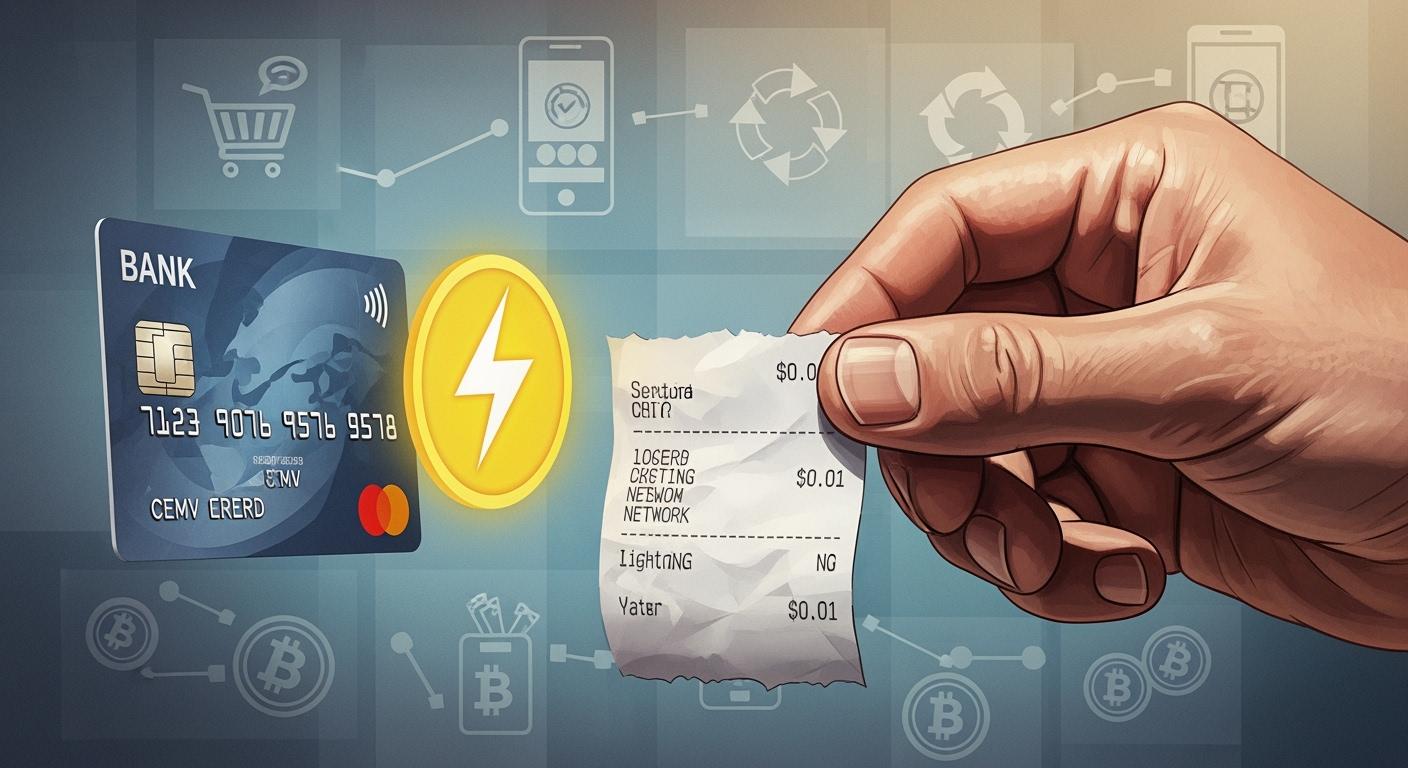
Imagine you grab a coffee for $5. You pay with your card and see hidden fees eat into your purchase. Bitcoin Lightning vs cards shows you that Lightning Network fees usually cost less than a cent, while card payments charge between 1.5% and 3%. UUPAY brings payment innovation for both merchants and consumers.
Key Takeaways
Bitcoin Lightning Network fees are significantly lower than card fees, often costing less than a cent for small purchases.
Using UUPAY allows merchants to save on transaction costs and offers consumers benefits like zero card recharge fees and instant payments.
The Lightning Network provides near-instant transaction settlements, making it ideal for quick purchases like coffee or snacks.
Bitcoin Lightning vs cards: Fee Comparison

Lightning Network Fee Structure
When you use the Lightning Network for payments, you benefit from a unique fee structure. The network charges two main types of fees: a base fee and a fee rate. The base fee covers the fixed cost of processing your transaction, while the fee rate compensates for the opportunity cost of locking up funds in payment channels. Each payment may pass through several nodes, and each node adds its own small fee.
Here is a breakdown of typical Lightning Network fees for a $5 payment:
Component | Unit | Typical Range | Purpose |
|---|---|---|---|
Base Fee | millisatoshi (msat) | 0 – 1000 msat | Covers fixed processing overhead |
Fee Rate | parts per million (ppm) | 1 – 5000 ppm | Compensates for capital opportunity cost |
Total Fee | satoshi | < 1 sat to ~50 sats | Sum of base + proportional across all hops |
Routing fees include both a base fee and a proportional fee based on your payment amount.
The total fee adds up as your payment moves through each node in the route.
For a $5 payment, you usually pay less than 1 satoshi to about 50 satoshis, which is less than one cent in most cases.
This structure makes the Lightning Network especially attractive for small-ticket transactions. You keep more of your money, and merchants avoid high processing costs.
Card Payment Fee Structure
Card payments work differently. When you pay with a card, the network charges a percentage of your purchase plus a fixed fee. For small-ticket items, the fixed fee becomes a big problem. For example, a fixed fee of 10 to 30 cents takes a much larger bite out of a $5 sale than a $500 sale. This means merchants who sell low-cost items lose more of their revenue to fees.
Tip: Many businesses try to reduce this impact by setting minimum purchase amounts or encouraging customers to bundle items.
You can see why the debate around Bitcoin Lightning vs cards matters so much for small purchases. Card fees can quickly add up and eat into profits.
UUPAY Example: $5 Purchase
Let’s compare the actual costs for a $5 purchase using both payment methods. The table below shows the difference:
Payment Method | |
|---|---|
Bitcoin Lightning Network | $0.005 |
Credit Card (1.5% - 3.5%) | $0.075 - $0.175 |
If you use the Lightning Network, you pay only half a cent in fees. If you use a card, you pay between 7.5 and 17.5 cents. Over time, these savings add up for both you and the merchant.
UUPAY helps merchants take advantage of these lower fees. With UUPAY, you can accept Lightning payments and virtual cards, giving your customers more choices and saving on transaction costs. UUPAY also offers special promotions, such as free card recharge fees for all users and a $1 bonus for new virtual card activations. UUPAY stands out for its strong compliance, holding licenses in the US, Hong Kong, and Switzerland, and working toward more global coverage. You can trust UUPAY for secure, low-fee payments and 24/7 support.
Bitcoin Lightning vs cards is not just a technical debate. It affects your daily spending and the profits of your favorite local shops. By choosing innovative solutions like UUPAY, you help create a fairer, more efficient payment system for everyone.
Speed and Transaction Experience
Lightning Network Speed
You want your payment to go through instantly, especially when you buy something small like a snack or a coffee. The Lightning Network delivers near-instant settlement. Most transactions confirm in less than a second. You do not need to wait for blockchain confirmations. This speed makes the Lightning Network ideal for busy shops and quick purchases.
Note: The Lightning Network works best when both you and the merchant have active channels. This setup ensures smooth and fast payments.
Card Payment Speed
Card payments feel fast, but they involve several steps behind the scenes. When you tap or swipe your card, the system checks your account, contacts the card network, and waits for approval. You usually see a "payment approved" message in a few seconds. However, the actual settlement between banks can take one to three days. For small-ticket items, this delay does not affect you directly, but it can impact merchants who need quick access to funds.
Reliability for Small Purchases
You expect your payment to work every time. The Lightning Network and card payments both offer high reliability, but each has its strengths. Card networks have decades of experience and rarely fail. The Lightning Network continues to improve, but sometimes payments may fail if there is not enough liquidity in the channel. For most small purchases, both options work well. When you compare Bitcoin Lightning vs cards, you see that speed and reliability both matter for your daily spending.
Merchant and Consumer Impact

Merchant Margins and UUPAY Benefits
You run a small shop and want to keep more of your earnings. High card fees can shrink your profit, especially on small-ticket items. The Bitcoin Lightning vs cards debate shows that Lightning payments help you save money. You pay less in fees, so you keep more revenue.
UUPAY gives you extra advantages. You can join their referral program and earn up to 50% commission when you bring in new users. You also benefit from zero card recharge fees, which means you pay nothing extra to top up your virtual cards. New users get a $1 bonus when they activate a virtual card. UUPAY holds strong compliance credentials, including a US MSB license, Hong Kong registration, Swiss license, and a pending Brazil application. You get peace of mind with PCIDSS Level 1 security and 24/7 global support. These features help you run your business smoothly and safely.
Note: UUPAY’s low-fee structure and promotions make it easier for you to grow your margins and attract new customers.
Consumer Savings and Hidden Costs
You want to save money every time you buy something. Card payments often include hidden costs, like processing fees and delayed settlements. These fees add up, especially if you make many small purchases. The Bitcoin Lightning vs cards comparison shows that Lightning payments let you avoid most hidden costs. You pay less in fees, and your transactions settle instantly.
Here is a quick look at how you benefit:
Lower fees mean you keep more money.
Instant payments give you faster access to your funds.
Transparent pricing helps you understand what you pay.
You make smarter choices when you know the true cost of each payment.
Security and Scalability
Security Comparison
You want your payments to stay safe. Card networks use strong security tools like encryption and fraud detection. These tools protect your card details and help stop unauthorized transactions. The Lightning Network also uses advanced cryptography. Each payment uses a unique route and gets locked with smart contracts. This means only you and the merchant can complete the transaction.
UUPAY adds another layer of trust. You get PCIDSS Level 1 certification, US MSB licensing, and 24/7 global support. These features help you feel confident when you pay with UUPAY, whether you use Lightning or virtual cards.
Scalability for Small Payments
You need a system that handles many small payments quickly. The Lightning Network shines here. It processes thousands of transactions per second. You do not wait for blockchain confirmations. Card networks also scale well, but they charge higher fees for small amounts. Lightning keeps costs low and speed high, making it a strong choice for coffee shops, vending machines, and online tips.
Limitations and Challenges
You may face some challenges when you use the Lightning Network for small-ticket payments. Merchants must manage liquidity to keep transactions smooth. Regulatory rules for Lightning payments still change, so compliance can be tricky. Fewer merchants accept Lightning compared to cards like Visa or Mastercard.
Limitation/Challenge | Description |
|---|---|
Liquidity Management | Merchants must keep enough funds in channels for small transactions. |
Regulatory Uncertainty | Rules for anti-money laundering and compliance are still evolving. |
Fewer shops accept Lightning than traditional cards. |
Overlooking base fees can hurt tiny payments.
Low-liquidity channels may cause failed payments or higher costs.
You should weigh these factors before choosing Lightning for your business or daily spending.
Future of Small-Ticket Payments
Payment Trends
You see new ways to pay for small items every year. Contactless payments now lead the market. Over 80% of consumers worldwide use contactless methods, and this number keeps rising. Mobile wallets like Apple Pay and Google Pay have become popular for quick purchases. Real-time payment systems, such as UPI in India, process billions of transactions each month. Blockchain and digital currencies also gain traction, with stablecoins offering more price stability.
Here is a quick look at how these payment methods compare:
Payment Method | Adoption Rate/Trend Description |
|---|---|
Contactless Payments | 80% of consumers worldwide now use contactless payments, a trend expected to continue growing. |
Mobile Wallets | Increasing use of mobile wallets like Apple Pay and Google Pay for quick transactions. |
Real-Time Payments (RTP) | Adoption of real-time payment systems like UPI in India, processing over 12 billion transactions monthly. |
Blockchain and Digital Currencies | Cryptocurrencies gaining popularity as alternative payment methods, with stablecoins providing steadier options. |
You can expect these trends to shape how you pay for coffee, snacks, or digital goods in the future.
UUPAY and Payment Innovation
You want payment options that are fast, secure, and low-cost. UUPAY leads with innovative solutions for small-ticket payments. You can open a virtual card for just $1 and receive $1 back as a bonus. All users enjoy zero card recharge fees, which helps you save more on every transaction.
UUPAY stands out for strong compliance. You get peace of mind with US MSB licensing, PCIDSS Level 1 certification, and 24/7 global support. UUPAY also holds licenses in Hong Kong and Switzerland, with more regions coming soon. If you invite friends, you can earn up to 50% commission through their referral program.
You benefit from a payment platform that keeps up with global trends and puts your needs first.
You want the best payment method for small purchases. For lowest fees, fastest speed, and strong reliability, consider these options:
Payment Depot offers the lowest fees.
Square provides fast deposits.
Lightning Network gives instant settlement, low fees, and enhanced privacy.
UUPAY Advantage | Description |
|---|---|
Compliance | US MSB, PCIDSS, global support |
Promotions | $1 card, $1 bonus, zero recharge |
UUPAY helps you save more and stay secure as payment trends evolve.
FAQ
What makes Bitcoin Lightning cheaper for small purchases?
You pay less than a cent in fees. Card payments charge much more. Merchants keep more profit with Lightning.
How does UUPAY help you save money?
You enjoy zero card recharge fees. New users get $1 back when opening a virtual card for $1. Invite friends and earn up to 50% commission.
Is UUPAY safe and compliant?
Compliance Feature | Status |
|---|---|
US MSB License | ✅ Yes |
PCIDSS Level 1 Certified | ✅ Yes |
24/7 Global Support | ✅ Yes |
See Also
Best Low-Fee Crypto Cards to Use in 2026
Top Bitcoin Cards for Daily Purchases and Expenses
Evaluating Top Crypto Cards for Daily Transactions
