What a crypto card for high yield crypto accounts is and how it works in 2026
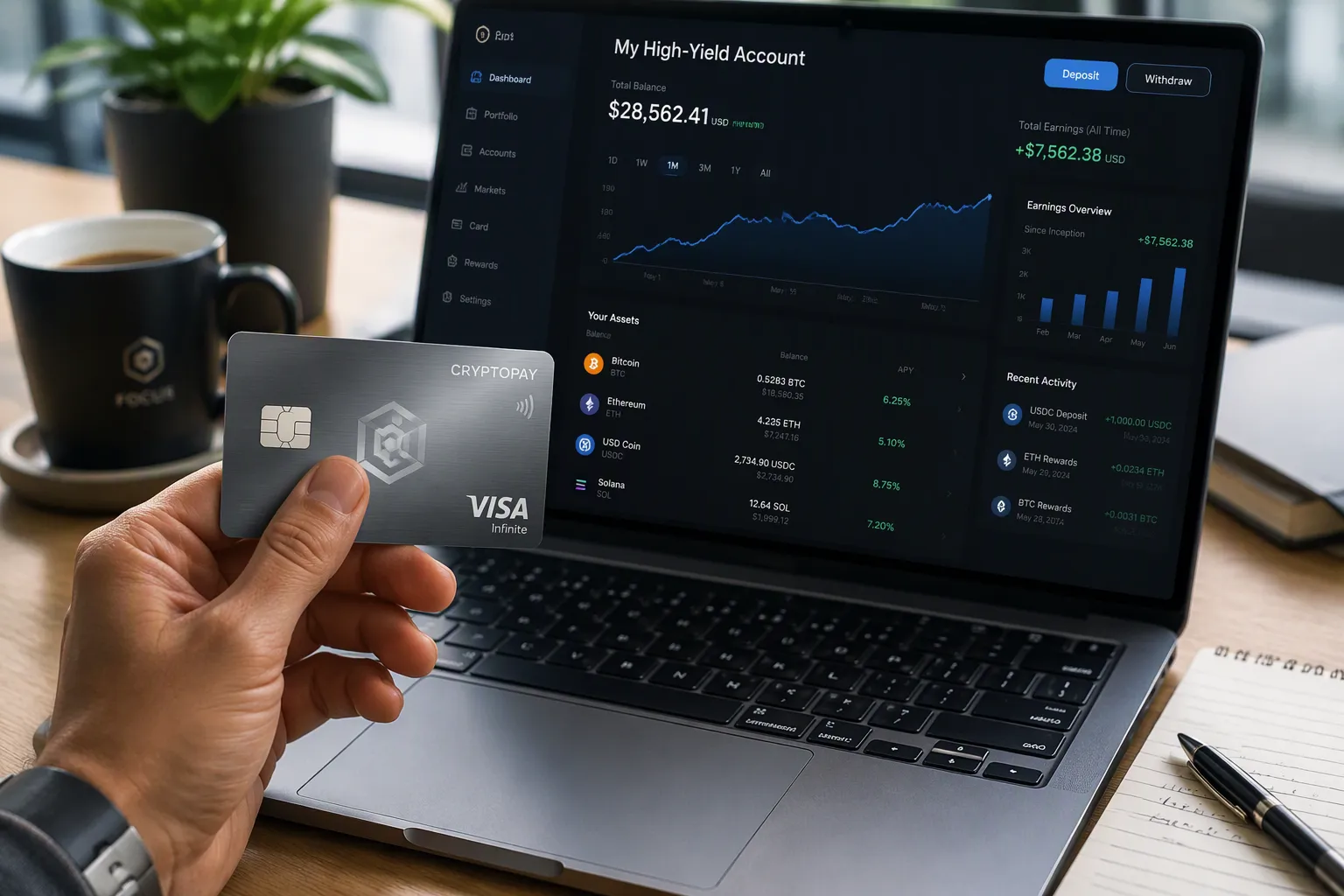
You earn steady yield in high yield crypto accounts. Daily spending, however, still relies on fiat. A crypto card links directly to that account, converting crypto to dollars at the moment you pay. Understanding the 2026 conversion flow and the difference between prepaid and non-prepaid cards makes comparing fees and rewards far simpler.
Key Takeaways
A crypto card automatically converts your crypto to dollars when you buy something, so you can spend without selling your crypto first.
Prepaid cards require you to load funds first, while non-prepaid cards convert crypto at the point of sale or let you borrow against your crypto.
Compare fees, rewards, and staking requirements before choosing a card, and start with a small prepaid card to test how it works.
How crypto cards for high yield crypto accounts work in 2026
A crypto card works like a debit card, but crypto funds it instead of a bank balance. You connect the card to your crypto exchange account or wallet. The card network converts the required amount of crypto into fiat at checkout, then settles the payment with the merchant. Most 2026 cards run on Visa or Mastercard rails. You can spend anywhere those networks operate. This setup turns your high yield crypto accounts into an everyday payment source.
Converting crypto to fiat at the point of sale
The conversion happens automatically during the transaction. You buy an item. The card issuer quotes a live BTC price. It converts the needed Bitcoin and sends dollars to the merchant. You never manually sell your crypto before paying.
2026 disclosures make the costs visible. Xapo Bank's published schedule lists the USD/BTC exchange with no separate transaction fee. The issuer embeds a 0.10% spread in the quoted Bitcoin price instead. Debit card payments cost $0. Foreign currency purchases also show $0, with operator fees possible. Crypto wealth buy/sell transactions carry a 1% fee of trade value.
Fee item | Disclosed fee (2026) |
|---|---|
USD/BTC exchange transaction fee | None disclosed (0) |
USD/BTC exchange spread | 0.10% (subject to change) |
Crypto wealth buy/sell | 1% of trade value |
Debit card payment | $0 (operator fees may apply) |
Debit card payment in foreign currency | $0 (operator fees may apply) |
That 0.10% spread acts as the effective conversion cost during each purchase. The spread may change. Review the terms before relying on a rate.
Prepaid and non-prepaid card mechanics
Prepaid cards require loading funds first. You transfer fiat or crypto onto the card before spending. They operate without a bank account. In 2026, virtual USD prepaid cards with minimal identity verification are available. In Canada, most crypto Visa cards are prepaid. You load money through Interac e-transfer or by linking a digital wallet. The card spends your own funds. It works like a pseudo-debit card with a zero credit limit. Yield in your high yield crypto accounts remains untouched because the loaded balance is separate.
Non-prepaid cards work differently. Debit-style cards convert crypto at the point of sale. Credit-style cards borrow against your crypto holdings. You never sell the crypto. You pledge it as collateral. Hybrid cards add spending power. Your assets continue earning in the background. New 2026 entries from MetaMask and Ledger expand these options. The Mastercard Crypto Card Program provides the network infrastructure. A credit-style model keeps your crypto working inside high yield crypto accounts. You spend borrowed dollars. Your holdings remain invested.
Choosing between these formats depends on your use case. Prepaid cards give precise budget control and no credit check. Non-prepaid cards offer convenience. They introduce collateral risks and interest charges.
Choosing a crypto card for high yield crypto accounts
Decide with your high yield crypto accounts in mind first. Does the card let you earn yield on balances? Does it force you to stake tokens for meaningful rewards? In 2026, most providers tie card tiers to staking. Compare fee structures, spending limits, supported fiat and crypto currencies, reward rates, and safety protections before picking one.
Fees, limits, and supported currencies
Fee structures vary widely. Some cards charge monthly fees. Others embed a spread in the crypto-to-fiat conversion. Look for cards that disclose both. UUPAY, for example, currently gives new users a virtual card for 1U and immediately rebates that 1U. Top-up fees are free for all users. That combination makes trial spending cheap. The physical card launch adds global acceptance, so you can swipe anywhere Visa or Mastercard works. The card also offers up to 50% spending rebate, instant arrival after approval, and security features that block unauthorized use.
Spending limits differ by verification level. Minimal-verification virtual cards fit fast purchases. Prepaid cards help you control a fixed budget. Credit-style cards raise limits because your crypto serves as collateral. Supported currencies matter too. Confirm the card handles your main holdings, whether Bitcoin, Ethereum, stablecoins, or the native token of a high-yield platform. Also confirm settlement fiat, usually USD or EUR. Some providers only support fiat settlement in one currency, so check before applying.
Rewards, staking, and safety basics
Reward rates vary more than any other feature. Some cards pay without strings. Others demand a large stake.
Crypto Card Provider | Cashback Reward Rate | Conditions |
|---|---|---|
Nexo | 2% | No fees, no investment stake required; paid in Bitcoin or NEXO tokens on all purchases |
Spend Visa (Spend.com) | 6% | Requires investment stake of ~$20,000 (2,500,000 SPND tokens); $100 referral bonus |
Crypto.com (Midnight Blue) | 1% | No investment stake required; $200 balance limit |
Those numbers show a stark trade-off. You stake more, you earn more. Count the opportunity cost carefully. Staking locks capital that could otherwise stay inside high yield crypto accounts.
Staking BASED directly reduces your on-chain trading fees across their perpetuals and prediction markets. It also acts as a tier unlock for the Based Visa Card, giving you higher fiat spending limits and up to 8.00% cashback.
Higher cashback is not the only path.
Some crypto credit card providers offer up to 4% rewards on select spending categories such as fuel and transit, with rewards payable in stablecoins like USDT or USDC.
These cards suit people who want category-based earnings without a massive stake.
Safety basics come down to licensing, encryption, and support. UUPAY holds a US MSB license, a Hong Kong registration, and a Swiss license, with a Brazil license pending. The platform is PCI DSS Level 1 certified. It runs 24/7 global support. Card security also depends on whether you can freeze the card instantly, a feature most 2026 apps include. Check the same credentials on any competitor before funding the card. UUPAY's referral program also pays tiered commissions up to 50%, which matters if you plan to earn from the card ecosystem rather than just spend.
Match the card type to your behavior. Minimal-verification virtual cards favor speed. Credit-style cards keep your crypto working. Prepaid cards enforce budget discipline. Start small with a prepaid card if you are new, then scale once the mechanics feel clear. That approach lets you test conversions, fees, and support without risking the balance inside your high yield crypto accounts.
A crypto card turns your high yield crypto accounts into a spending tool. Compare prepaid and non-prepaid models, conversion mechanics, fees, rewards, staking demands, and safety. Weigh UUPAY against 2026 options like Nexo's 2% cashback or Spend Visa's 6% reward. Start with a small prepaid card. Always review the latest terms yourself.
FAQ
How does a crypto card convert your balance at checkout?
The card issuer quotes a live crypto price and converts the needed amount at checkout. A small spread, like Xapo Bank's 0.10%, covers the cost. You never manually sell first.
What is the difference between prepaid and credit-style cards?
Prepaid cards require loading funds before spending. They work without a bank account. Credit-style cards borrow against your crypto holdings. Your assets keep earning inside high yield crypto accounts.
Do you need to stake tokens to earn rewards?
Some cards like Nexo pay 2% without staking. Others, like Spend Visa, need a large stake for 6% cashback. Weigh that cost against your high yield crypto accounts.
