Crypto card for physical asset tokenization
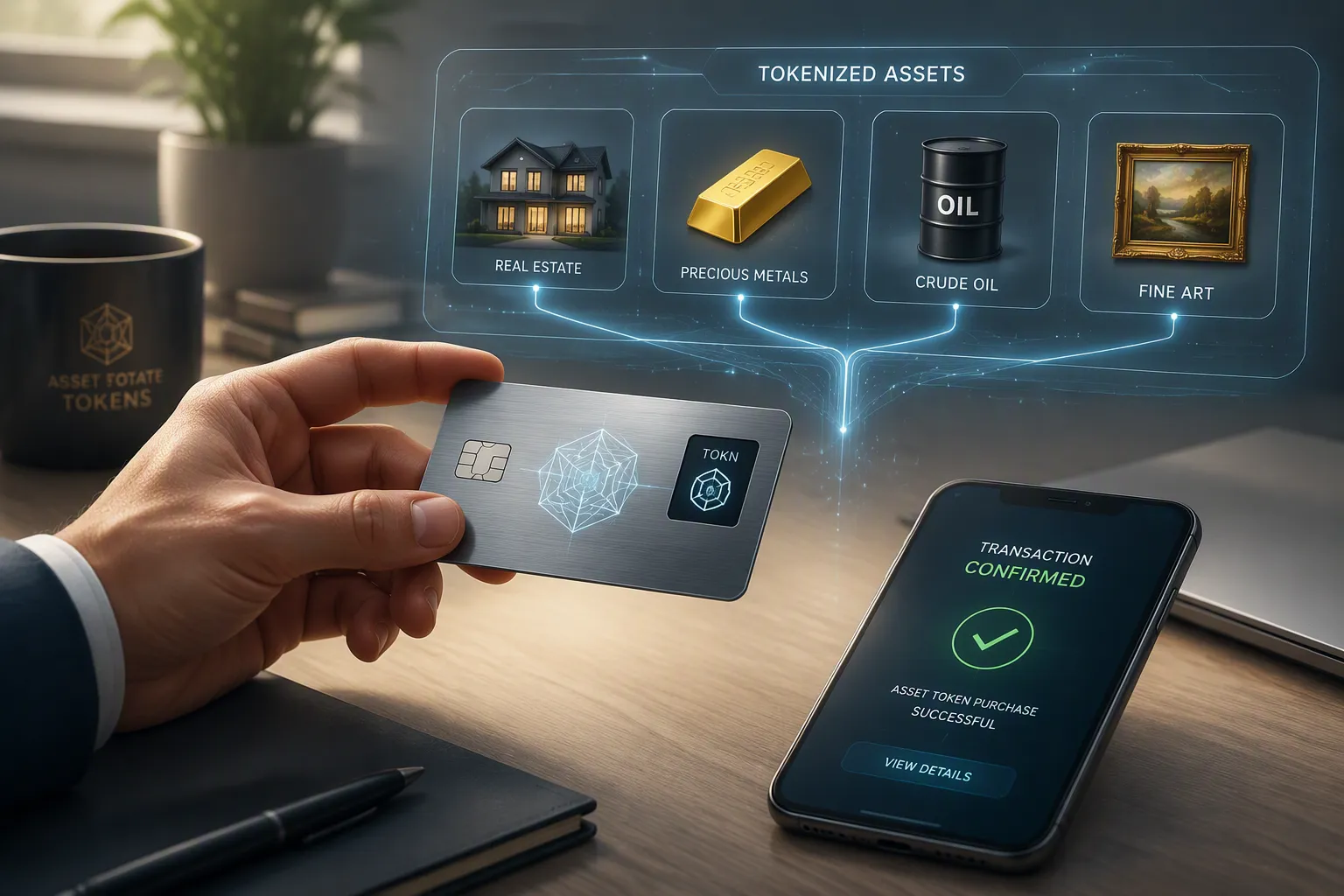
Imagine swiping a card to own a fraction of a rare vintage trading card. A crypto card acts as your bridge to digital assets. Physical asset tokenization converts real-world items into blockchain tokens. This article demystifies how these technologies combine. You can own a piece of a tokenized trading card with ease. This creates an accessible investment frontier for everyone.
Key Takeaways
Crypto cards open the door to owning fractions of high-value physical assets like trading cards, real estate, and commodities.
Tokenization turns illiquid assets into tradeable tokens, offering 24/7 liquidity and global market access.
Secure platforms with audited smart contracts and proper custody protect your investments and ensure regulatory compliance.
Crypto Cards: A Gateway to Physical Asset Tokenization
From Physical Card to Digital Token
A crypto card works as a bridge between traditional money and digital assets. You load it with cryptocurrency or fiat currency. Then you spend it anywhere standard cards work. This simple mechanism opens a door to something far more powerful: direct access to tokenized real-world items.
Consider a rare vintage trading card worth thousands of dollars. Normally, you would need significant capital to buy it. You would also need secure storage and a trusted intermediary. Physical asset tokenization changes this equation entirely. The card's owner digitizes its details—condition, provenance, serial number—and records them on a blockchain. The system then issues digital tokens that represent fractional ownership of that card. Each token corresponds to a specific share of the physical item.
Blockchain technology makes this system trustworthy through several mechanisms. The ledger operates as a decentralized, immutable record. Once a token transfer occurs, no single authority can alter or delete that entry. Cryptographic hashing links each block to the previous one. Any tampering becomes immediately evident. This ensures the integrity of ownership records.
Transparency also plays a crucial role. Network participants can view transactions and token holdings associated with public addresses. This traceability creates a trustless network. Certainty in the record's accuracy relies on the protocol itself, not on a central intermediary.
Smart contracts add another layer of automation. These programs live on the blockchain and execute if/then logic. For example, if payment arrives, then token ownership transfers automatically. Smart contracts also handle compliance checks, enforce transfer restrictions, and manage dividend distributions. Only verified parties can hold or trade tokens.
The tokenization process itself produces an on-chain ownership certificate. This certificate serves as a tamper-proof record of authenticity and ownership. You receive a digital document that proves your claim to a fraction of that vintage card.
A Step-by-Step Purchase Guide
Buying your first tokenized asset with a crypto card follows a straightforward path:
Choose a compliant platform. Look for providers with proper licensing. UUPAY, for instance, holds a US MSB license and maintains PCI DSS Level 1 certification. These credentials signal regulatory oversight and security standards.
Create your account. Complete identity verification. The platform runs KYC checks to comply with anti-money laundering regulations.
Fund your crypto card. Load your card with cryptocurrency or fiat currency. Some platforms offer fee-free loading options.
Browse tokenized assets. Explore available offerings. You might find fractional shares of trading cards, precious metals, or real estate.
Select your asset and quantity. Decide how many tokens you want. Your card balance determines your purchasing power.
Confirm the transaction. The smart contract executes automatically. It verifies your identity, processes payment, and transfers token ownership to your wallet.
Receive your digital certificate. Your on-chain ownership record appears instantly. You now hold a verifiable claim to a physical asset.
This process takes minutes, not weeks. You avoid traditional barriers like minimum investment thresholds or geographic restrictions. Physical asset tokenization through a crypto card puts high-value investments within your reach.
Key Benefits of Tokenized Asset Investing

Unlocking Liquidity and Fractional Ownership
Tokenization transforms illiquid assets into tradeable digital instruments. You no longer need millions to access high-value markets. A rare trading card worth $10,000 becomes 10,000 tokens at $1 each. You purchase exactly what your budget allows. This fractional ownership model democratizes access to asset classes once reserved for wealthy institutions.
The liquidity advantage extends beyond entry costs. Traditional private assets lock your capital for years. Tokenized assets trade on secondary markets around the clock. You exit positions when you choose, not when a buyer appears. Citi Group projects tokenization in private markets could grow 80-fold, reaching nearly USD 4 trillion by 2030.
Asset Class | Example | Liquidity Outcome |
|---|---|---|
Real Estate | Aspen St. Regis Resort ($18M Aspen Coin) | Hotel equity became tradable; smaller investors gained access and exit |
Commodities | PAX Gold | 24/7 trading with fractional ownership; $1.4B+ market cap |
Private Credit | Hamilton Lane Fund | Minimum investment dropped from $5M to $20,000 |
Asset owners benefit equally. You access a global pool of capital without geographic restrictions. Digital issuance streamlines fundraising across jurisdictions. Centralized ownership records reduce administrative overhead. You manage a diverse investor base efficiently while automation cuts long-term operational costs.
Verifiable Provenance and Global Access
Blockchain creates an immutable record of every transaction. Each token carries its complete history—origin, previous owners, condition assessments. You verify authenticity without trusting a middleman. Smart contracts enforce transfer rules automatically. This transparency prevents fraud and builds confidence in physical asset tokenization.
Global access transforms your investment reach. Traditional markets close at 5 PM. Tokenized platforms operate 24/7 across borders. You react to news instantly, regardless of time zone. Emerging market opportunities become accessible without local intermediaries or complex legal structures.
Tokenized assets can be traded 24/7 across borders, democratizing access to emerging markets and international investment opportunities.
The combination proves powerful. You gain liquidity, transparency, and global reach simultaneously. Physical asset tokenization through crypto cards puts this entire ecosystem in your pocket. Your vintage trading card investment now trades alongside global commodities and real estate—all from one interface.
Navigating Security and Regulatory Hurdles
Ensuring Asset Safety and Smart Contract Audits
Security for tokenized assets operates on two fronts: the physical item and the digital token. The physical asset requires professional custody. Secure vaults, cold storage for the majority of holdings, and 24/7 monitoring form the baseline. Multi-signature authorization ensures no single individual can move assets alone.
You have three custody models to consider. Self-custody gives you full control but demands technical expertise and carries limited insurance protection. Third-party custody through licensed custodians offers regulatory clarity and insured infrastructure, though you accept counterparty risk and ongoing fees. Hybrid models using multi-party computation distribute key shares across parties, eliminating single points of failure while enabling flexible approvals.
Insurance complements custody rather than replacing it. Comprehensive policies cover external theft, insider collusion, and loss of private keys. You should note exclusions: user error, phishing attacks, blockchain failures, and market volatility typically fall outside coverage. Evaluate insurers on their financial strength, crypto expertise, and claims handling record.
Smart contract audits serve as your critical control point. Independent security firms review code before deployment, identifying vulnerabilities and poor coding practices. Blockchains are immutable—funds lost through flawed contracts cannot be recovered. A rigorous audit verifies security, logic, and functionality. Its absence represents a significant control deficiency that could lead to financial loss.
The Role of Compliant Platforms Like UUPAY
Regulatory frameworks vary dramatically across jurisdictions. The European Union operates a DLT Pilot Regime and MiCA framework. Singapore's MAS oversees Project Guardian. Switzerland grants blockchain-based securities equal legal standing through its DLT Act. The United States applies existing securities laws with modernization efforts underway.
Compliant platforms navigate this complexity through legal structuring and verification. They confirm ownership and legal status before tokenization. They enforce investor eligibility through identity checks. They classify tokens correctly to avoid misclassification penalties.
UUPAY exemplifies this approach. The platform holds a US MSB license, registration in Hong Kong, a Swiss license, and awaits approval in Brazil. PCI DSS Level 1 certification demonstrates enterprise-grade security protocols. Its virtual card carries no opening fee, with fee waivers available. The physical card offers cashback rewards. These credentials signal regulatory oversight and security standards that build investor confidence.
You should look for audited smart contracts, secure custody, onchain KYC/AML compliance, and investor whitelisting. Short-lived credentials and transaction-level policy enforcement limit exposure windows. Monitoring for anomalous patterns flags potential fraud. Physical asset tokenization demands this layered defense—your investment deserves nothing less.
The crypto card transforms into your gateway to the tokenized economy. You now access high-value physical assets—real estate, commodities, collectible trading cards—without traditional barriers. This marks the beginning of your investment journey. Physical asset tokenization continues evolving rapidly. Explore platforms like UUPAY, which offer global accessibility and robust security, to start building your tokenized portfolio today.
FAQ
What fees should I expect when using a crypto card for tokenized assets?
Fees vary by platform. UUPAY currently offers new users a virtual card for 1U with an immediate 1U rebate. All users enjoy zero card loading fees. Physical card holders earn up to 50% cashback on purchases.
