How to Use a Virtual Card for Crypto to Pay Property Taxes
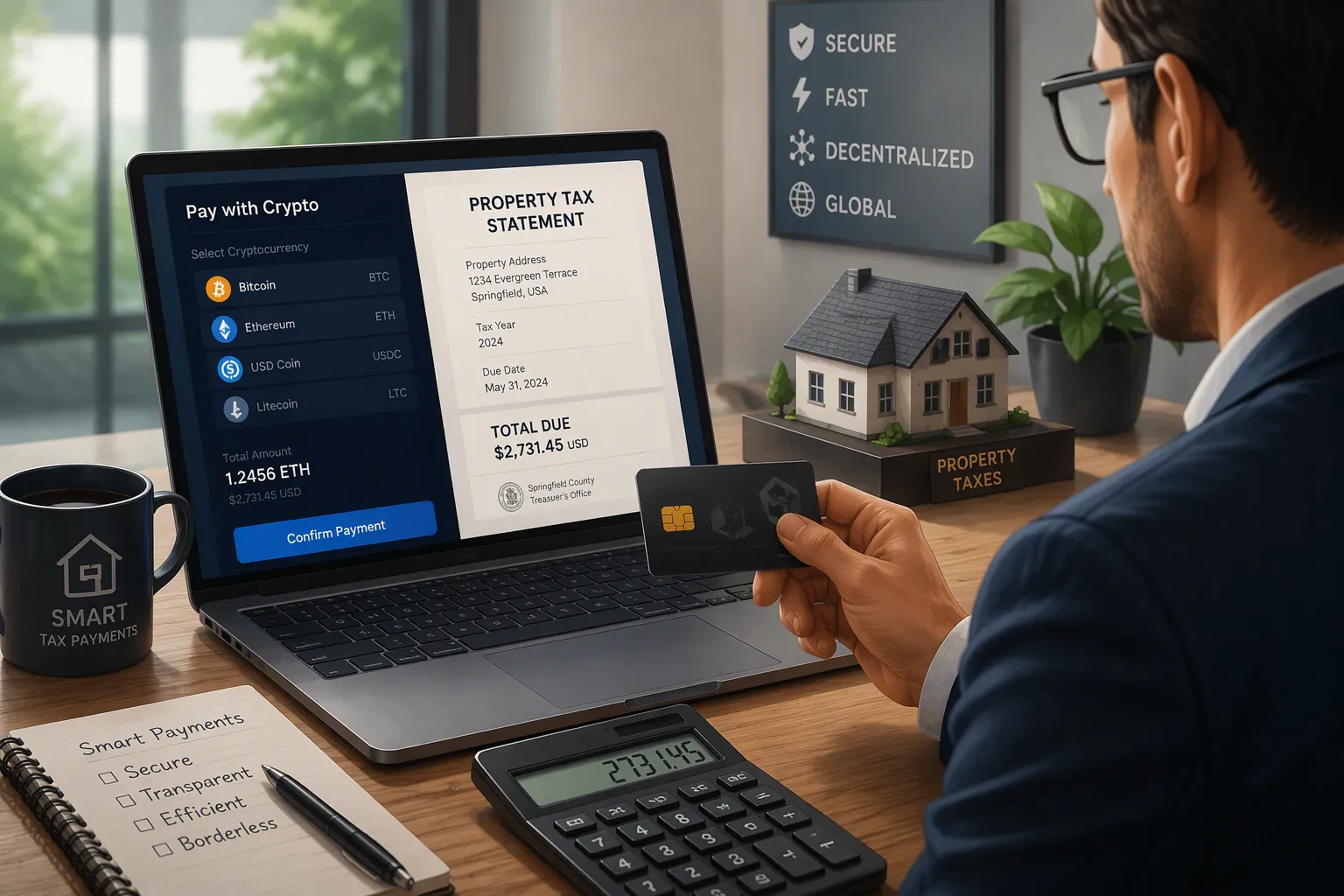
Yes, you can pay property taxes with a virtual card funded by crypto, as long as your tax office accepts card payments. Choose a provider, load crypto, convert it to fiat, pay by card, and keep records. The IRS treats cryptocurrency as property, so converting it to fiat can create a taxable event. This walkthrough keeps each step simple. Verify your local tax office's payment rules first.
Key Takeaways
Check if your tax office accepts card payments before you start.
Use a crypto-funded virtual card like UUPAY to pay your property taxes easily.
Remember that converting crypto to fiat for payment may trigger capital gains tax.
Choosing a Virtual Card Provider for Property Tax Payments
Choosing a card provider takes more than picking the first option. UUPAY offers a crypto-funded virtual card that works on many online card payment portals. The card's usefulness still depends on your local tax office. Confirm your tax office accepts card numbers, expiration dates, and CVV codes before you load any funds. Many tax systems accept card payments. Some offices accept only ACH transfers, checks, or wire payments. The official tax collector website or customer service line provides the definitive answer. Call first. Load second.
Confirm Tax Office Card Payment Acceptance
Look at your property tax bill first. Find the payment methods section. If card payments appear, read the fine print. Some tax portals require an in-person card swipe. Many accept online entries. The card carries the same number, expiration date, and CVV as a physical card. The processor cannot tell the difference. Do not assume. Call the tax collector's office. Ask whether this payment method works on their portal. Keep the agent's name, the call date, and the answer. That record protects you if the payment fails later. Write the payment deadline on your calendar. Ask about convenience fees, too. Some offices add a percentage on top. Verify the card network. A few government portals accept only Visa or Mastercard.
Compare UUPAY With Other Crypto Card Options
Compare providers on four points before committing: loading fees, conversion spreads, transaction limits, and whether the provider supports U.S. dollar balances. Each point changes your final cost. UUPAY checks these boxes well. New users receive a virtual card for 1U, plus 1U cashback. Recharge fees cost nothing. Your first crypto deposit moves almost entirely toward the property tax bill.
UUPAY also launched physical cards. These cards work globally, deliver up to 50% cashback on eligible purchases, and arrive instantly. Security protections match the card's controls. Compliance strengthens the case. UUPAY holds a U.S. MSB license, a Hong Kong registration, and a Swiss license. Its Brazil application remains in progress. The company meets PCIDSS Level 1 standards and offers 24/7 support. These credentials matter. Government tax systems store sensitive personal and financial data. A compliant provider reduces the risk of service interruptions. This protects your funds and your identity.
Referral rewards add another advantage. UUPAY pays up to 50% commission based on your invites. If you pay property taxes multiple times each year, that income offsets future fees. A wide conversion spread silently reduces the amount that reaches your card balance. UUPAY's free recharge keeps your deposited value intact. Compare this structure with other crypto cards. Many competitors charge monthly fees or impose low transaction caps. Limits matter more than most people realize. Choose a provider with transparent limits that can handle a full property tax payment.
Using the Virtual Card to Pay Property Tax Bills

Load Crypto and Convert It to Fiat First
Log in to your card provider dashboard. Confirm your fiat balance before you start the payment. Most providers let you load crypto and convert it to dollars inside the same screen. Select the amount you need to cover the bill. Add a small buffer for convenience fees. Submit the conversion. The fiat balance now sits ready for the tax payment.
This conversion step carries a tax consequence. The IRS classifies cryptocurrency as property, not currency. Converting crypto into fiat counts as a disposal of property. That disposal is a taxable event. If your crypto gained value since you acquired it, you may owe capital gains tax on the difference between your original cost basis and the fair market value at the time of conversion. This rule applies no matter why you converted the crypto, including paying property taxes. Calculate your gain or loss at the moment of conversion. Do not wait until tax season.
Enter Card Details and Keep Payment Receipts
Return to the tax collector's payment portal. Select the property tax payment option. Enter your virtual card number, expiration date, and CVV code. Double-check the amount against your bill. Submit the payment. Wait for the confirmation screen. Do not close the browser until you see it.
Save every record from this transaction. Download the confirmation page as a PDF. Keep the email receipt. Export your card statement showing the fiat conversion and the tax payment. These documents let you match your records with IRS reporting forms later. The IRS expects you to track the fair market value of the cryptocurrency in U.S. dollars at the time of conversion, the original cost basis, your complete transaction history, and the valuations used to calculate gain or loss.
Purpose | |
|---|---|
Form 8949 | Report individual cryptocurrency transactions, including conversions to fiat |
Schedule D (Form 1040) | Summarize capital gains and losses from crypto disposals |
Schedule C | Report crypto income if earned through mining or as a business |
A virtual card payment leaves a clean paper trail. Store these files in one folder. Label them by tax year. This habit saves hours when you file.
Reporting Crypto Property Tax Payments on Your Taxes
Calculate Capital Gains or Losses at Conversion
Paying property taxes with a virtual card funded by crypto counts as a disposition of virtual currency. You may owe capital gains tax on any increase in value between acquiring the crypto and converting it to fiat. To find your gain or loss, determine two amounts: the fair market value of the crypto at the moment you spend it, and the adjusted cost base of that same coin. The difference between these two figures produces your capital gain or capital loss. Calculating the adjusted cost base can be complex depending on the type of crypto token. Consult an expert tax lawyer if you feel uncertain.
Report Transactions Under IRS Virtual Currency Rules
The IRS classifies cryptocurrency as property. Every trade, sale, or other disposal is a taxable event. Each reportable crypto disposition must be entered on Form 8949 (Sales and Other Dispositions of Capital Assets). The totals from Form 8949 are then summarized on Schedule D of your tax return. Paying a property tax bill by transferring crypto is a disposal of a capital asset. It falls under the same Form 8949 and Schedule D reporting requirement.
UUPAY may issue information forms, but you are ultimately responsible for reporting the transaction accurately on IRS Form 1040, Schedule D, or Form 8949. If you received the crypto as income, report that income separately. Do not confuse it with the property tax payment itself.
Paying property taxes with a crypto-funded virtual card works when you follow the right steps. Pick a provider your tax office accepts, load crypto, convert it to fiat, pay the bill, and save every record. UUPAY makes this possible, yet you still track the tax implications. Check accepted payment methods, compare providers, and run a small test payment before the deadline.
FAQ
Can I really pay my property tax bill with a crypto-funded virtual card?
Yes, if your tax office accepts card payments. Confirm their rules first. Then load crypto, convert to fiat, and pay.
What does UUPAY charge for its virtual card?
New users pay 1U for card opening and get 1U back. Recharge fees are free for all users. This keeps your tax payment cost low.
Is UUPAY safe for a government tax payment?
UUPAY holds a U.S. MSB license and PCIDSS Level 1 certification. It offers 24/7 support. These credentials protect your funds and personal data.
See Also
Simple Steps To Acquire Your Own Crypto Card
Effortless Methods For Getting A Virtual Crypto Debit Card
How To Purchase Cryptocurrency Using A Credit Card
Essential Facts Regarding Virtual Crypto Visa Cards Explained
Novice Guide To Virtual Crypto Cards For Paying Overseas Rent
