How Vietnamese Protect Savings From VND Depreciation With USDT
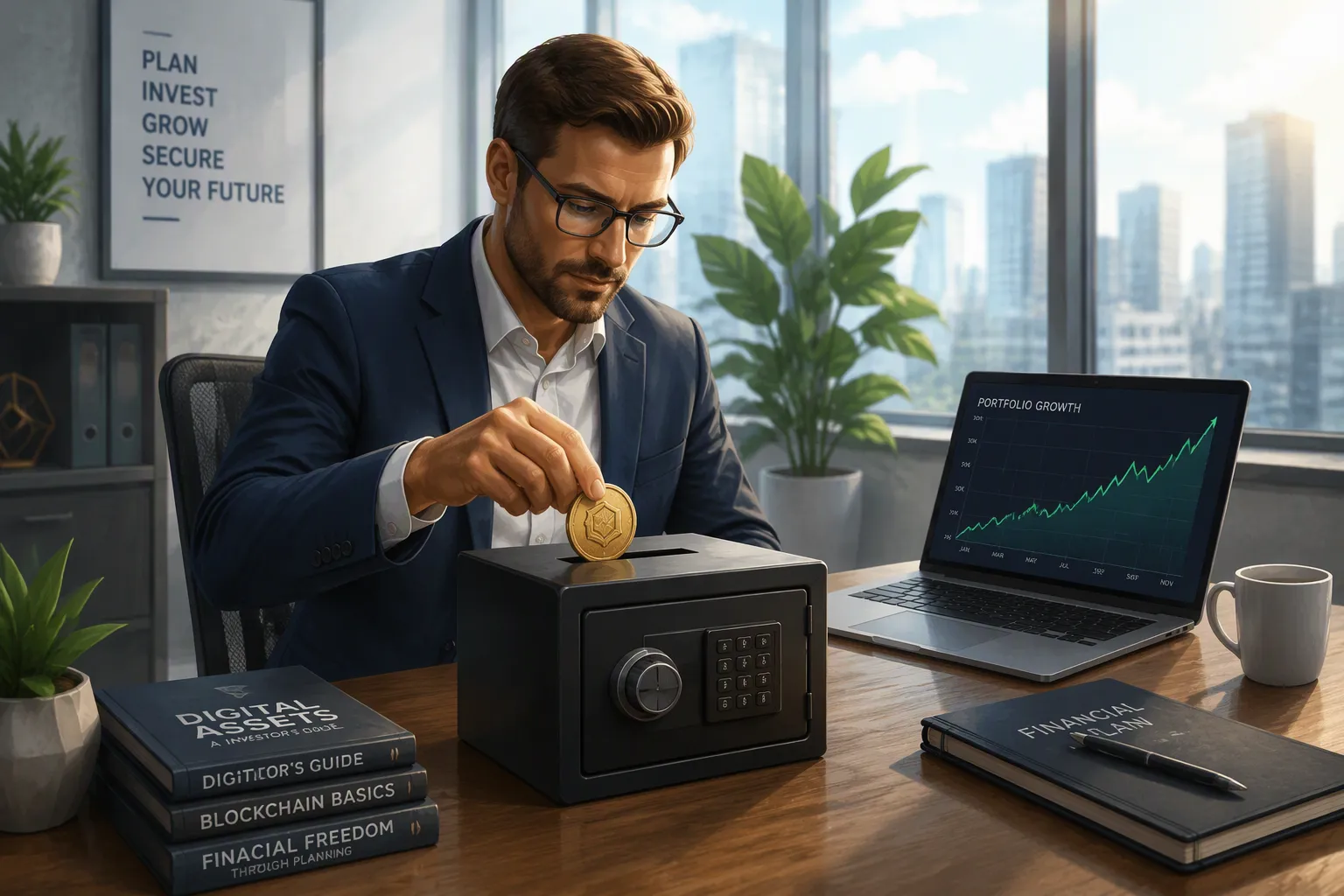
You can shield your savings from VND Depreciation by turning dong into USDT through peer-to-peer trading or an exchange, then holding it or earning yield on it. This guide covers three practical pillars: buying USDT safely, storing it, and applying strategies like dollar-cost averaging and stablecoin savings accounts. We'll also flag the risks and legal rules in Vietnam.
Key Takeaways
Convert your dong into USDT to protect your savings from VND depreciation.
Store your USDT in a secure wallet and enable two-factor authentication.
Use dollar-cost averaging and stablecoin savings to grow your dollar position.
Why VND Depreciation Happens
The Mechanics
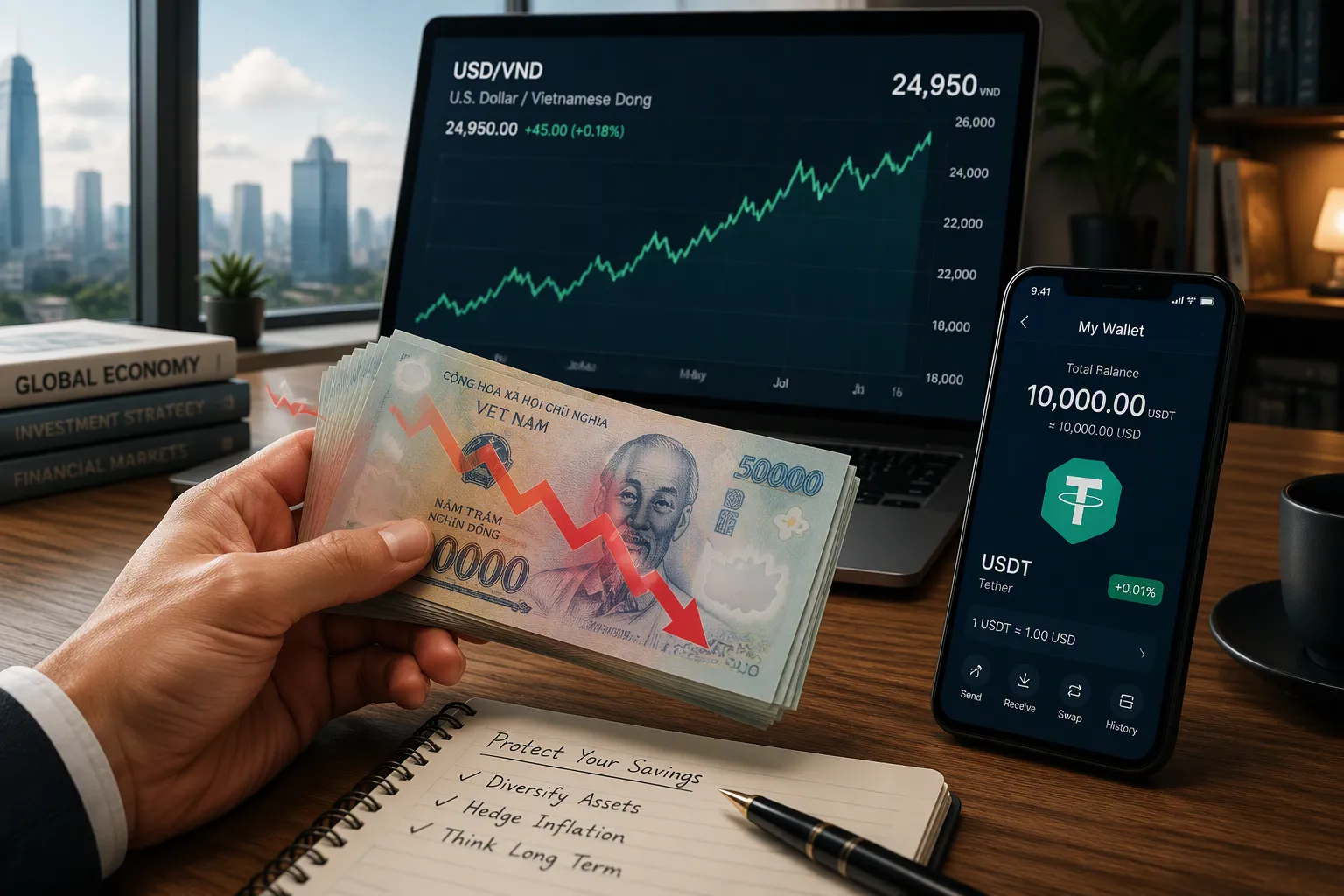
At its weakest point this year, the dong had fallen sharply year-to-date. That was the steepest decline among regional currencies. If you hold your savings in dong, that slide quietly eats into what your money can buy abroad.
Vietnam runs a managed exchange rate regime. The State Bank of Vietnam sets a daily reference rate and lets the dong weaken gradually. This is not an accident. It is policy with a purpose:
The dollar-dong pair rose about 3.5% in 2025, giving exporters a competitive edge.
A weaker dong makes Vietnamese goods cheaper abroad, which matters with a 20% US tariff in play.
Exports make up roughly 90% of Vietnam's GDP, and US-bound exports represent one-fifth of the total economy.
Experts see the logic clearly. BMI's Darren Tay says allowing the dong to depreciate gradually "will help Vietnam slowly regain its trade competitiveness in the US market." Pham Xuan Hong of the textile association adds that the weakening dong "has greatly boosted our exports." Unlike Indonesia, which actively intervenes to curb depreciation, Vietnam deliberately favors a softer currency.
The buffers look solid on paper. Foreign reserves sit at about US$86.3 billion, and the 2024 US trade surplus reached $123 billion. Still, bank deposit rates climbed, which tells you savers are already feeling the pressure.
June 2024 Rate Range | Rate Range a Year Earlier | |
|---|---|---|
Long-term deposits in Vietnam | 5.9% – 7.8% | 4.8% – 7.1% |
Hedging Against VND Depreciation
Here is the simple idea behind the hedge. USDT tracks the US dollar. When the dong weakens, the dollar value of your USDT holdings holds steady. So holding USDT offsets VND Depreciation almost one-for-one.
Think of it this way. You convert dong into a dollar-pegged token. Your purchasing power now moves with the dollar, not the dong. That is the whole trick. You are not betting on crypto prices. You are parking value in a different currency.
This hedge works best as a habit, not a one-time move. Spread your conversions over time. Keep the rest of your plan simple. The next sections show you how to buy, store, and grow that dollar position safely.
Buying And Storing USDT
Step-By-Step Buying
UUPAY makes the VND-to-USDT conversion simple, whether you prefer peer-to-peer trading or a direct exchange order. The platform holds a US MSB license, Swiss and Canadian licenses (Brazil pending), Hong Kong registration, and PCI DSS Level 1 certification, so your identity and payment data sit behind serious compliance. New users get a virtual card for 1U with 1U cashback, and every user pays zero card recharge fees. A physical card adds global acceptance and up to 50% cashback. You also get hotel and flight booking, eSIM, and chat features in the same app.
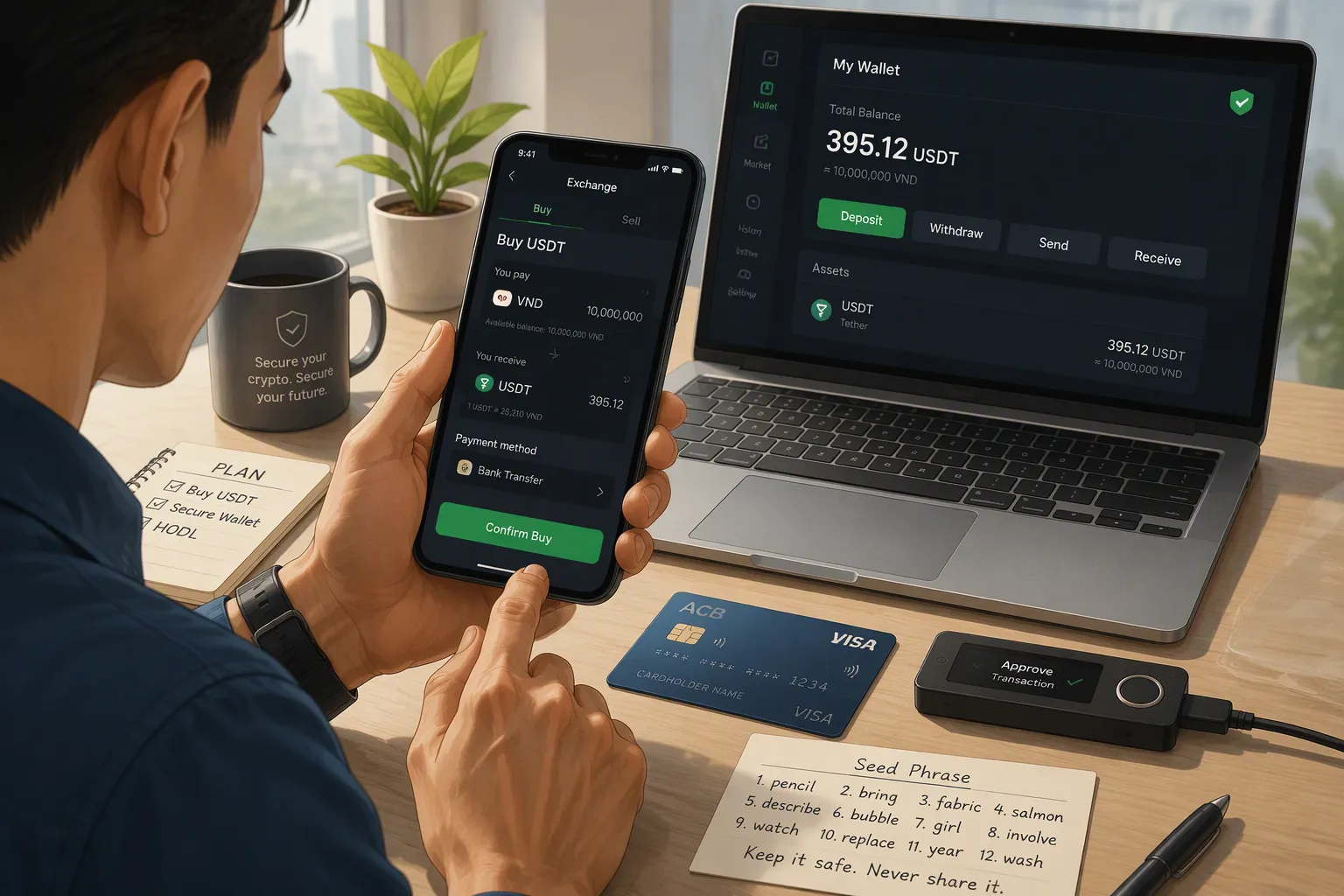
Here is the flow:
Verify your identity. Upload your documents and complete the check before you trade.
Fund your account. Deposit dong through your linked bank or payment method.
Place your order. Choose a P2P listing or an exchange order, then confirm the rate and amount.
Confirm receipt. Check that USDT lands in your wallet before you release payment or close the trade.
Invite friends through the referral program and your commission climbs as high as 50%.
Storing USDT Safely
You have two storage paths. An exchange wallet is convenient — your funds stay on the platform and you can trade fast. A personal wallet gives you full control, because you hold the keys. Pick based on how often you move funds, not on hype.
Whichever you choose, apply the same security habits:
Create a robust password for wallet access.
Activate two-factor authentication (2FA) for an extra security layer.
Remain vigilant against scams and phishing attempts.
Exercise caution when clicking links or downloading new software.
These rules apply to custodial and non-custodial wallets alike. Back up your seed phrase offline, never share it, and store it somewhere only you can reach. A lost seed phrase means lost funds, and no support desk can reverse that.
Strategies And Risks
DCA And Stablecoin Savings
Dollar-cost averaging smooths your entry price. Instead of converting a large sum on one day, you split it into smaller buys at regular intervals. Some weeks you pay more, some weeks less. Over time, your average cost evens out, and you stop worrying about timing the market. This habit pairs well with your hedge against VND Depreciation, because it turns a single decision into a steady routine.
Stablecoin savings accounts let you earn yield on the USDT you hold. You deposit funds, the platform pays interest, and your dollar position keeps working. Treat the yield as a bonus, not a guarantee. Platforms can change rates, freeze withdrawals, or fail outright. Spread your deposits across more than one provider, and never lock up money you might need soon.
Risks And Legal Rules
Vietnam keeps tight capital controls and restricts foreign currency transfers. Rules around crypto assets keep shifting, so check the current legal status before you convert or move funds abroad. Stay informed through official sources, and consult a local advisor when the amounts are large.
Stablecoins carry their own risks. USDT depends on the issuer's reserves, and any doubt about backing can move the price. Counterparty risk applies too: the exchange or P2P trader on the other side may not deliver. Keep trades small at first, verify each counterparty, and hold only what you can afford to lose.
Convert your dong through a trusted platform like UUPAY, store your USDT securely, and let dollar-cost averaging or stablecoin savings do the rest. Treat USDT as a purchasing-power tool, not a speculative bet. Check the legal rules, watch counterparty risk, start small, and stay informed.
FAQ
Does holding USDT fully protect my savings?
No hedge is perfect. USDT tracks the dollar, so it offsets dong weakness, but issuer and platform risks remain. Treat it as one tool, not a guarantee.
How much of my savings should I convert?
Start small and spread your buys over time. Convert only what you can afford to lose, and keep emergency funds in dong for daily needs.
Is buying USDT legal in Vietnam?
Rules keep shifting, so check the current legal status through official sources before you trade. For large amounts, talk to a local advisor first.
See Also
Top Methods For Using USDT Cards On Google Play In Vietnam
Practical Steps For USDT Visa Cards Paying Overseas Utility Bills In Vietnam
Important Risks To Watch When Using USDT Cards In Thailand
Advanced Guide To USDT Visa Cards Converting Crypto For Unbanked Daily Spending
Advanced Guide To USDT Visa Cards Budgeting Daily Expenses For Digital Nomads
