USDT crypto card everyday spending
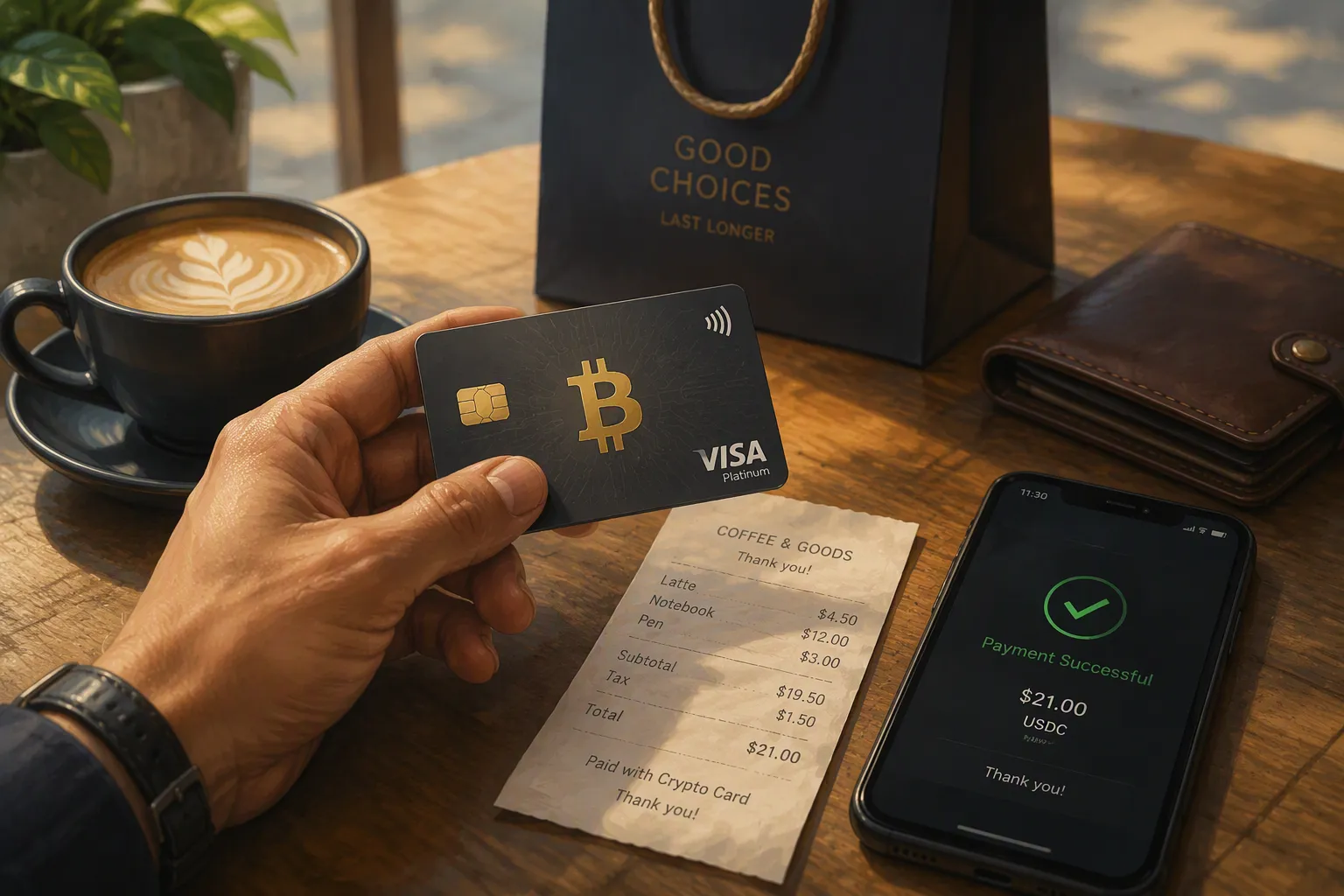
A USDT crypto card is a debit or prepaid card funded by Tether that lets you spend stablecoin dollars anywhere Visa or Mastercard is accepted. You skip selling crypto or waiting for bank transfers to buy groceries, gas, or coffee. This guide explains why USDT fits daily spending, how to get and use one with UUPAY, and what fees and taxes apply.
Key Takeaways
A USDT crypto card lets you spend stablecoin dollars anywhere Visa or Mastercard is accepted, with instant conversion to local currency.
UUPAY offers no top-up fees, 0% foreign transaction fees, and up to 50% cashback, making everyday spending cheaper.
In the US, spending USDT may trigger capital gains taxes, so you should track each transaction for tax reporting.
What Is a USDT Crypto Card
A USDT crypto card is a debit or prepaid card that converts your Tether balance into spending power at Visa or Mastercard merchants, both online and in stores. You load the card with USDT, and the provider converts it to local currency at the moment of purchase. The merchant sees a normal card transaction. You see your stablecoin balance drop by the purchase amount.
How It Works in Daily Life
The conversion happens instantly at the point of sale. Visa states that its crypto card programs let consumers spend stablecoins at any merchant that accepts Visa, with instant conversion to local fiat and no disruption for merchants. Mastercard reports that consumers can use crypto holdings across more than 150 million acceptance locations worldwide. In practice, you tap your card at a coffee shop, and the payment settles like any other debit transaction.
Several providers offer these cards. Oobit, MetaMask Card, Nexo Mastercard, Bybit, Gate Card, and Ledger all run variants. Some issue virtual cards with no-KYC options for USDT and USDC, which means you can start spending without a full identity review. Other cards let you spend against crypto collateral without selling your holdings. You keep your Bitcoin or Ethereum position open while your card draws on it for daily purchases.
Why USDT Beats Other Crypto
USDT holds a 1:1 peg to the US dollar. That peg makes it ideal for everyday spending. Bitcoin and Ethereum swing in price throughout the day. A $5 coffee could cost you more or less in crypto terms minutes later. With USDT, the math stays simple. Your card balance reflects dollars, and your purchases reflect dollars.
This stability matters for budgeting. You can plan a grocery run or a gas fill-up without watching charts. The card converts USDT at checkout, so you never guess what your holdings are worth. Volatile assets force you to time your spending. Stablecoins remove that guesswork entirely.
A USDT crypto card also bridges two worlds. Your funds sit on-chain, yet you spend them through traditional payment rails. You get the speed of crypto settlement with the reach of a global card network. That combination turns a digital dollar balance into something you can actually use every day.
How to Get and Use a USDT Crypto Card with UUPAY
Signing Up and Funding Your Card
You start by creating a UUPAY account through the app or website. The process takes a few minutes. Enter your email, set a password, and confirm your details. Next, complete identity verification. UUPAY holds a US MSB license, a Hong Kong registration, and a Swiss license, with a Brazil license pending. These credentials mean the platform follows strict compliance rules. You upload a government ID and a selfie, then wait for approval.
Once verified, you fund your card with USDT. UUPAY charges no top-up fees for all users, so every deposit arrives in full. New users get a virtual card for 1U, and UUPAY returns 1U as cashback. That offer lets you test the card with almost no risk. The platform also carries PCIDSS Level 1 certification, which protects your payment data at the highest industry standard. Funds arrive instantly, so you can spend right after topping up.
Spending Online, In Stores, and at ATMs
Your USDT crypto card works anywhere Visa or Mastercard is accepted. For online checkout, enter your card number, expiry date, and security code just like any debit card. The system converts your USDT to local currency at the moment of purchase. For in-store payments, add the card to your phone wallet and tap the terminal. Contactless payments settle in seconds.
ATM withdrawals work too. Insert your physical card, enter your PIN, and withdraw local cash. UUPAY recently launched its physical card with global spending, so you can use it abroad without carrying multiple currencies. The card offers up to 50% cashback on eligible purchases, which lowers your effective cost per transaction.
Travel bookings and subscriptions show the card's daily value. You can pay for flights, hotels, and ride shares directly from your USDT balance. Recurring charges like streaming services and gym memberships also work, because the card processes automatic payments without interruption. UUPAY provides 24/7 global support if a transaction fails or a merchant blocks your card.
You can also invite friends through the referral commission program. Each successful invitation raises your commission level, up to 50%. That structure rewards you for sharing a tool you already use.
Fees, Travel Perks, and Tax Basics
Common Fees and How to Avoid Them
Card providers charge different fees, and those fees eat into your balance. You may pay an issuance fee, a top-up fee, a conversion fee, an ATM fee, and a foreign transaction fee. Bitget Wallet Card charges 10 USDT for issuance. Bybit Card applies a 0.5% cross-border fee in the EEA and Switzerland. MEXC Card charges a flat 1% transaction fee with no FX markup.
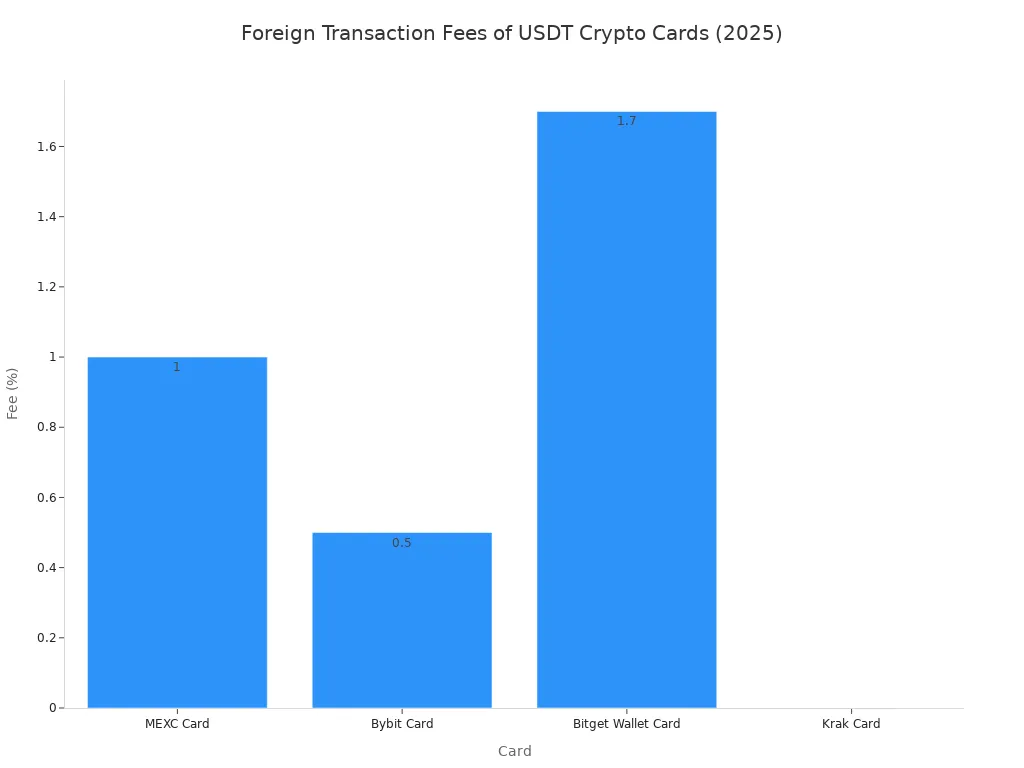
You can avoid many of these costs. UUPAY charges no top-up fees for all users, so every USDT deposit arrives in full. UUPAY also applies 0% foreign transaction fees and offers free withdrawals at domestic and overseas ATMs. Compare that to Krak Card, which charges 0% FX fees globally but pays only up to 1% cashback on its standard tier. Always check a provider's fee schedule before you commit.
Travel Benefits and Tax Reporting
Travel perks vary by provider. Gemini Credit Card charges 0% foreign transaction fees and pays 3–4% cashback in Bitcoin. MetaMask Card offers 3% mUSD back on purchases. UUPAY provides up to 50% cashback on eligible purchases and 24/7 global support. These perks lower your effective cost per transaction when you travel abroad.
Tax rules matter too. In the US, spending USDT may trigger capital gains reporting. The IRS treats crypto as property, so every purchase creates a taxable event. You should track each transaction, including the date, the amount spent, and the fair market value at the time of purchase. Good records make filing simpler. Compare providers carefully, review UUPAY's fee schedule, and start with a small transaction to test the card.
A USDT crypto card turns your stablecoin balance into spendable dollars for everyday life, and UUPAY gives you a simple way to start. You now understand what the card is, how to use it, and which fees and taxes apply. Compare providers, review the fee schedule, and test a small transaction first.
FAQ
How do you start spending USDT with a card?
Create a UUPAY account, verify your identity, and top up with USDT. New users pay 1U for a virtual card and get 1U back as cashback. You can spend immediately after funding.
Does a USDT crypto card charge fees?
It depends on the provider. UUPAY charges no top-up fees for all users and applies 0% foreign transaction fees. Other cards may charge issuance, conversion, or ATM fees, so compare schedules first.
Do you owe taxes when you spend USDT?
In the US, yes. The IRS treats crypto as property, so each purchase counts as a taxable event. Track the date, amount, and fair market value for every transaction.
See Also
Top USDT Debit Card Choices For Effortless Crypto Transactions
Comprehensive USDT Visa Card Guide For Unbanked Daily Crypto Use
Daily Payment Made Easy With A USDT Debit Card
Managing Daily Expenses For Cross-Border Sellers Using USDT Visa Cards
Expert USDT Visa Card Budgeting Tips For Digital Nomads Daily
