What a virtual card is and how it secures online transactions
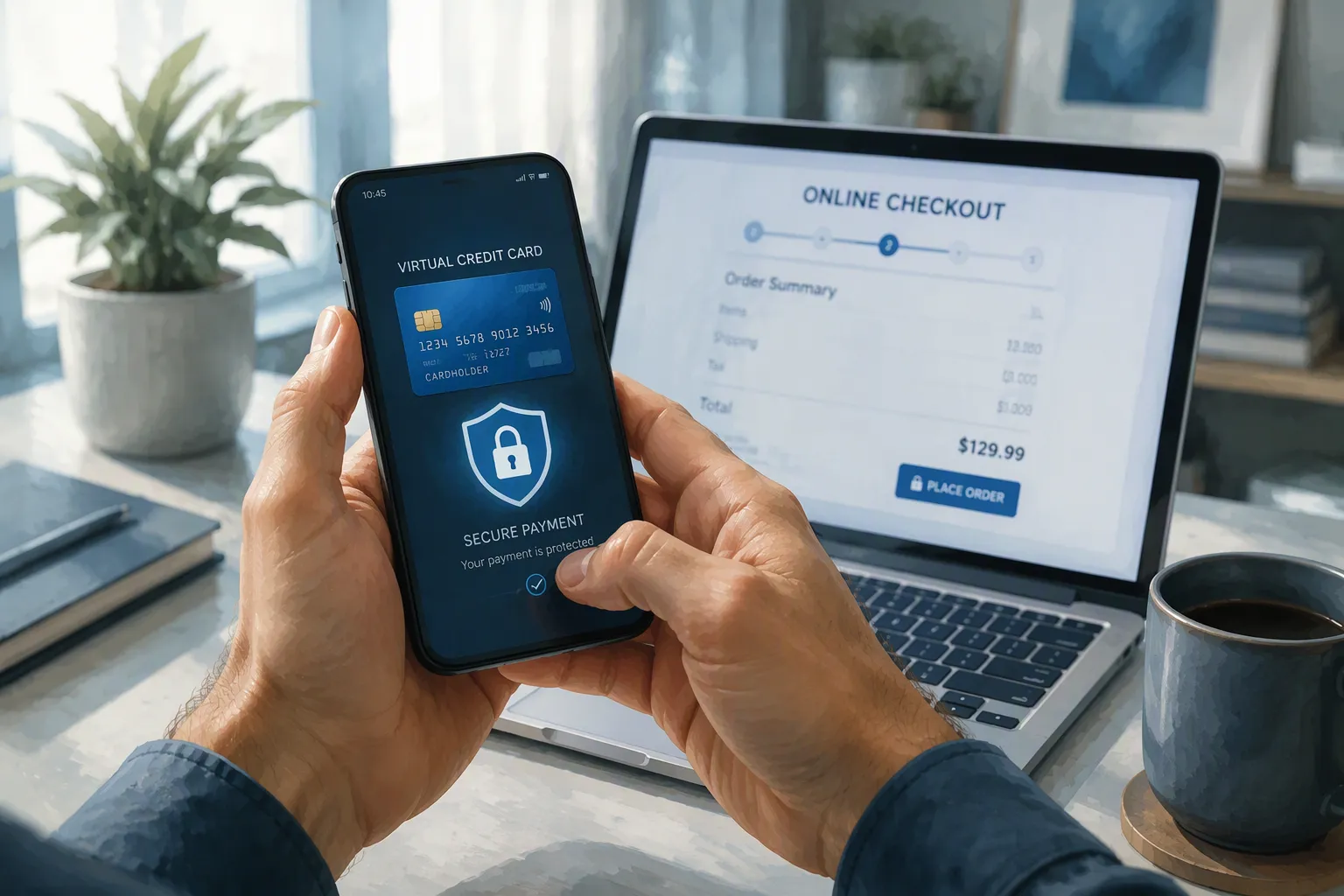
A virtual card is a digital card number, complete with its own CVV code and expiration date, that you can generate instantly for online purchases. It may come as a virtual credit card or a virtual debit card. Its main job? Securing online transactions by masking your real card details, so merchants never see your actual account information. Is it a safe, practical alternative to a traditional card? Let's look at how the technology works, what security features it offers, and how to use it well.
Key Takeaways
Virtual cards keep your real card details private by using unique numbers for online purchases.
You can set spending limits and block cards instantly to stop fraud before it happens.
Virtual cards are easy to use and offer strong security for online shopping and subscriptions.
How a virtual card works
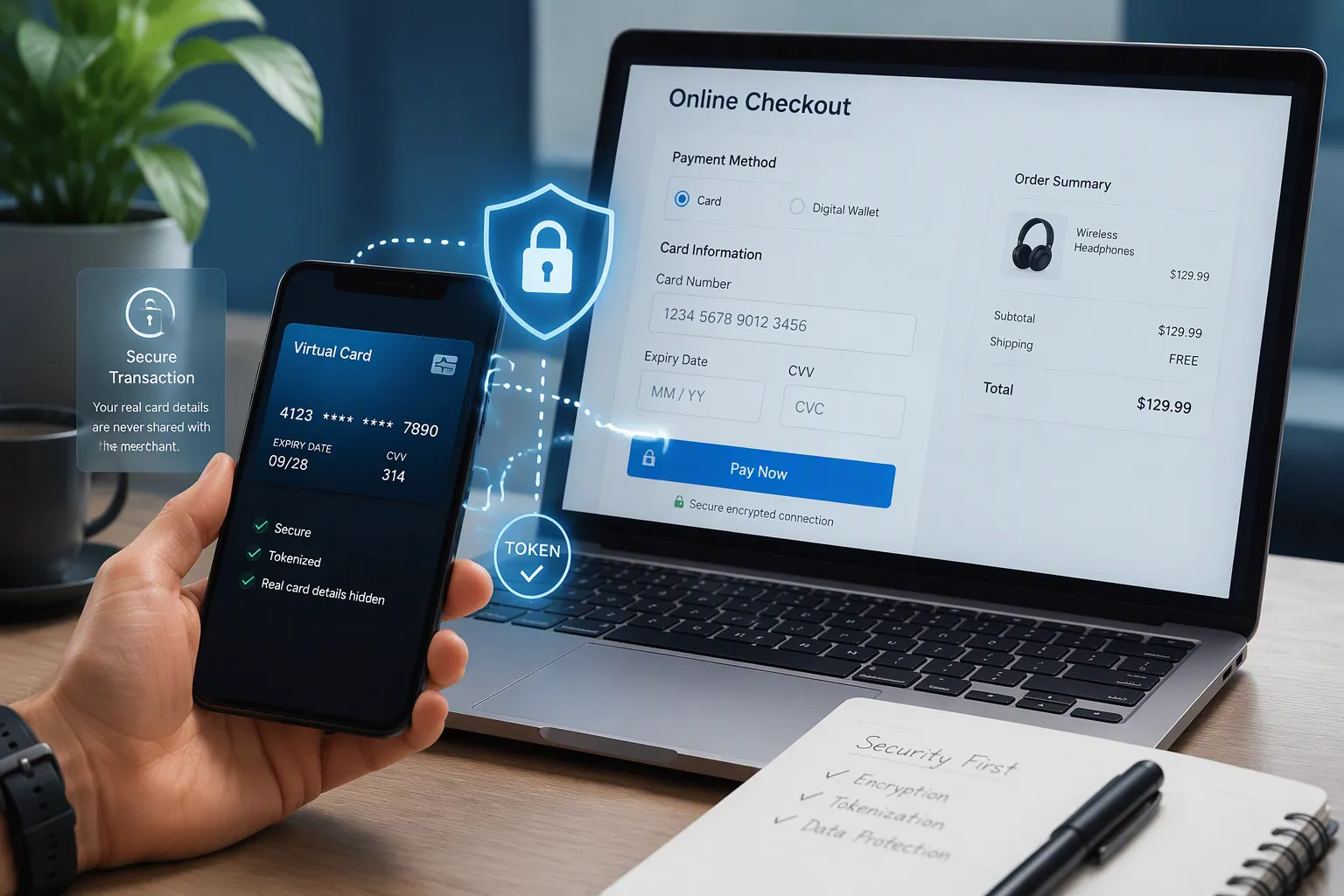
Generating a unique card number
A virtual card is a set of payment credentials you create on demand. You get a card number, an expiration date, and a security code, usually called a CVV or CVC. These details look just like the ones printed on a plastic card. The key difference is that they live only in digital form, and they stay separate from your real account. Your bank or provider links the virtual number to your actual account behind the scenes. You never hand your real card details to a merchant.
You will meet two versions. A virtual credit card draws on a credit line, so it works like a standard credit card for online checkout. A virtual debit card pulls funds straight from your balance, much like a debit card. Both give you the same core benefit: a number you can control, limit, or throw away.
The online transaction process
Paying with a virtual card feels familiar. You go to a checkout page, type in the virtual number, expiration date, and CVV, and confirm the order. The merchant sends that number to the payment network for approval. Your provider checks the request against any rules you set, such as a spending cap or a single-use limit. If everything matches, the payment goes through.
Here is the part that matters for your privacy. The merchant only ever sees the virtual number. Your real card details stay hidden on your provider's side. Many providers add another layer called tokenization. This process swaps your traditional card account number for a unique digital token during online and mobile purchases. The swap happens automatically in the background, so you never notice it. Each token can be tied to specific conditions, like one device, one merchant, or one type of transaction. Even if someone intercepts the token, they cannot freely reuse it elsewhere. A token may work across multiple purchases while staying bound by those restrictions, and it sits in a secure token vault linked back to your real account. That is how a virtual card keeps your actual information out of reach.
How a virtual card secures online payments
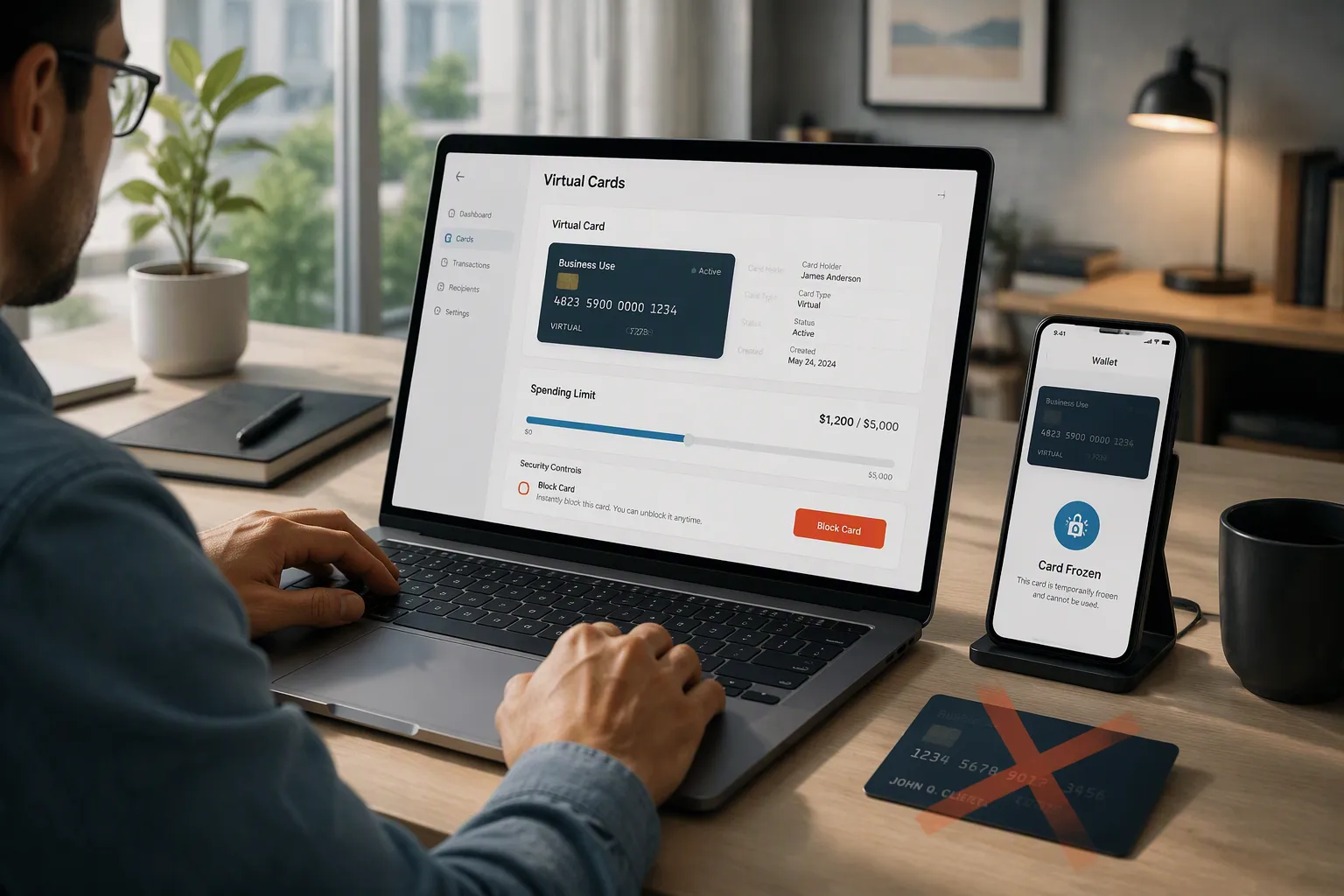
Security features that prevent fraud
A virtual card gives you several controls that stop fraud before it costs you money. Here is how the main ones work:
Security Feature | How It Works |
|---|---|
Spending limits | You set a cap per transaction or over a set period. This controls your budget and limits exposure if the number is compromised. |
Instant blocking or expiration | You can disable a number right after use or set it to expire. A leaked number then cannot be reused. |
Unique virtual numbers | A fresh number is generated for each merchant or transaction, so your real account details stay hidden. |
Zero liability fraud protection | Major issuers extend the same fraud protection as physical cards, with a comparable dispute process for unauthorized charges. |
How does this stack up against a physical card? A physical card is generally safe, but it is exposed to physical theft. A virtual card exists only digitally, so you cannot lose it in a wallet or have it stolen from a pocket. If someone compromises it, you cancel or replace it in a digital wallet within moments. No phone call to the bank, no waiting for a replacement in the mail. That speed matters most for online shopping, where data breaches are more likely.
Virtual card uses with UUPAY
Individuals get plenty of mileage here. Pay international merchants that accept Visa but not crypto directly, and skip currency-conversion or cross-border banking fees. For subscriptions, a dedicated card per service isolates each expense, tracks renewals, and lets you freeze or replace one card without touching the others. Load a fixed amount before use to enforce a spending limit on predictable costs.
Businesses gain granular control. Set limits per card, per transaction, per time period, or by merchant category. Lock, unlock, or pause a card in a few clicks when a subscription ends or an employee leaves. Common setups include travel cards with trip budgets, pre-approved procurement cards, one card per SaaS subscription, and controlled payments to freelancers.
Getting started with UUPAY is simple. New users can open a virtual card for 1U and get 1U cashback, and all users enjoy free top-up fees. UUPAY also launched physical cards with global usage, up to 50% cashback, and secure instant transactions. Beyond cards, you can book hotels and flights, use eSIM, and chat with support. UUPAY holds a US MSB license, Swiss and Canadian licenses, a Brazil application in progress, Hong Kong registration meeting Asian regulatory requirements, and PCI DSS Level 1 certification, with 24/7 global support. The referral program rewards more invites with higher tiers, up to 50% commission.
A virtual card keeps your real details private by giving you unique, controllable numbers for online payments. Single-use numbers, spending limits, and instant blocking all work together to stop fraud before it reaches your account.
Ready to shop with confidence? Open your virtual card through UUPAY today and enjoy a safer online checkout.
FAQ
Is a virtual card safer than using my regular card online?
Yes, for online use. You expose only a generated number, never your real account details. If that number leaks, you block it instantly and keep shopping.
Should I use a single-use number or a reusable one?
Pick single-use numbers for one-off purchases and unfamiliar merchants. Choose a reusable number with a spending limit for subscriptions you trust and renew often.
How do I get started with UUPAY?
Open a Virtual card in the app for 1U and get 1U back. Top-ups carry no fees, and support runs 24/7 if you need help.
See Also
Essential Facts You Should Know About Virtual Crypto Visa Cards
Simple Methods to Get Your Own Crypto Virtual Debit Card
Comparing Top Virtual Crypto Card Providers by Features and Benefits
Beginner Guide to Virtual Crypto Cards for Overseas Rent for Digital Nomads
How Southeast Asia Users Benefit from Virtual Crypto Cards for Marketplace Fees
