Crypto card for tax-efficient crypto spending
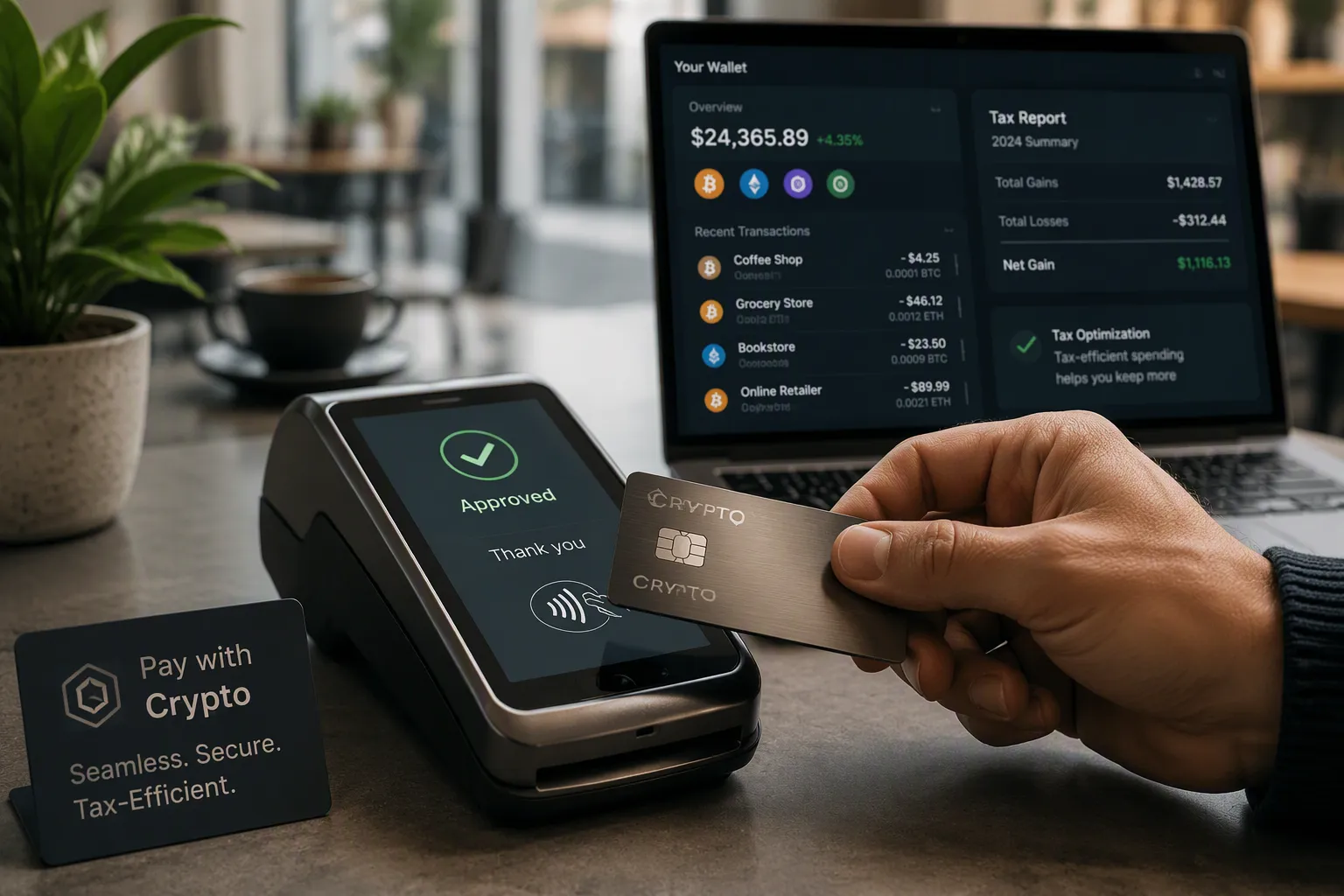
A crypto debit card triggers capital gains tax on each transaction. A crypto credit card generally does not. Understanding the tax treatment of your Crypto card is crucial. Both can be used tax-efficiently. This post explains the tax rules, shows how UUPAY supports a tax-smart strategy, and gives practical tracking and reporting tips.
Key Takeaways
Crypto debit cards trigger capital gains tax on every purchase. Credit cards and stablecoins avoid this tax at the point of sale.
Spending crypto that lost value can lower your tax bill through capital loss harvesting.
Good record-keeping and tax software help you track transactions and report rewards correctly.
How Crypto Card Transactions Are Taxed

Debit Cards and Capital Gains
A crypto debit card sells your crypto the moment you pay. The card provider converts your coins to fiat, then sends that fiat to the merchant. The IRS treats this conversion as a disposal of property. If your crypto gained value since you bought it, you owe capital gains tax on the profit.
IRS Notice 2014-21 makes this rule clear:
"For federal tax purposes, virtual currency is treated as property. General tax principles applicable to property transactions apply to transactions using virtual currency."
Card providers confirm the same mechanics. When you swipe a crypto debit card, your cryptocurrency converts to fiat currency, and that conversion counts as a taxable disposal. Starting with the 2025 tax year, custodial exchanges and card providers must issue Form 1099-DA reporting these digital asset sales, including every swipe.
Credit Cards and Stablecoins
A crypto credit card works differently. You borrow fiat from the issuer and repay the balance later. No crypto leaves your wallet at the point of sale, so no capital gains event occurs. You may owe tax later if you sell crypto to repay the card, but the purchase itself stays tax-free.
Stablecoin-linked cards offer another path. Stablecoins hold a steady value by design, so each transaction produces minimal gain or loss. A card funded with stablecoins rarely triggers a meaningful tax bill. This makes stablecoins a practical spending balance for everyday purchases.
Consider a $500 purchase. With a debit card funded by Bitcoin you bought at $20,000 and that now trades at $50,000, you realize a gain on the portion you spend, and that gain is taxable. With a credit card, you borrow $500 in fiat, repay it later, and report nothing at the point of sale. The same $500 leaves your account, yet only one route creates a taxable event.
The takeaway is simple. A crypto card that spends appreciated coins creates tax work with every swipe. A card that borrows fiat, or spends stablecoins, keeps your tax picture clean.
Tax Advantages, Rewards, and Reporting

Capital Losses and Crypto Card Rewards
Spending crypto that has dropped in price can work in your favor. You sell the asset at a loss, and the IRS lets you claim that capital loss. Those losses offset your gains for the year, which can lower your tax bill. Certified public accountants frequently recommend this strategy, called tax-loss harvesting, alongside other moves. Common CPA recommendations in 2025 include:
Tax-loss harvesting to offset gains
Holding crypto for over one year to qualify for long-term capital gains rates
Organizing records to identify deductible trading fees
Using tax software to track basis and sales
Consulting about timing of gain realization
Donating appreciated crypto directly to charity for fair market value deductions
Rewards need attention too. The IRS generally treats card rewards as taxable income when you earn them. Report those rewards at their fair market value on the day you receive them.
Form 1099-DA and Transaction Tracking
Starting with the 2025 tax year, custodial exchanges and card providers must issue Form 1099-DA. This form reports every digital asset sale, including each debit card swipe. You must reconcile those forms against your own records. Good record-keeping means tracking the date, the amount, the crypto used, your cost basis, and the gain or loss on every transaction.
Canadian crypto card users face a different reporting burden. The Canada Revenue Agency requires you to report dispositions on Schedule 3 of your T1 return, and you must file Form T1135 if your holdings exceed C$100,000. Many Canadian providers now focus on reducing the 2.5% USD foreign exchange spread that most credit cards charge.
Provider / Feature | FX Spread Reduction | CRA Record-Keeping Support |
|---|---|---|
ether.fi Cash | 0% FX fee on all transactions; no markup when spending in CAD | Stablecoin (USDC) funding keeps capital gains near zero per transaction |
RedotPay | Stablecoin-funded card (USDT/USDC) | Stablecoin loading keeps CRA capital gains reporting minimal |
Shakepay, Kast, Ready, Tria | Zero-fee cards with no FX markup on domestic CAD spending | — |
If you want to minimize CRA tax complexity: Start with stablecoin-funded cards — RedotPay (free virtual, load USDT) or the USDC path on ether.fi Cash. Stablecoin spending keeps your capital gains near zero on each transaction, making Schedule 3 reporting manageable.
UUPAY simplifies this entire process. Clean statements and transaction history make UUPAY a practical Crypto card for tax-efficient spending.
Debit card spending triggers a taxable disposal. Credit card spending usually does not. Stablecoins and loss harvesting can reduce your tax bite.
A Crypto card with good records simplifies this. Treat your UUPAY statements as tax records. Consult a tax professional for your situation. Tax-efficient crypto spending stays achievable with the right card and simple tracking.
FAQ
Does spending with a crypto debit card trigger taxes?
Yes. Each swipe sells your crypto, which counts as a taxable disposal. You owe capital gains tax on any profit since you bought those coins.
How do I avoid capital gains tax on crypto card purchases?
Use a credit card that borrows fiat, or fund your card with stablecoins. Both routes keep your tax bill near zero at the point of sale.
Are crypto card cashback rewards taxable?
Yes. The IRS treats rewards as income when you earn them. Report the fair market value on the day you receive them.
See Also
Helpful Crypto Card Tips For Simple Daily Purchases
Evaluating Top Crypto Cards For Regular Daily Use
Taiwan Crypto Card Simplified For Routine Daily Expenses
Best Crypto Cards Offering Lowest Fees In 2026
Beginner Guide To Crypto Debit Cards For Travelers Daily Spending
