How Freelancers Can Earn in USD and Spend in VND Using a Crypto Card
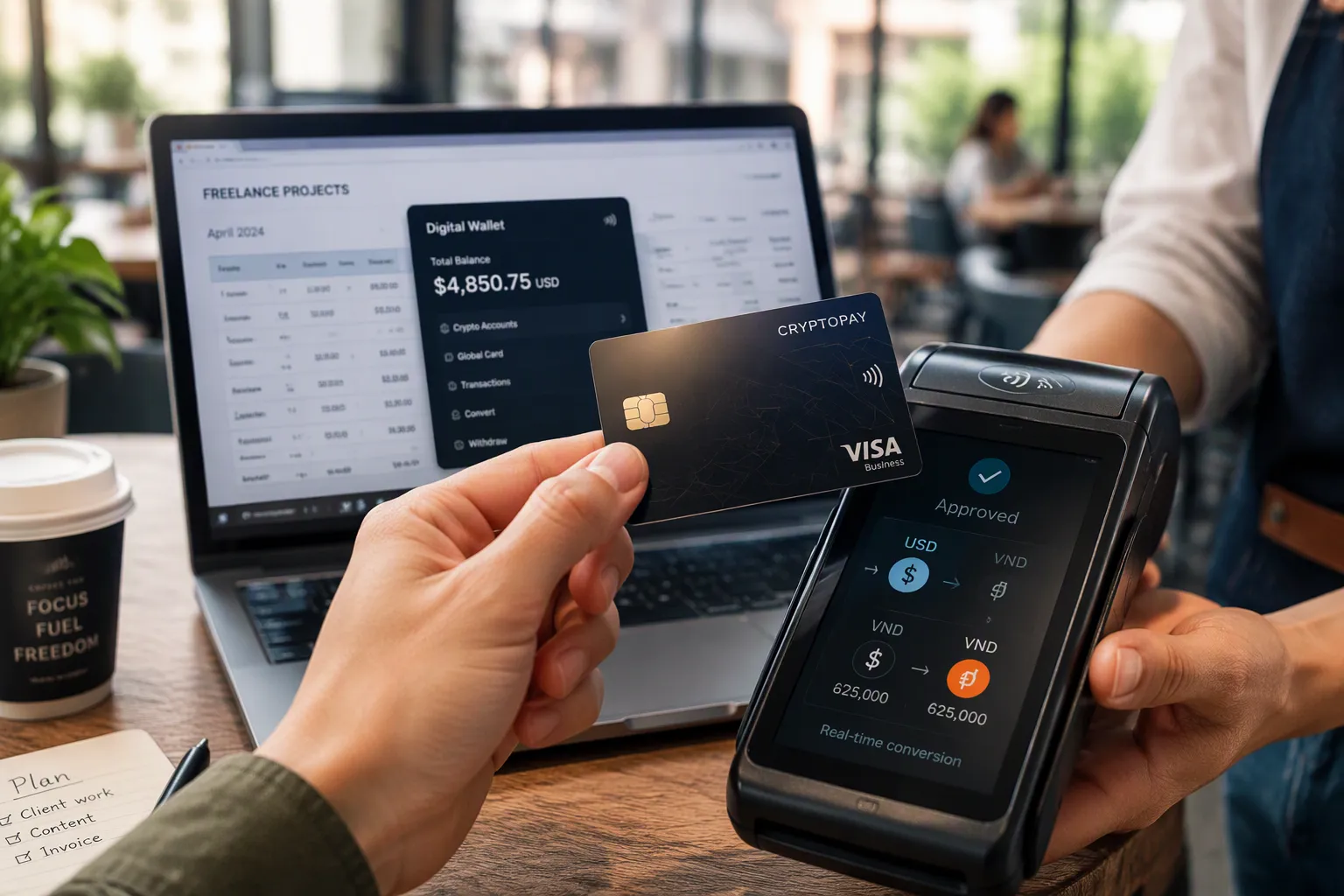
You earn in USD from international clients, convert it to stablecoins like USDT or USDC, load a crypto card, and spend VND anywhere cards or QR pay work. Clients pay in USD, daily life in Vietnam runs on VND, and traditional conversion routes can be slow or costly. This guide walks you through the four-stage money flow step by step, with no background theory. You will see how to earn, convert, choose a card such as UUPAY, and spend, all without a traditional bank account.
Key Takeaways
Earn USD from clients and convert it to stablecoins like USDT or USDC.
Load a crypto card like UUPAY to spend VND anywhere cards or QR pay work.
Compare fees, test with small amounts, and keep records for taxes.
How to Earn in USD as a Freelancer
Platforms and Client Payment Methods
Most freelancers earn in USD through a handful of well-worn routes. International payment platforms and wallets suit small or irregular payments, because clients pay from their own account or card. SWIFT bank transfers fit larger amounts, and clients can send USD, EUR, GBP, JPY, AUD, or CAD. Collection platforms with multi-currency virtual accounts give you accounts in your own name, so clients pay through a domestic rail in their own country.
Channel Type | Best For | Payment Rails | Currencies |
|---|---|---|---|
International payment platforms | Small or irregular payments | Client account or card payments | Multi-currency |
SWIFT bank transfers | Larger amounts | SWIFT | USD, EUR, GBP, JPY, AUD, CAD |
Collection platforms with virtual accounts | Clients who prefer local rails | ACH, Fedwire, SWIFT | USD, EUR, GBP, JPY, AUD, CAD and more |
Collection networks reach 180+ countries. Domestic-rail funds typically arrive T+0 or T+1, while SWIFT and Fedwire take T+0 to T+2.
Receiving USD Without a Bank Account
You do not need a traditional bank account to earn in USD. Many remote contractors now take payment in crypto or stablecoins, and a crypto card lets you spend those earnings like regular money. Your client sends USDT or USDC to your wallet, and the card handles the rest at checkout.
Each route fits a different situation. Stablecoin payouts work well for clients already comfortable with crypto. Virtual accounts suit clients who want familiar local rails. Pick the route that matches how your client prefers to pay, then keep it consistent month to month.
Converting USD to Crypto
Exchange and P2P Routes
You have three practical ways to hold stablecoins such as USDC before you spend them. A stablecoin card keeps funds ready for checkout. An exchange off-ramp suits people who want to move value back to a bank or e-wallet. A local payout over systems like Pix, SPEI, or ACH fits freelancers who still keep a local account and prefer familiar rails.
Route | Best Fit |
|---|---|
Stablecoin card | Everyday spending and QR pay |
Exchange off-ramp | Moving value back to a bank or e-wallet |
Local payout (Pix, SPEI, ACH) | Freelancers who keep a local account |
Holding USDC also lets your idle balance earn interest while it waits to be spent. That turns a waiting balance into a small working asset.
Keep the steps practical. Compare fees at each stage before you commit. Convert in batches instead of moving your whole balance at once. Test the flow with a small amount first, then scale up once you trust it.
Wallet Setup and Stablecoin Choice
Set up a wallet that supports USDT and USDC on the networks your clients use. Confirm the network before every transfer, because a mismatch can strand funds. Choose USDC if you want a stablecoin that can earn interest while idle; choose USDT if your clients or the card settle in it more often.
UUPAY makes the card route simple for Vietnam-based freelancers. New users open a virtual card for 1U and get 1U back, and all users pay zero top-up fees. The physical card is now live, with up to 50% rebates and instant settlement. Compliance is solid: US MSB license, PCI DSS Level 1, Swiss and Canadian licenses, Hong Kong registration, and a Brazil application in progress.
Choosing a Crypto Card
Features and Fees to Compare
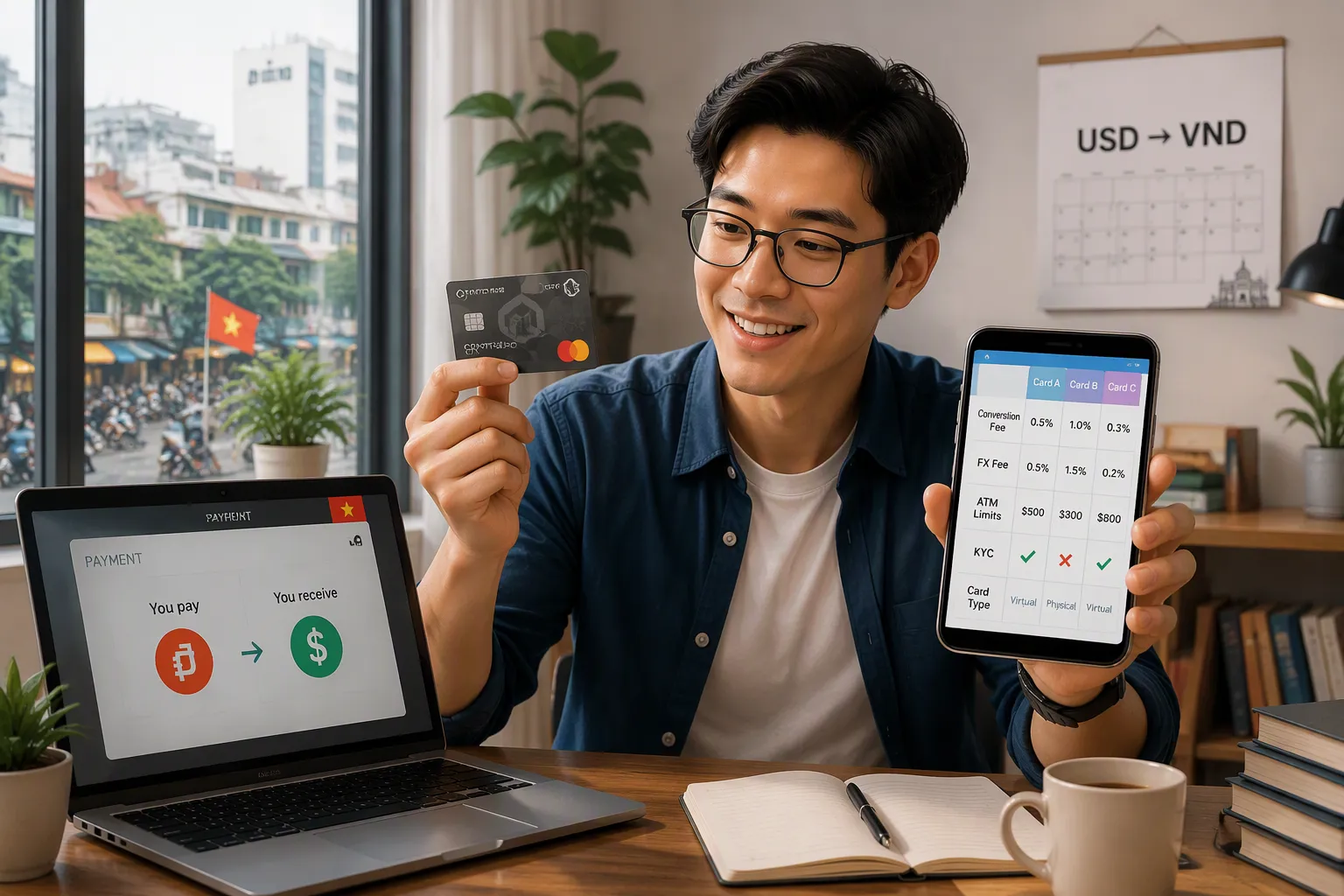
Compare five things before you commit to any card. Conversion fees tell you what the card charges when it turns your stablecoins into fiat at checkout. FX fees apply when a purchase settles in a currency other than USD. ATM limits cap how much cash you can pull out daily or monthly. KYC and compliance requirements show how much verification the issuer demands. Virtual versus physical options decide whether you can pay online only or also tap a terminal in a shop.
Feature | What to Check |
|---|---|
Conversion fee | Cost per transaction when stablecoins become fiat |
FX fee | Surcharge on non-USD purchases |
ATM limits | Daily and monthly withdrawal caps |
KYC and compliance | Documents required, licensing |
Card type | Virtual only, or virtual plus physical |
Cost differences add up over a year. A crypto card can save freelancers an estimated $300 to $1000 annually compared with peer-to-peer exchanges or alternatives such as RedotPay. Each option fits a different habit: P2P suits large one-off swaps, RedotPay suits users already inside its ecosystem, and a dedicated crypto card suits steady everyday spending.
Where UUPAY Fits
UUPAY targets freelancers in Vietnam who earn in USD and spend locally. You can instantly issue a virtual USD card and spend globally without high foreign exchange fees. The crypto Visa card lets you spend USDT anywhere without a bank account.
New users issue a virtual card for 1U and receive 1U back. All users pay zero top-up fees. The physical card has launched with global spending, up to 50% cashback, and secure instant settlement. Extra services include hotel and flight booking, eSIM, and chat.
Compliance is broad: a US MSB license, a Swiss license through a subsidiary, a Canadian license, Hong Kong registration for Asian regulatory compliance, and a Brazil application in progress. The platform holds PCI DSS Level 1 certification and offers 24/7 global support. A referral program pays commission that rises with more invites, up to 50%.
Weigh these against the table above. UUPAY fits freelancers who want a virtual card fast, no top-up fees, and local QR spending. Other cards may fit if you need different ATM caps or already hold balances elsewhere.
Spending VND with the Crypto Card
Card Payments and QR Pay
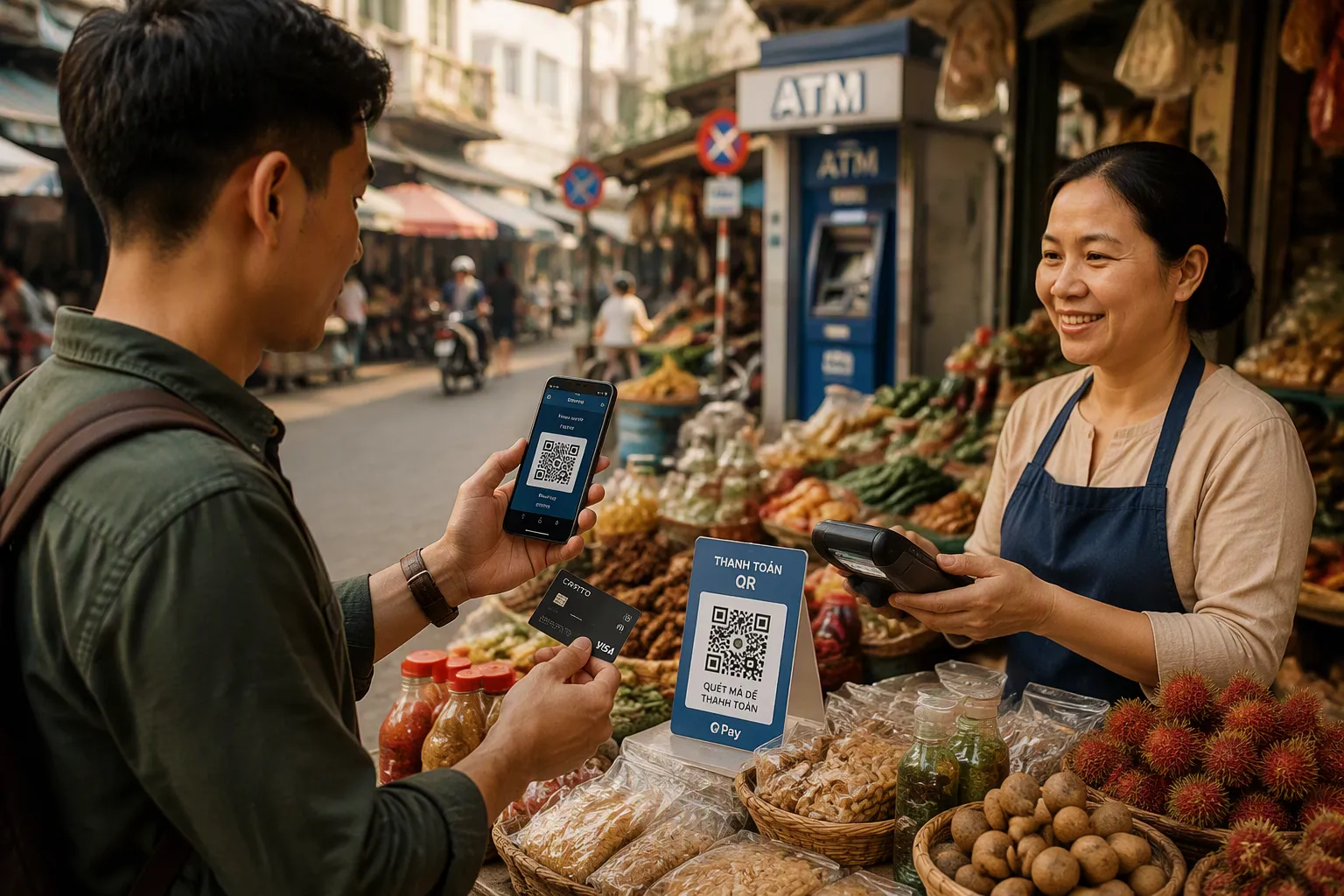
Your card works at any merchant that accepts Visa, both in Vietnam and abroad. You tap or insert the card at the terminal, and the card converts your stablecoin balance to fiat at the point of sale. Online purchases work the same way. You enter the card number at checkout, and the issuer settles the transaction in the merchant's currency. You never manually swap USDT before you buy. The conversion happens in the background, so the price you see at checkout is the price you pay.
Vietnam adds a local option that many freelancers use daily: QR pay. You scan the shop's QR code, the local shop receives VND, and the card deducts USDT from your balance. This flow suits markets, cafes, and small retailers that prefer QR over terminals. The shop gets familiar local currency, and you spend the stablecoins you already hold. That is the practical payoff of choosing to earn in USD while living on VND.
Test QR pay with a small purchase first. Confirm the deducted amount matches the quoted price before you rely on it for larger bills.
ATM withdrawals and Budgeting
ATM withdrawals give you physical cash when a shop or landlord does not take cards. Check your card's daily and monthly limits before you travel or pay rent. Withdraw in amounts you will actually use, because each withdrawal may carry its own fee.
A few habits keep the flow clean. Convert in batches that match your monthly spending, not your entire balance. Track each transaction in a simple sheet or app, so you can see where the money goes. Keep records of every conversion and purchase for tax season. Hold idle funds in USDC between conversions, so the balance can earn interest while it waits.
Set a monthly budget in VND, then work backward to the USDT you need to load. This approach keeps your spending predictable and your records tidy. Run the flow once, review the fees, and adjust the batch size until it fits your routine.
You earn in USD, convert to stablecoins, load the crypto card, then spend VND through card taps, QR pay, or ATM cash. Compare fees at every stage, keep tax records, convert in sensible batches, hold USDC so idle funds earn interest, and test with a small amount first. Set the flow up once and reuse it monthly; crypto debit cards in 2026 make this practical for remote workers and contractors.
FAQ
Do you need a bank account to use a crypto card?
No. You can receive USDT or USDC from clients straight into your wallet, load the card, and spend VND. The card handles conversion at checkout, so a traditional bank account stays optional.
How fast can you get a virtual card?
You can issue a virtual USD card instantly. New users open one for 1U and get 1U back, and all users pay zero top-up fees. The physical card is also live now.
How does QR pay work at local shops?
You scan the shop's QR code. The shop receives VND, and the card deducts USDT from your balance. Test it with a small purchase first and confirm the deducted amount matches the quoted price.
See Also
Top Methods For Virtual Crypto Cards To Book Vietnam International Flights
How Freelancers Abroad Can Use USDT Prepaid Cards For Overseas Rent
Advanced Guide For Unbanked Users To Convert Crypto Via USDT Visa Cards
Top Ways Global Travelers Use Multi-Currency Crypto Cards For International Flights
Beginner Guide For Digital Nomads Using Virtual Crypto Cards For Overseas Rent
