How FX spreads impact no-fee crypto debit cards
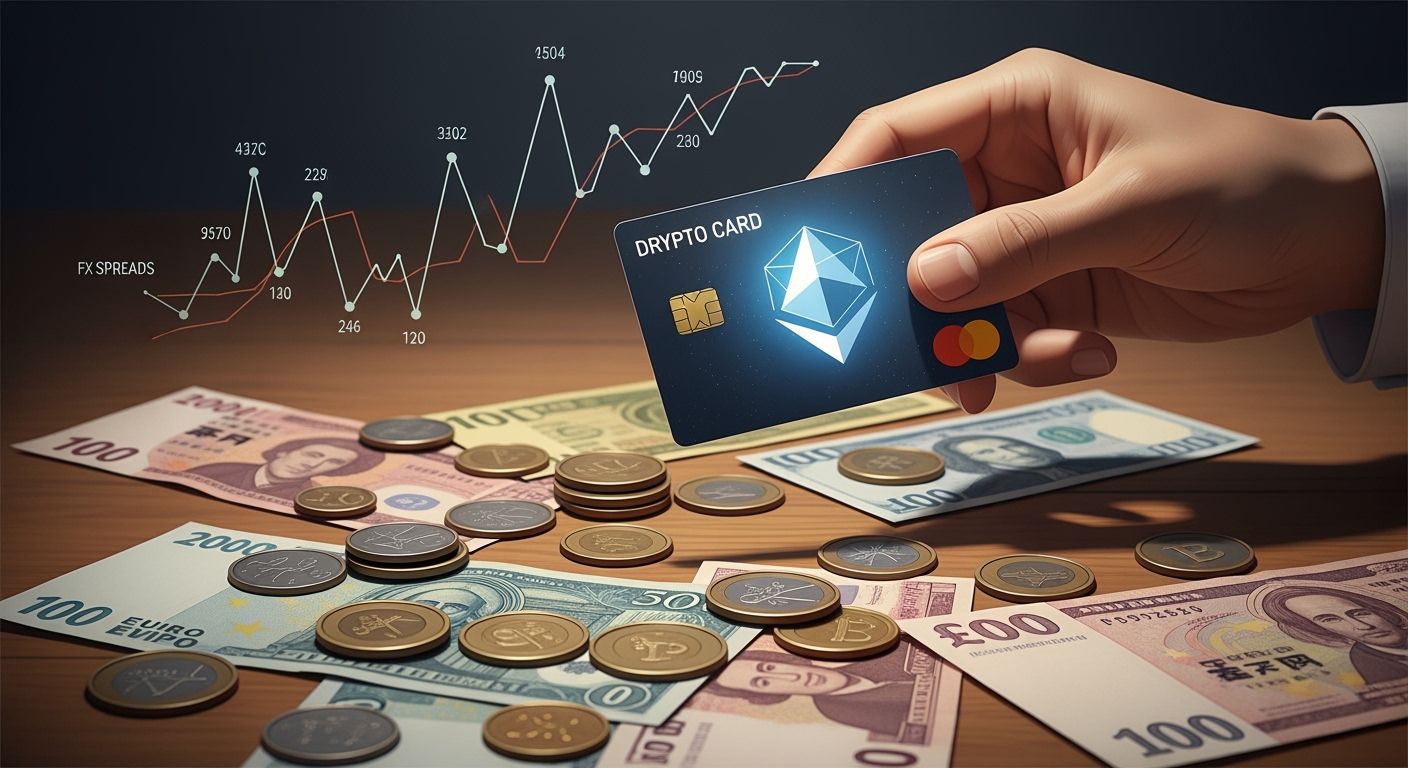
You might see a crypto debit card that promises no fees, but the FX spreads impact what you actually pay each time you spend. Hidden conversion costs can quietly eat into your balance. Watch out for these charges because they can change the real price of your everyday purchases.
Key Takeaways
FX spreads can add hidden costs to your transactions. Always compare your card's conversion rate to the market rate to avoid unexpected charges.
Even cards that advertise no fees may have FX spreads that increase your spending. Check the fine print and understand the real costs before using your card.
To minimize costs, avoid using your card on weekends and steer clear of dynamic currency conversion at merchants. Timing your transactions can lead to better rates.
FX spreads impact on crypto debit cards
What are FX spreads?
You may wonder what FX spreads mean when you use a crypto debit card. FX spreads describe the difference between the rate at which a provider converts your cryptocurrency to fiat currency and the actual market rate. This gap represents a hidden cost that you pay every time you make a purchase in a different currency. When you spend with your crypto debit card, the provider converts your crypto to local currency. The FX spreads impact the final amount you receive because the provider often uses a rate that is less favorable than the real market rate.
Many crypto debit card providers claim to offer zero FX fees. However, the FX spreads impact your transaction even if you do not see a direct fee. The provider may build the cost into the conversion rate. For example, you might see a card that advertises no fees, but the exchange rate used is slightly worse than the market rate. This difference is the FX spread, and it can quietly reduce your balance.
Traditional bank debit cards usually charge fixed fees or spreads for currency conversion. Crypto debit cards can vary more. Some offer 0% FX fees, but others may have spreads ranging from 1% to 3%. You need to check the conversion rates and compare them to the market rate to spot the real cost. Providers like UUPAY may have unique structures or disclosures, so always review their terms.
Tip: Always check the conversion rate used by your crypto debit card provider. Compare it to the current market rate to see if you are paying more than you expect.
How FX spreads affect transactions
When you use your crypto debit card abroad, the FX spreads impact your purchasing power. The conversion spread can add 1% to 3% to each transaction. For example, Coinbase charges a 2.49% spread per transaction. This means you pay more than the market rate when converting your crypto to local currency. Over time, these spreads reduce the value of your crypto and make your purchases more expensive.
FX spreads can range from 1% to 3%, adding to the cost of transactions abroad.
The conversion spread, such as Coinbase's 2.49% per transaction, shows how much extra you pay.
These spreads lower your purchasing power when spending with your crypto debit card.
Crypto debit cards may seem attractive because they advertise no fees. However, the FX spreads impact the real cost of every transaction. You need to look beyond the marketing and check the actual conversion rates. Some providers, like UUPAY, may offer special promotions or fee waivers, but you should still review their FX spread policies. Different providers have different structures, so always read the fine print.
Note: Even if a card claims zero FX fees, the FX spread can still affect your transaction. Always compare the provider's rate to the market rate before spending.
Real costs behind no-fee crypto cards
Crypto-to-fiat conversion fees
You may see crypto debit cards that promise no fees, but the real costs often go deeper. When you convert crypto to fiat, providers usually charge conversion fees. These fees can appear as a percentage of your transaction or as a flat fee. For example, Wirex charges a conversion fee that does not exceed 1% of the transaction amount. You also pay a blockchain fee, which goes to miners or block verifiers.
UUPAY stands out with its current promotions. You can get a new user virtual card offer and pay zero card recharge fees. These perks help you save money when you start using the card. UUPAY also holds compliance credentials, including a US MSB license, Hong Kong registration, Swiss license, Brazil license application, and PCIDSS Level 1 certification. These credentials show that UUPAY follows strict security and regulatory standards.
You should compare the advertised 'no-fee' cards to actual expenses. The table below shows typical fees you might face with crypto debit cards, including UUPAY:
Fee Type | Description |
|---|---|
Card Creation Fees | Fees for issuing a card range from $1 to $10, with some providers offering free card creation. |
Spending Fees | Transaction fees typically range from 1% to 3% per transaction or a flat fee of $0.50. |
Top-Up Fees | Reloading fees can be 1% to 5% of the deposit amount, with some hidden in exchange rates. |
Monthly Fees | Monthly maintenance fees range from $1 to $5, with some cards having no recurring fees. |
UUPAY's zero card recharge fees and free virtual card offer can help you avoid some of these costs. You can also earn up to 50% commission through UUPAY's referral program if you invite friends who use the card.
Spotting hidden FX spreads
You need to look beyond the marketing to spot hidden FX spreads. Providers often build these costs into the exchange rate, so you pay more than you expect. The FX spreads impact your total transaction cost, even if you see zero fees advertised.
Tiered fee structures can make it harder to analyze the real cost. Some cards use flat fees, while others use tiered fees based on transaction size. The table below compares flat and tiered fee structures for a 10 BTC transaction:
Fee Structure | |
|---|---|
Flat Fee | Up to 0.5 BTC |
Tiered Fee | 0.15 BTC |
You should check the conversion rate used by your card provider. Compare it to the mid-market rate to see if the FX spreads impact your spending. You can spot hidden costs by reading the full fee schedule, not just the marketing summary. Ask for the provider's spread disclosure in writing if you want clarity.
Tip: Always calculate the all-in cost on a representative transaction, including the spread. This helps you understand what you really pay.
Minimizing FX spread costs
You can take steps to minimize the FX spreads impact when using crypto debit cards. Follow these practical steps:
Compare the mid-market rate to your card's applied rate on a small transaction before relying on the card for large spend.
Request the provider's spread disclosure in writing.
Read the full fee schedule—not the marketing summary—before activating the card.
Calculate the all-in cost on a representative transaction including the spread.
You can save money by avoiding wider spreads on weekends and steering clear of dynamic currency conversion (DCC) at merchants. The table below shows how you can save by minimizing FX spread costs:
Fee Type | Example Spread | Potential Savings |
|---|---|---|
Weekend FX Spread | Wider on weekends | Better rates on weekdays |
Dynamic Currency Conversion (DCC) | Worse rates via merchant | Avoiding DCC saves money |
Conversion Spread Comparison | 1% vs 2.5% | Significant savings possible |
Crypto cards can offer 0% FX fees compared to 2-4% on bank cards for international spending. You should pay attention to the exchange-rate spread to maximize your savings. The FX spreads impact your bottom line, so you need to stay informed and proactive.
Note: You can reduce hidden costs by choosing cards with transparent fee structures and by timing your transactions for the best rates.
FX spreads play a major role in the true cost of no-fee crypto debit cards like UUPAY. You should always check conversion rates and hidden fees. The table below shows how ignoring FX spreads can lead to unexpected costs and long-term financial impact.
Aspect | Description |
|---|---|
Effective Transaction Fee | Actual cost may be higher than stated due to conversion spread. |
Conversion Spread | Difference from mid-market rate creates hidden charges. |
Long-term Impact | Frequent use can accumulate significant hidden fees over time. |
Stay proactive and choose transparent providers for smarter spending.
FAQ
What is an FX spread on a crypto debit card?
You pay an FX spread when your provider converts crypto to fiat at a rate less favorable than the market rate. This increases your transaction cost.
How can you check if your card has hidden FX spreads?
Compare your provider’s conversion rate to the mid-market rate. If the rates differ, you pay a hidden FX spread.
What makes UUPAY stand out for compliance and fees?
Feature | UUPAY Benefit |
|---|---|
Compliance | US MSB, Swiss, Hong Kong |
Fees | No recharge fee |
Support | 24/7 global support |
See Also
Exploring The Functionality Of Crypto Debit Cards
Best Low-Fee Crypto Cards To Consider In 2026
Choosing Between USDC And Other Crypto Debit Cards
