Hidden fees on no monthly fee crypto debit cards
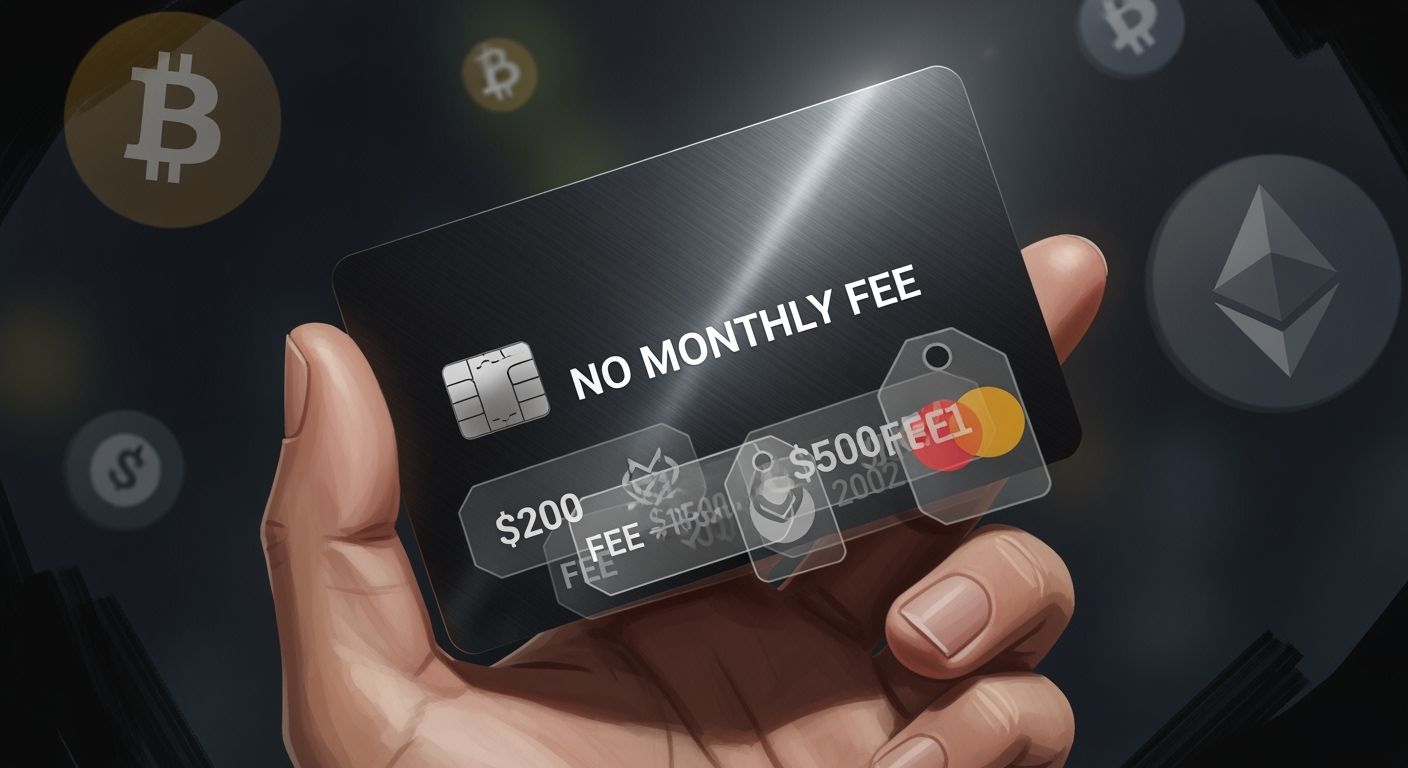
You might expect no charges from crypto debit cards with no monthly fee, but hidden fees often sneak in. Here are the most common ones:
Transaction fees
Exchange rate spreads
ATM withdrawal fees
Conversion costs
Always check the fine print. UUPAY and other providers can differ in their fee structures.
Key Takeaways
Always read the fine print. Hidden fees like transaction charges, ATM withdrawal fees, and conversion spreads can add up quickly.
Use stablecoins for spending to avoid high conversion spreads. This simple change can save you money on fees.
Compare different providers. UUPAY offers no card recharge fees and transparent pricing, making it a cost-effective choice.
Common hidden fees

Transaction fees
You might think you’re in the clear with a no monthly fee card, but transaction fees can still pop up. Some issuers charge you a small fee every time you make a purchase. These fees often go unnoticed until you check your statement. You may also see blockchain gas fees when topping up your card, especially if you use Ethereum. These can range from $0.50 to $5 or more, depending on network congestion.
ATM withdrawal fees
Need cash? Using your crypto debit card at an ATM can trigger extra charges. Many cards add a flat fee or a percentage for each withdrawal. Sometimes, the ATM operator tacks on their own fee, which doesn’t always show up in the card’s official fee schedule. Always check both your card’s terms and the ATM’s screen before confirming a withdrawal.
FX markups
Traveling or shopping online in another currency? You could face foreign exchange (FX) markups. Traditional banks often charge 1–3% for these transactions. Some crypto cards, like Bleap Mastercard or Crypto.com Visa, advertise 0% FX fees, but others may still add a small percentage. These hidden fees can add up if you travel often or shop internationally.
Conversion spreads
Every time you convert crypto to fiat, you pay a conversion spread. This fee usually hides inside the exchange rate. Most platforms charge between 0.5% and 3.5%. Even a small percentage can eat into your balance, especially if you use your card frequently.
Tip: Conversion spreads are one of the most common hidden fees. Always compare the rate you get with the current market rate.
Inactivity fees
If you don’t use your card for a while, you might get hit with inactivity fees. Some cards charge nothing, but others can take up to $10 per month from your balance. These fees can drain your funds if you forget about your card.
Card issuance fees
Getting your card isn’t always free. Some providers charge a one-time card issuance fee, which can range from a few dollars to over $10. Make sure you know the cost before you order your card.
How hidden fees work
Understanding how hidden fees sneak into your crypto debit card experience can save you a lot of money and frustration. Let’s break down how these charges actually work in practice.
Transaction fee mechanics
Every time you swipe your crypto debit card, you might pay a transaction fee. This fee can show up in a few ways. Some providers charge a flat amount for each purchase. Others take a small percentage of the total. You might not see these fees right away, but they add up over time.
Here’s a quick look at how providers structure these charges:
Description | |
|---|---|
Top-Up Fees | Charged when you load crypto into your card; varies by provider. |
Transaction Fees | Applied during payments, especially in different currencies. |
ATM Withdrawal Fees | Fees for cash withdrawals from ATMs, often with limits. |
FX (Foreign Exchange) Fees | Charged for spending in a currency different from the card's base currency. |
Inactivity Fees | Charged if the account remains unused for a certain period. |
Includes high FX conversion rates, network fees, and ATM operator fees. |
You might also pay network fees when you top up your card, especially if you use tokens like USDT. These network fees can change based on blockchain congestion.
Exchange rate spreads
When you spend crypto, your provider converts it to local currency. This is where exchange rate spreads come in. The provider gives you a rate that’s a bit worse than the real market rate. The difference is the spread, and that’s where they make extra money.
Let’s say the market rate for 1 BTC is $30,000. Your provider might give you $29,700 for 1 BTC. That $300 difference is the spread. You pay it every time you convert, even if the provider says there are no extra fees.
Tip: Always compare the rate you get with the current market rate. Even a small spread can cost you a lot if you use your card often.
FX markups in practice
Foreign exchange (FX) markups hit when you spend in a currency different from your card’s base currency. Providers often add a percentage on top of the real exchange rate. This markup usually ranges from 1% to 3%. Some cards claim zero FX fees, but you should check if they hide the cost in the exchange rate spread.
You might also see extra charges on weekends or for international transactions. These can sneak up on you, especially if you travel or shop online a lot.
High FX conversion rates
Weekend or international transaction charges
If you want to avoid surprises, always check your provider’s fee schedule before you travel or make a big purchase.
Inactivity and dormancy charges
If you stop using your card, you might face inactivity or dormancy fees. Providers charge these fees if your account sits unused for a set period, like three or six months. The fee can be a few dollars or even more, and it comes straight out of your balance.
Some cards don’t charge inactivity fees, but many do. If you plan to take a break from using your card, check the terms first. You don’t want your balance to disappear just because you forgot about your card.
Note: Hidden fees like inactivity charges often hide in the fine print. Always read the terms and conditions before you sign up.
Overlooked hidden fees
Conversion spreads as hidden costs
You might think you know all the fees, but conversion spreads often slip past unnoticed. When you convert crypto to fiat, the platform usually gives you a rate that’s not the same as the market rate. This difference is the conversion spread, and it’s a hidden cost that can add up fast. Take a look at how these spreads impact your wallet:
Description | Cost Impact |
|---|---|
Conversion spread on crypto | |
Example on $500 purchase | $2.50 - $15 in hidden fees |
Multi-layer conversion losses | Cumulative hidden cost of 1-2% |
If you make several conversions, you pay more each time. Always check the rates before you spend.
Reward deductions
You probably expect rewards when you use your crypto debit card. Some cards promise cashback or points, but hidden fees can eat into those rewards. For example, platforms may deduct fees from your reward balance or reduce the reward rate if you spend in foreign currencies. You might see less cashback than advertised, especially after conversion spreads and FX markups.
Tip: Always read the reward terms. If you notice your rewards shrinking, hidden fees could be the reason.
Unadvertised ATM fees
ATM withdrawals seem simple, but you can face fees that aren’t listed in the card’s main fee schedule. Most crypto cards offer monthly free limits, usually between $200 and $1,000. After you pass that limit, you pay about 2% on the extra amount. Some ATMs add their own charges, which can surprise you at the machine.
ATM withdrawals: Free up to a limit, then 2% fee on excess
Top-up fees: 1-2.5% for loading crypto to fiat
Inactivity fees: Account maintenance charges after long periods of non-use
You need to watch out for these hidden fees, especially if you use ATMs often.
Avoiding hidden fees
Reading fee schedules
You can dodge most hidden fees by reading the card’s fee schedule before you sign up. Providers often tuck extra charges into the fine print. Look for details about transaction fees, ATM withdrawals, conversion spreads, and inactivity charges. If you see terms like “may apply” or “subject to change,” take a closer look. Always compare the exchange rate offered with the current market rate. This simple habit helps you spot conversion spreads and FX markups.
Tip: Save a copy of the latest fee schedule. Providers sometimes update their fees without much notice.
Comparing UUPAY and others
Not all crypto debit cards treat fees the same way. Here’s how UUPAY stacks up against other major providers:
UUPAY has no card opening or recharge fees, making it a cost-effective choice.
UUPAY waives card recharge fees, so you keep more of your money.
UUPAY’s pricing is clear and transparent, so you avoid surprises.
Other providers, like Wirex, may charge monthly fees unless you catch a promotion.
Coinbase and Gemini skip annual fees but often add conversion fees.
Some cards hide foreign transaction fees or use complicated fee structures.
You get peace of mind with UUPAY’s straightforward approach. You know exactly what you’ll pay.
Smart usage tips
You can cut down on hidden fees with a few smart moves:
Use stablecoins like USDC for spending to avoid big conversion spreads.
Fund your card on networks with lower gas fees, such as Polygon.
Make fewer, larger ATM withdrawals instead of many small ones.
Spend in USD when possible to dodge FX markups.
Watch for inactivity fees if you don’t use your card often.
Try Apple Pay or Google Pay for purchases to skip ATM withdrawal fees.
A little planning goes a long way. You keep more of your crypto by staying alert and using your card wisely.
UUPAY vs. others: Fee comparison

Fee table overview
You want to know how UUPAY stacks up against other crypto debit cards. Here’s a quick look at the main fees you’ll face with each provider:
Provider | Foreign Transaction Fees | FX Spreads Details |
|---|---|---|
UUPAY | None | Transparent rates, zero card recharge fees |
Nexo | Varies | FX costs depend on transaction type and timing |
Gemini | None | Predictable costs, no foreign transaction fees |
Coinbase One Card | None | Promotes no foreign transaction fees |
Crypto.com | None | No foreign transaction fees, other charges vary |
Tip: UUPAY offers a special deal for new users—a virtual card for only 1U with 1U cashback. You basically get your first card for free!
Key differences
UUPAY stands out for a few reasons. You pay no card recharge fees, so you keep more of your crypto. The fee structure is simple and clear. You don’t have to worry about surprise charges when you spend or withdraw.
UUPAY also takes compliance seriously. The platform holds a US MSB license, registers in Hong Kong, has a Swiss license, and is applying for a Brazil license. UUPAY meets PCIDSS Level 1 security standards, so your funds stay safe.
You can earn with UUPAY’s referral program, too. Invite friends and get up to 50% commission. Most other cards don’t offer rewards like this.
If you want a card with no hidden fees, strong compliance, and real perks, UUPAY gives you a clear advantage.
You need to watch for hidden fees like transaction charges, FX spreads, ATM fees, and inactivity costs. Always check the terms, not just the headline. Use these tips to avoid surprises:
Check ATM and withdrawal fees.
Look out for inactivity and conversion fees.
Stay alert. Review fee schedules often. Protect your crypto by making smart choices.
FAQ
What hidden fees should you watch for on no monthly fee crypto debit cards?
You should look for conversion spreads, ATM withdrawal fees, FX markups, and inactivity charges. Always check the provider’s fee schedule before you use your card.
Does UUPAY really have no card recharge fees?
Yes! UUPAY waives all card recharge fees for every user. You keep more of your crypto when you top up your card.
Is UUPAY a compliant and secure provider?
Absolutely. UUPAY holds a US MSB license, meets PCIDSS Level 1 standards, and offers 24/7 global support. You can trust your funds are safe.
See Also
Best Cryptocurrency Cards Offering Minimal Fees in 2026
Essential Tips for Digital Nomads to Use Crypto Cards
A Comprehensive Guide to How Crypto Debit Cards Work
Top Prepaid Cryptocurrency Cards for Hassle-Free Daily Purchases
