How Vietnamese Sellers on Amazon and Etsy Receive USD and Spend VND
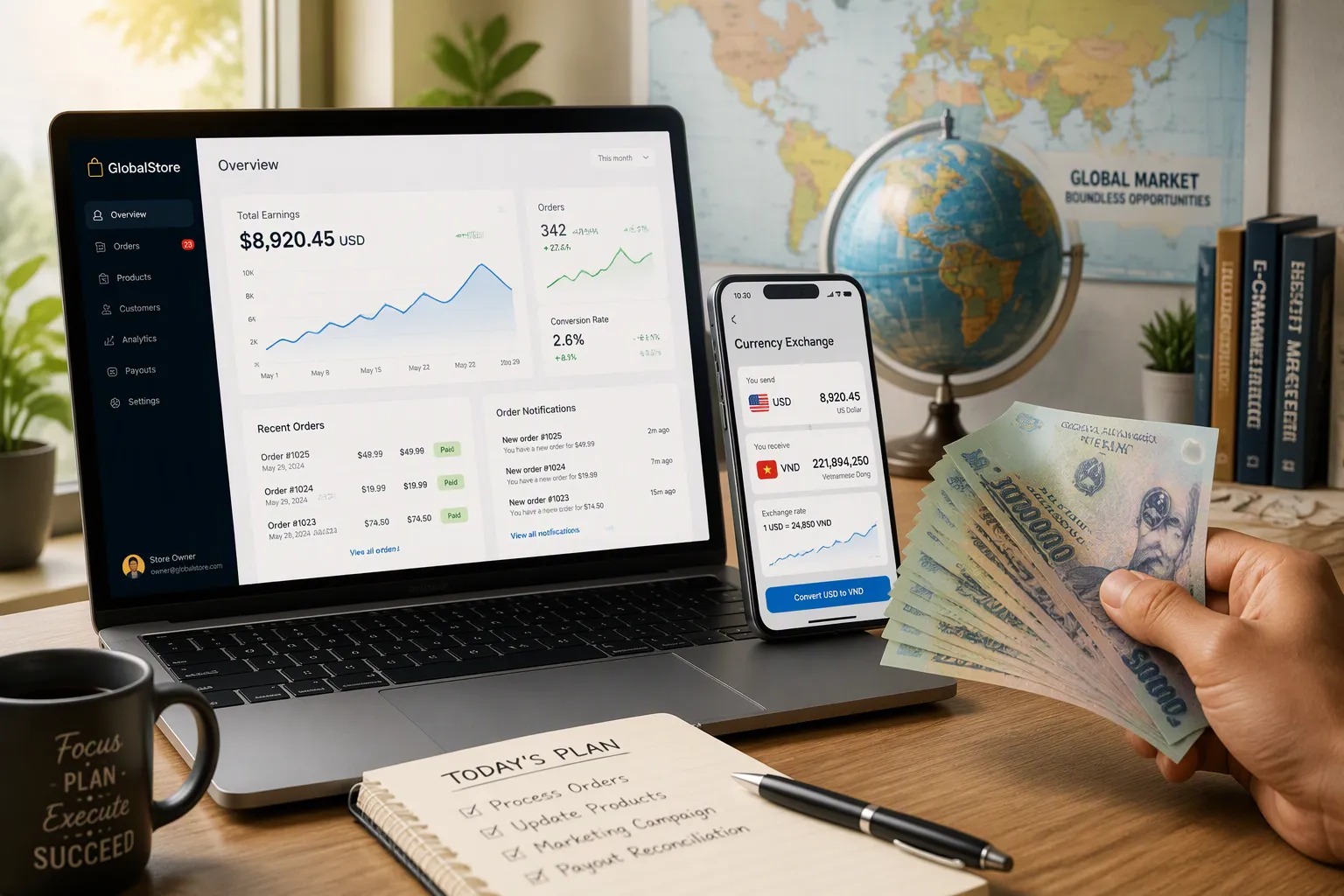
Vietnamese sellers get paid by Amazon and Etsy through platform payout options: bank transfer, e-wallets, and payment service providers. You then convert USD to VND through a bank or a licensed service and spend it from local accounts and cards. This guide resolves three practical concerns: choosing a payout method, keeping conversion costs low, and staying compliant with Vietnamese tax and invoicing rules. It also shows how to receive USD without unnecessary friction.
Key Takeaways
Choose a payout method that fits your sales volume and check that it accepts Amazon or Etsy payments.
Convert USD to VND through a licensed bank or service and compare rates to keep more money.
Keep clear records of all payments and sales for tax and invoicing purposes.
About the Author
Will is a senior Web3 payments specialist and SEO Content Lead at UUPAY. He has extensive experience in the global decentralized finance (DeFi) and payments ecosystem, with a focus on developing seamless crypto-to-fiat retail payment solutions. Will regularly analyzes digital wallet integrations, international compliance frameworks, and virtual card payment optimization, with the goal of providing users worldwide with secure, simple, and borderless payment guidance.
Amazon and Etsy Payout Rules
Amazon Payout Requirements
Amazon pays sellers into a US bank account. This rule is the main hurdle for Vietnamese sellers. You cannot simply point Amazon at a local VND account and wait for the money. Payment solution providers solve this problem. They give you US account details that Amazon accepts, and they handle the onward transfer to Vietnam.
Amazon converts your sales revenue into your local currency before deposit. The money then lands in a domestic bank account linked to your payout profile. Timing is not always immediate. Amazon may hold funds in reserve to cover refunds, claims, or chargebacks. A new account often sees longer holds than an established one. Plan your cash flow around this delay instead of assuming every sale pays out on schedule.
Etsy Payout Setup
Etsy asks Vietnamese sellers to complete a payout method before the first sale. You choose your country, enter your bank details, and verify your identity. Etsy then deposits your earnings on a fixed schedule, typically weekly or monthly, depending on your settings.
Etsy also applies a payment threshold. Your balance must reach a minimum amount before Etsy releases it. The exact figure depends on your registered country and currency. Check your shop's payment settings to see the current threshold and schedule. A clear setup helps you receive USD on a predictable rhythm.
How to Receive USD from Amazon and Etsy
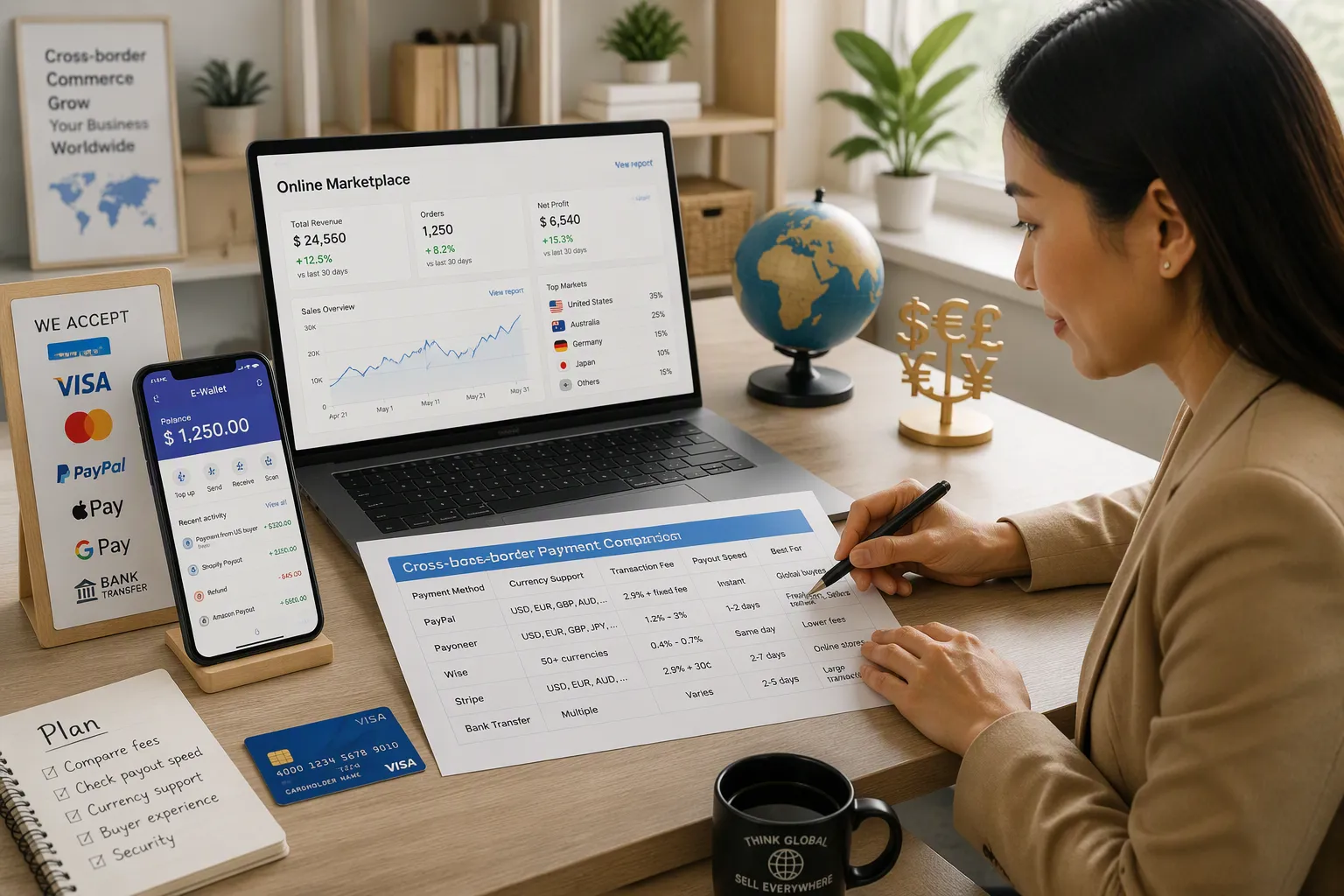
Your payout method decides how fast your money arrives and how much it costs along the way. Each option below fits a different sales volume and seller type. Compare fees, speed, and setup effort before you commit.
Receive USD via Bank Transfer
A direct bank wire sends Amazon or Etsy earnings straight to your Vietnamese bank account. Setup is simple: you enter your account details in the platform payout settings. The trade-off is speed. International wires can take several business days to clear, and intermediary banks may deduct a handling fee. A wire suits established sellers with steady, high-volume revenue who value a familiar banking relationship over fast access to cash.
Receive USD via E-Wallets and UUPAY
Payment service providers give you virtual US account details that Amazon and Etsy accept. Payoneer is a common starting point for new sellers. It offers straightforward onboarding and works well at low to moderate volume. LianLian Global and WorldFirst serve sellers who want multi-currency support and tools built for cross-border commerce. Both handle larger volumes comfortably.
UUPAY combines receiving and spending in one account. New users get a virtual card with a 1U opening fee and 1U cashback. Card top-ups are fee-free for all users. A physical card is launching with global spending and up to 50% rebate. Extra services include hotel and flight booking, eSIM, and chat support. UUPAY holds licenses in the US (MSB), Switzerland, Canada, and Hong Kong, with Brazil pending. A referral program pays commission up to 50%.
Use this table to match each option to your situation:
Option | Best fit | Setup effort |
|---|---|---|
Bank wire | High-volume, established sellers | Low |
Payoneer | New sellers, low volume | Low |
LianLian Global | Multi-currency sellers | Moderate |
WorldFirst | Growing cross-border sellers | Moderate |
UUPAY | Sellers wanting receiving plus spending | Low |
Whichever route you pick, confirm the provider accepts Amazon or Etsy payouts before you switch. Test with a small withdrawal first. That habit helps you receive USD reliably before your sales scale up.
Convert USD to VND and Spend Locally
Conversion via Banks and UUPAY
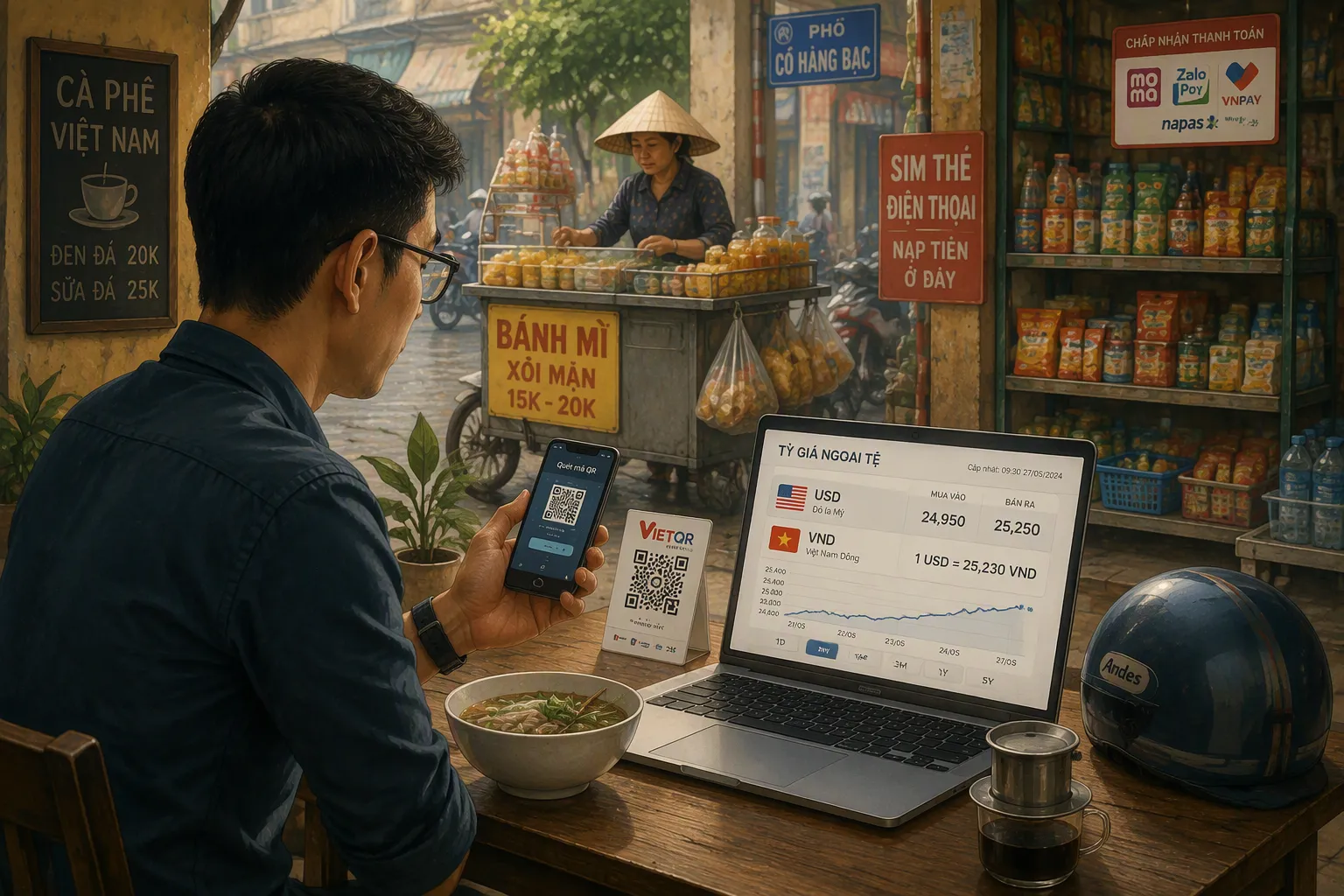
Check the live rate before you convert. Google Finance, XE.com, and Wise all show current USD to VND quotes. Official rates fluctuate around 25,600–26,050 VND per USD, so the figure you see on Monday may differ from Friday's. Compare the rate your provider offers against the live quote. A small gap on a large transfer adds up quickly.
Banks convert at their posted rate and deposit VND into your local account. The process is familiar and the paperwork is standard. UUPAY handles conversion inside the same account where you receive USD, which saves a transfer step. Both routes are licensed, and the better choice depends on your volume and how often you convert. Convert in batches when the rate sits near the top of the range, and keep some USD on hand for platform fees.
Spending VND in Vietnam
A local VND bank account is the simplest way to run a business in Vietnam. It avoids costly currency conversion on everyday purchases. You pay local expenses in VND, track transfers easily, and sidestep the high fees that foreign debit or credit cards often carry. A VND card covers most business spending without extra conversion charges.
QR codes are everywhere in Vietnam. You will find them in shopping malls, large supermarkets, local markets, noodle-soup stalls, grocery stores, sticky-rice vendors, and mobile coffee carts. Scan, confirm, and the payment clears. For personal budgeting, open the "Expense Management" section of the MoMo app to review your monthly spending.
Mobile payments grew fast. The e-wallet sector began to flourish with the emergence of MoMo. The explosion of mobile payments then compelled banks to join the digital transformation of the banking sector. Today you can move between a bank app and an e-wallet without friction.
Keep business and personal spending in separate accounts. This habit simplifies your bookkeeping later. When you receive USD into a provider account, transfer only what you need for the month and leave the rest in USD until the rate favors conversion.
Compliance and Tax for Sellers
Invoicing and VAT Basics
Vietnam does not issue a separate invoice type for Amazon or Etsy sales. Your invoice depends on your tax position and your VAT obligations. Register as a business, and you issue invoices under the rules that apply to your registered form. Sell as an individual, and different rules may apply to your income. Confirm your status with a local tax advisor before your first payout, not after your first audit notice.
Your VAT position follows the same logic. Cross-border sales can create VAT obligations, and the treatment depends on how you register and what you sell. Keep your platform fee statements, because those fees affect your recorded revenue. Do not guess at your obligations. Ask a licensed accountant in Vietnam to map your selling activity onto the correct tax category.
Recordkeeping for Cross-Border Income
Keep a record of every cross-border payment you receive. Save your Amazon or Etsy payout statements, your provider transaction history, and your bank credit advices. Match each payout to the sales period it covers. This paper trail supports your tax filings and answers questions from your bank or your provider.
Treat account setup as a task that requires platform understanding, not a quick-profit shortcut. Read the payout terms, confirm the provider's licensing, and check how the platform reports your income. UUPAY, for example, holds a US MSB license, plus licenses in Switzerland, Canada, and Hong Kong, with Brazil pending. That licensing matters when you document where your money sits. Build the habit of monthly reconciliation now. Clean records make tax season routine instead of stressful.
Comparing Costs Across Options
Fees, Speed, and Seller Fit
Total cost decides more than any single fee. Add three layers together: platform fees, receiving fees, and conversion spreads. A provider with a low receiving fee can still cost more when its conversion rate sits far from the live quote. Run the math on your typical monthly payout before you choose.
Speed matters too, and it carries a hidden cost. Slow payouts tie up cash you could spend on inventory or ads. Amazon reserve holds already delay your money. A receiving method that adds several more days compounds that wait. Match speed to your cash flow needs rather than chasing the fastest option at any price.
Option | Cost profile | Speed | Best fit |
|---|---|---|---|
Bank wire | Intermediary fees possible | Several business days | High-volume sellers |
Payoneer | Predictable, simple pricing | Moderate | New and low-volume sellers |
LianLian Global | Multi-currency handling | Moderate | Sellers across several marketplaces |
WorldFirst | Built for cross-border trade | Moderate | Growing sellers |
UUPAY | Fee-free card top-ups, 1U opening with 1U cashback | Fast | Sellers wanting one account for receiving and spending |
UUPAY suits sellers who want receiving and spending in one place. New users pay 1U to open a virtual card and get 1U back. Card top-ups carry no fee for all users, and the physical card offers up to 50% rebate on global spending. Those features reduce everyday costs, though you should still compare its conversion rate against your bank's.
Test one method with a small withdrawal. Track the actual amount that lands in your VND account. That real figure beats any published fee schedule. Scale up once the numbers work for your volume.
Confirm your platform payout settings first, including the US bank account Amazon requires. Next, pick a method to receive USD that fits your sales volume. Then convert through a licensed channel like UUPAY or your bank at a live rate you checked. Keep records for tax and VAT.
Compare total costs, not one fee. Add platform fees, receiving fees, and conversion spreads together. Start with the method that fits today's volume, then scale up as sales grow.
FAQ
Does Amazon require a US bank account for Vietnamese sellers?
Yes. Amazon pays into a US bank account, so you need US account details. A payment service provider supplies those details and forwards your earnings to Vietnam.
Which method should I use to receive USD at low volume?
Start with a provider built for new sellers, such as Payoneer or UUPAY. Both keep setup simple. Move to bank wire or a multi-currency provider once monthly payouts grow.
Do I need a licensed channel to convert USD to VND?
Yes. Convert through your bank or a licensed provider like UUPAY. Check the live rate first, since quotes move daily around the 25,600–26,050 VND range.
See Also
Top Methods For Using USDT Cards For Google Play Purchases In Vietnam
Optimal Ways To Utilize Bitcoin Debit Cards For Google Play In Vietnam
Using USDT Visa Cards To Manage Daily Expenses For Cross-Border Sellers
How Southeast Asia Users Can Benefit From Virtual Crypto Cards For Marketplace Fees
Top Strategies For Using Virtual Crypto Cards To Book International Flights In Vietnam
