How to spend USDT in Bangkok as a traveller
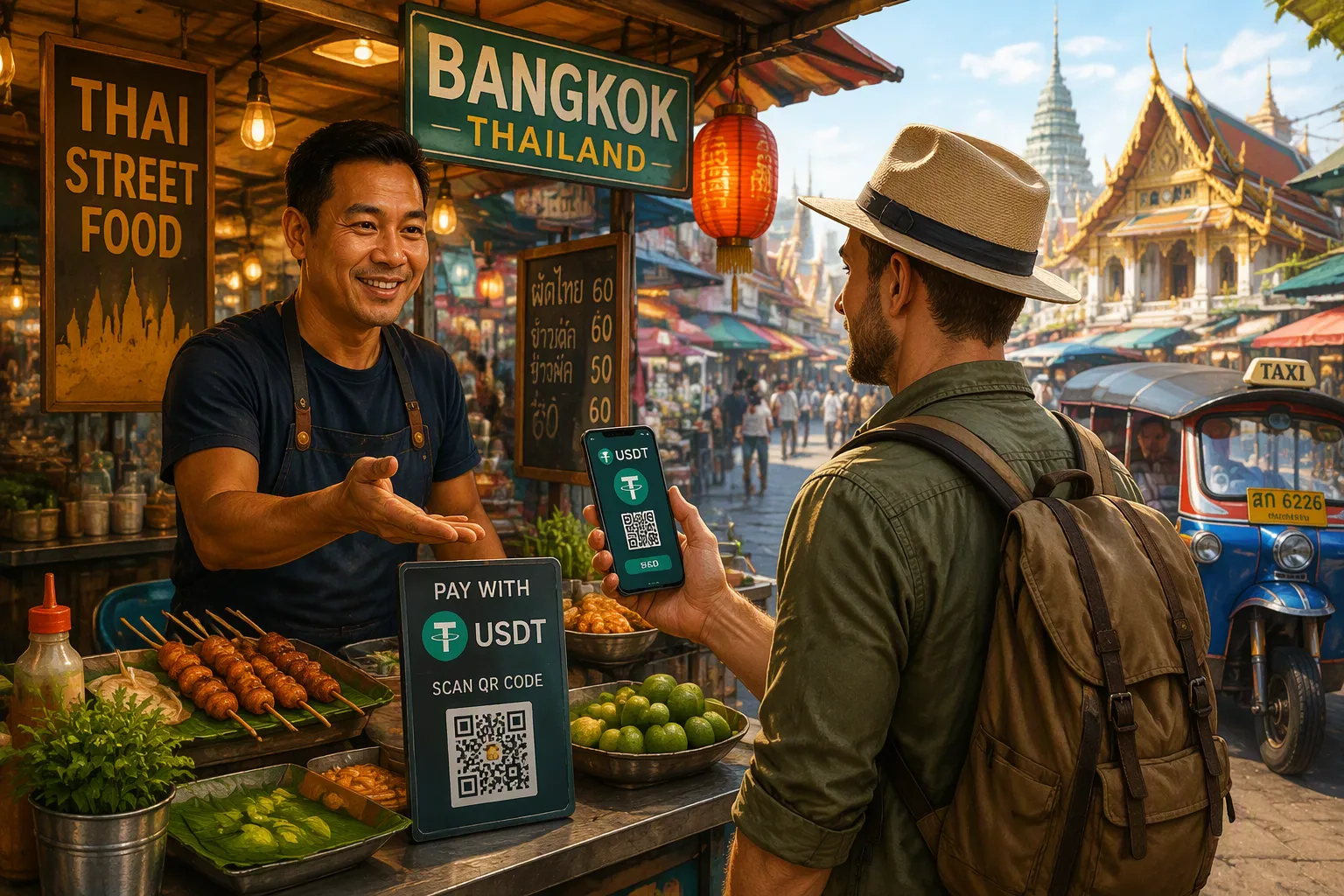
Yes, you can spend USDT in Bangkok. You pay Thai merchants through baht QR codes, either with the government's TouristDigiPay sandbox or a self-custody wallet. This guide walks you through both routes step by step: KYC, spending caps, cash-out rules, and costs. It also shows when cash still makes sense.
Key Takeaways
You can spend USDT in Bangkok using baht QR codes through two routes: the TouristDigiPay sandbox or a self-custody wallet.
TouristDigiPay has heavy KYC and spending caps, while self-custody wallets give you full control and no program caps.
Choose the route that matches your trip length and budget, and keep some cash for small vendors.
Spend USDT in Bangkok: The Short Answer
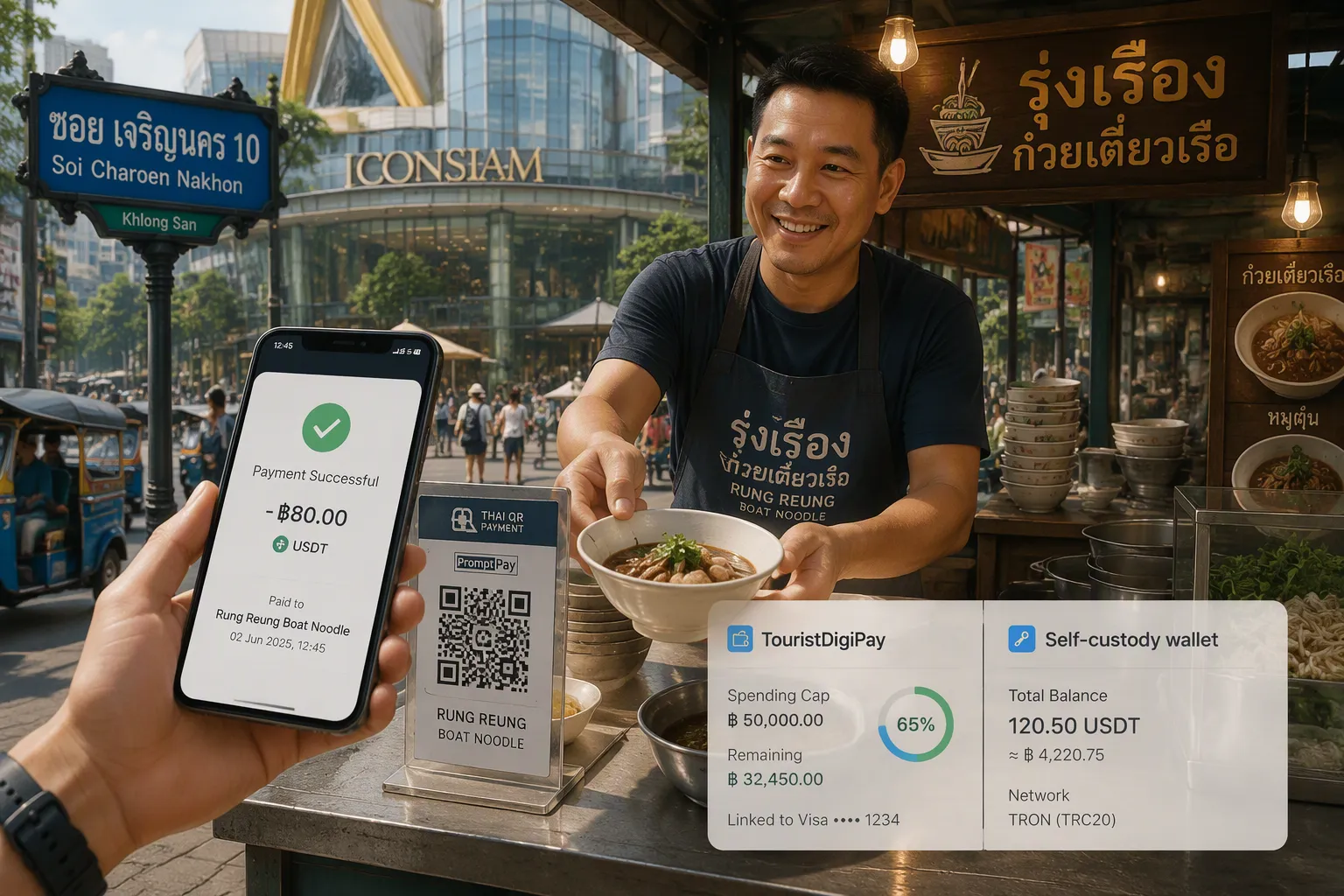
You have two working routes, and both end the same way: a Thai merchant scans a baht QR code and gets paid. The difference sits in who holds your USDT before that scan happens.
QR Payments Lead the Way
QR payments carry almost all of the action. Thailand's PromptPay network already covers street stalls, malls, and restaurants, so a QR code is the natural bridge between your stablecoin balance and a bowl of boat noodles. You do not need a Thai bank account for either route. You need a phone, an internet connection, and a wallet or app that can turn USDT into a baht payment at the counter.
The government sandbox route comes with category limits you should know before you plan a big purchase:
Merchant Category | Monthly Transaction Limit |
|---|---|
Merchants with card terminals | 500,000 THB (≈15,400 USD) per account |
Small, general merchants | 50,000 THB per month |
Transactions are also blocked at businesses that AMLO guidelines flag as high-risk for money laundering. Keep that in mind if you plan to buy jewelry or high-value goods.
Two Routes Compared
Route one is TouristDigiPay, a government sandbox pilot. You pass KYC, convert crypto such as USDT into baht inside the program, and pay by QR. Route two is a self-custody wallet, where the USDT balance stays in your own hands and you spend or cash out as you choose. UUPAY is one example of the self-custody approach.
The trade-offs are straightforward:
Feature | TouristDigiPay | Self-custody wallet |
|---|---|---|
Spending cap | Yes — tourist cap applies | No program cap |
Balance control | Held within a capped program with lockout rules | User retains full control; balance not capped or trapped |
Cash-out | User decides when to spend, send, or cash out |
The official TouristDigiPay route adds heavy KYC, a spending cap and no direct cash-out. If you would rather keep control, hold USDT yourself in a self-custody wallet. You are not handing your balance to a program with a cap and a lockout.
So which one fits your trip? A short visit with modest daily spending works fine on the sandbox. A longer stay, a bigger budget, or a plan to convert leftover funds back to cash points toward self-custody. Either way, you can spend USDT in Bangkok without carrying a thick stack of baht.
Route 1: TouristDigiPay
How the Sandbox Works
TouristDigiPay is a government sandbox pilot. It lets you convert crypto such as USDT into Thai Baht, then pay merchants by QR code. You join the program, pass verification, and load value into the app. From there, your phone works like any other Thai QR wallet at the counter.
Travelers often describe this as the best way to convert crypto to cash in Bangkok, and the praise has some logic behind it. The program runs inside a regulated framework, so merchants see a normal baht payment. You skip the peer-to-peer meetups and the informal exchange booths. The pilot status also means the rules can shift, so check the current terms before you fly.
KYC, Cap, No Cash-Out
Verification is the first real hurdle. You complete a strict identity check that combines Know Your Customer with Customer Due Diligence, as required by the Anti-Money Laundering Office of Thailand (AMLO). Expect to submit passport details and personal information before you spend anything.
Spending caps then shape your trip budget:
Merchant Category | Monthly Spending Cap (per account) | Approx. USD Equivalent |
|---|---|---|
Merchants with card terminals | 500,000 THB | ~15,400 USD |
Small / general retail outlets | 50,000 THB | — |
AMLO also blocks transactions at businesses it flags as high-risk for money laundering. Plan around that if you want jewelry or luxury goods.
The final limit matters most: no direct cash-out. You spend inside the program, and leftover baht stays there. For a short trip with modest daily spending, that is workable. For a longer stay, budget carefully so you do not leave value behind.
Route 2: Self-Custody
Hold USDT, Spend or Cash Out
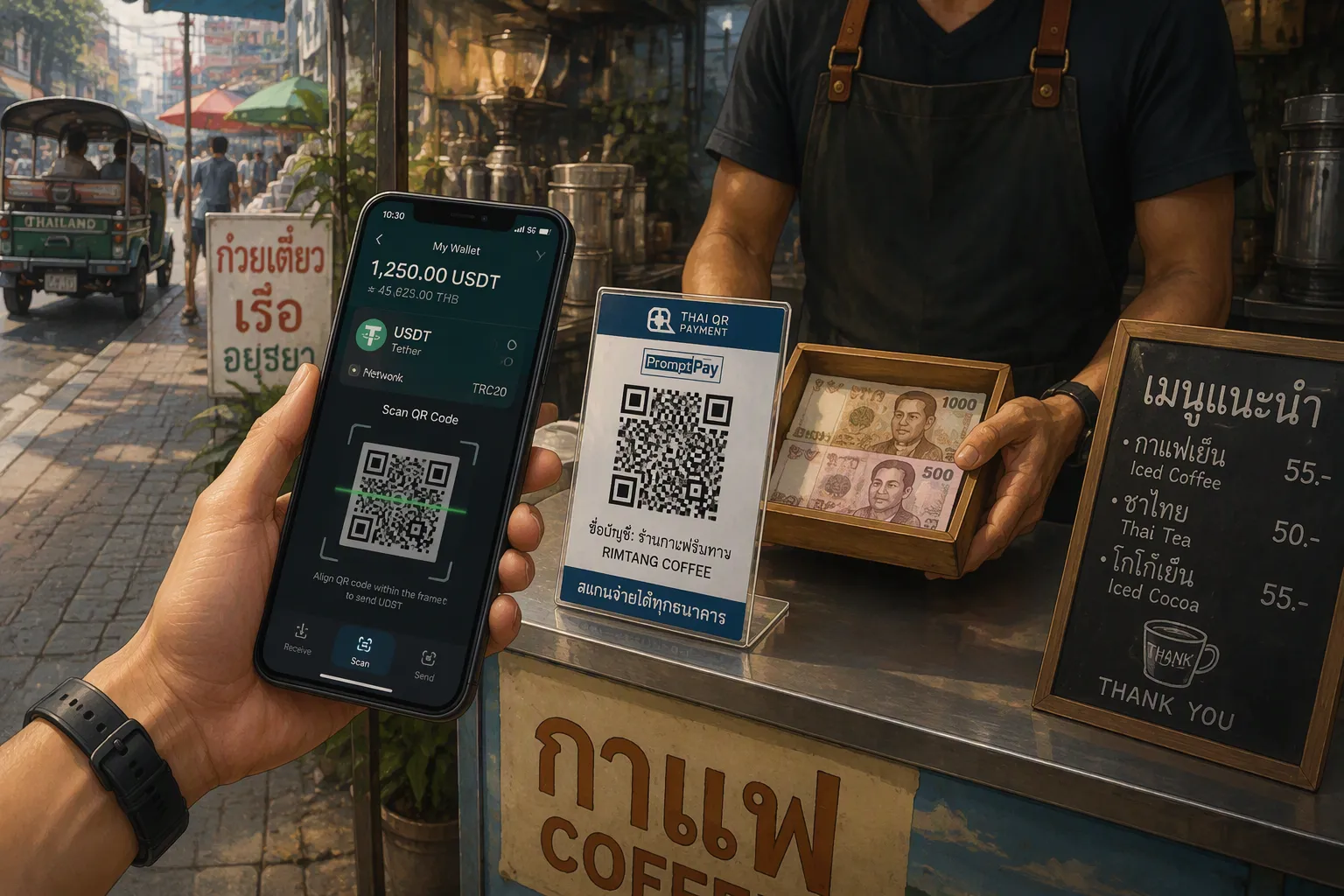
A self-custody wallet flips the setup. You hold the USDT balance yourself, and no program sits between you and your funds. UUPAY is one self-custody option built for exactly this trip. You keep the keys, you see the balance, and you decide what happens next.
That control changes your options. TouristDigiPay caps what you can spend each month and keeps leftover baht inside the program. A self-custody wallet carries no sandbox spending cap, and you can cash out whenever you like. Neither route is wrong. The sandbox suits a short, simple visit. Self-custody suits a longer stay or a bigger budget.
Cashing out follows a simple path:
Keep your USDT in the self-custody wallet you personally control.
Sell your USDT for Thai Baht through peer-to-peer trading inside the wallet app, at your own pace.
Withdraw the baht to a Thai e-wallet, or collect cash directly from your counterparty.
Where supported, skip the cash step and pay by QR in baht.
UUPAY adds more than a balance. New users open a virtual card for 1U and get 1U cashback, and all users enjoy a waived card top-up fee. A physical card is now available with global usage and up to 50% rebate. Extra services cover hotel and flight booking, eSIM, and chat. On compliance, UUPAY holds a US MSB license, Swiss and Canadian licenses, a Brazil application in progress, and Hong Kong registration that meets Asian regulatory requirements. It also carries PCI DSS Level 1 certification and 24/7 global support. Referral commission runs up to 50%.
Paying Baht QR Codes
QR payment works on this route too, wherever the merchant or wallet supports it. You scan, the app converts, and the merchant receives baht. No program cap limits the transaction.
Feature | Self-custody USDT | Program-based (TouristDigiPay) |
|---|---|---|
Who holds the balance | You | The program |
KYC burden | Lighter, wallet-based | Heavy |
Spending cap | No program cap | Tourist cap applies |
Cash-out flexibility | On your terms via P2P | Limited |
QR payment in baht | Yes, where supported | Yes |
The lighter KYC burden saves you time at the start of the trip. You can spend USDT in Bangkok without a lengthy enrollment, and you keep the option to convert leftovers back to cash before you fly home.
Comparing Both Routes
Side-by-Side Table
The two routes differ on five points that matter during a trip. This table puts them next to each other.
Factor | TouristDigiPay | Self-custody USDT |
|---|---|---|
Who holds your balance | The program | You |
KYC | Heavy | Lighter, wallet-based |
Spending cap | Yes, tourist cap | No program cap |
Cash out | Limited | On your terms via P2P |
Pay by QR in baht | Yes | Yes, where supported |
One row deserves a closer look. TouristDigiPay requires accounts with a digital asset business and an e-money provider, both regulated by the SEC and Bank of Thailand. You also face stringent KYC and customer due diligence checks under AMLO criteria. The sandbox also bars digital assets as a direct means of payment, so the program converts your USDT to baht first. Cash-out only happens when you close your account, not from your top-up balance.
Spend USDT in Bangkok: Which Route?
Match the route to your trip, not to the hype. A short visit with light daily spending fits the sandbox well. You get a regulated framework and normal baht QR payments at the counter.
A longer stay, a larger budget, or plans to recover leftover funds point toward self-custody. You keep the balance, skip the program cap, and cash out through P2P when you choose. UUPAY is one self-custody option worth trying for this style of trip.
Ask yourself two questions. How long will you stay? How much will you spend each month? Your answers settle the choice quickly. Either way, you can spend USDT in Bangkok without a Thai bank account.
Costs and Practical Tips
Fees, Rates, Limits
Costs vary by route, so compare the full picture before you commit. TouristDigiPay bundles conversion inside a regulated program. You pay for that convenience through the spread the program applies when it turns your USDT into baht. Self-custody works differently. You trade peer-to-peer at a rate you can see upfront, and you choose your counterparty. Neither route publishes one flat fee you can budget against, so check the live rate on the day you convert.
Limits deserve the same attention. The sandbox caps card-terminal merchants at 500,000 THB per account each month and small merchants at 50,000 THB. A self-custody wallet carries no program cap, but your P2P counterparty may set their own trade limits. Plan large purchases around those ceilings. If you intend to spend USDT in Bangkok on a laptop or a hotel bill, confirm the limit first and avoid a split payment at the counter.
Cash and Cards Together
Keep cash in your pocket for everyday spending. Street food stalls, local taxis, tuk-tuks, markets, and small tips all run on baht notes. Many of these vendors never touch a QR terminal, and a few will round up or refuse a card outright. Withdraw a modest amount each morning and top up as you go.
Pair that cash with a fee-free travel debit card. The card covers larger bills at restaurants and shops without stacking unnecessary exchange rate fees on top. If you earn in stablecoins, plan your USDT-to-baht conversion before the trip starts. Decide how much you need for daily spending, convert in batches, and keep the rest in your wallet. That habit keeps your costs predictable and your cash flow steady.
Both routes work, yet self-custody puts your USDT fully in your hands. No sandbox cap limits you, and you can cash out whenever you like. Pick the route that matches your trip length and spending needs. Ready to spend USDT in Bangkok your way? Try UUPAY and scan your first baht QR code.
FAQ
Do you need a Thai bank account to spend USDT in Bangkok?
No. Both routes pay merchants through baht QR codes without a local account. TouristDigiPay handles conversion inside its program. A self-custody wallet like UUPAY lets you hold USDT and pay or cash out yourself.
What happens to leftover USDT at the end of your trip?
On the sandbox route, leftover baht stays locked inside the program until you close your account. With self-custody, you keep the balance and cash out through peer-to-peer trading whenever you choose.
Can you use a UUPAY card alongside QR payments?
Yes. UUPAY pairs QR spending with a virtual card for 1U plus 1U cashback, waived top-up fees, and a physical card with up to 50% rebate. It also holds US MSB and PCI DSS Level 1 credentials.
See Also
Your Complete Guide to Paying with USDT Cards in Thailand
Important Risks You Should Watch for with USDT Cards in Thailand
Advanced USDT Visa Card Guide for Budgeting Daily Expenses as Digital Nomads
Advanced USDT Card Guide for Booking Overseas Hotels as Global Travelers
