TRC-20 USDT Top-Up: The Cheapest Way for Vietnamese Users
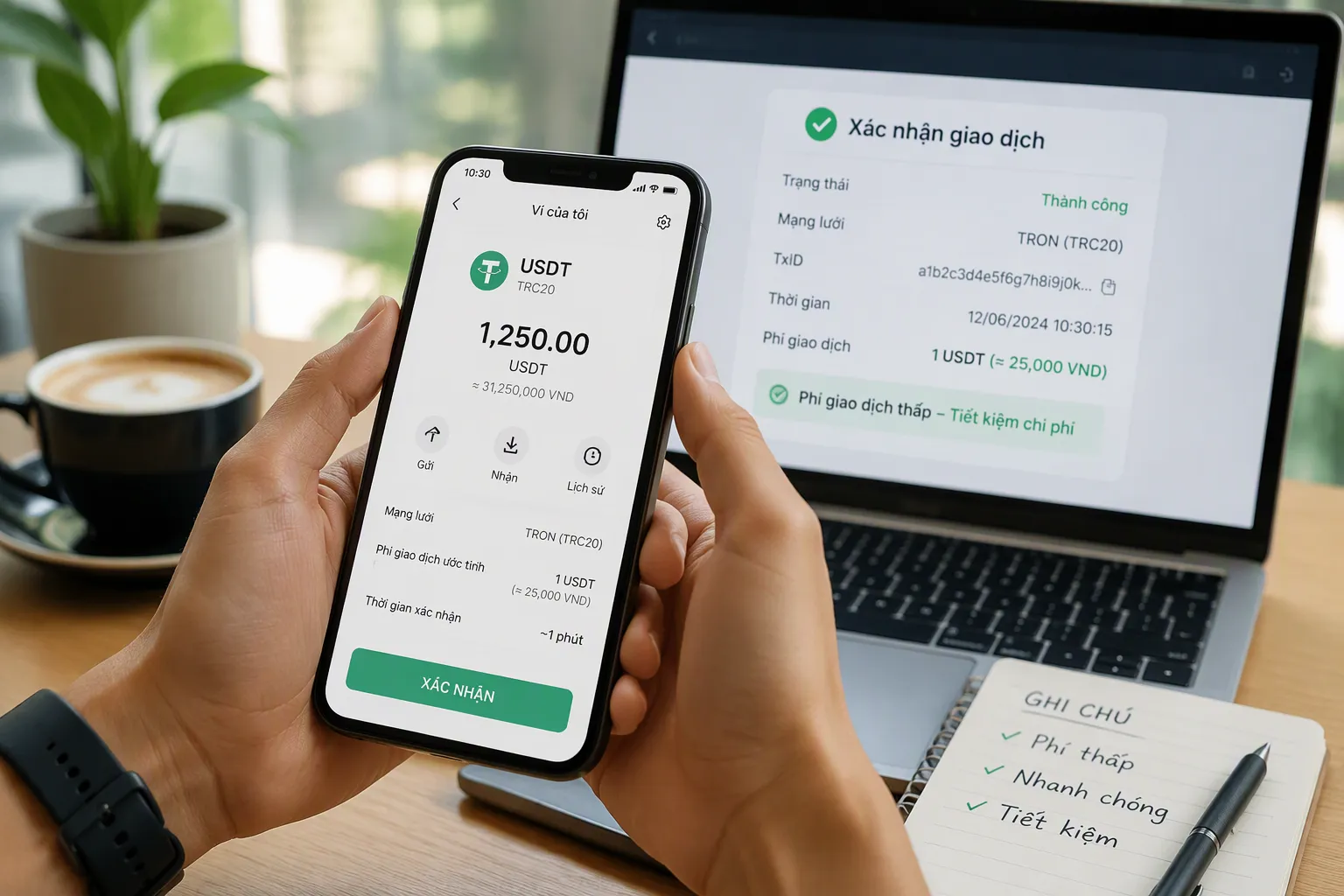
The cheapest way for Vietnamese users to top up USDT is the TRC-20 USDT Top-Up via P2P exchanges like Binance P2P or instant card services such as ChangeNOW. They offer the lowest fees and best VND exchange rates. TRC-20 beats ERC-20 with much lower transaction costs and faster confirmations. You pay less per transfer.
Key Takeaways
Use TRC-20 USDT for low fees and fast transfers. It costs about $1 per transfer, much less than ERC-20.
Choose P2P exchanges like Binance P2P with UUPAY for the best rates. UUPAY finds the lowest spreads and keeps your trades safe.
Always compare rates and use escrow to avoid scams. Check the seller's reputation and never trade outside the platform.
Comparing Top-Up Channels for Vietnamese Users

About the Author: Will is a senior Web3 payment expert and SEO content lead at UUPAY. He has extensive experience in global DeFi and payment ecosystems, focusing on seamless crypto-to-fiat retail solutions. Will continuously analyzes digital wallet integration, international compliance frameworks, and virtual billing optimization, committed to providing safe, simple, and borderless transaction guides for global users.
P2P Exchanges vs. Cash Offices vs. Card Purchases
You have three main ways to turn your VND into TRC-20 USDT. Each channel works differently. P2P exchanges connect you directly with other traders. Cash offices let you walk in and hand over physical money. Card purchases let you buy USDT instantly with a debit or credit card.
P2P platforms like Binance P2P, Bybit, and OKX hold your USDT in escrow until you pay the seller. You send VND through a local bank transfer. The seller releases the crypto after confirming your payment. This method gives you competitive rates because sellers compete for your business.
Cash offices offer face-to-face transactions. You meet a broker, pay in cash, and receive USDT. This route provides anonymity. However, these offices often charge higher fees for the convenience and privacy.
Card purchases through services like ChangeNOW or Banxa let you buy USDT directly. You pay with your bank card. The platform handles the conversion. This method is fast and simple.
Cost, Speed, and Safety Comparison
The table below shows how each channel performs across key factors.
Channel | Fees | Speed | Ease of Use |
|---|---|---|---|
P2P Exchange | Low | Moderate | Moderate |
Cash Office | High | Fast | Easy |
Card Purchase | Low to Moderate | Fast | Easy |
P2P exchanges and card purchases generally cost you the least. Cash offices charge more for anonymity. P2P trades may take a few minutes while you wait for the seller. Card purchases complete in about two minutes. Cash offices finish quickly once you meet the broker.
Safety varies by channel. P2P platforms use escrow to protect both parties. Card purchases rely on established payment processors. Cash offices carry higher risk because no escrow protects your funds. Always verify the seller's reputation before you trade.
Why TRC-20 USDT Top-Up Is the Cheapest Network
Low Fees and Fast Confirmation on Tron
Tron processes transactions in seconds. You send USDT and the network confirms it almost instantly. This speed matters when you trade often or move funds between wallets. The Tron network also charges very low fees for every transfer. You pay roughly $1 flat for a TRC-20 transfer in most cases. That cost stays stable even when the network is busy.
Security remains strong on Tron. The network uses delegated proof-of-stake consensus. This design keeps transactions secure without consuming massive energy. You get fast settlement and low cost at the same time. No other major network matches this combination for stablecoin transfers.
TRC-20 vs. ERC-20 and BEP-20
The fee difference between networks is significant. The table below shows current fee ranges across the three main networks.
Network | Reported current fee range |
|---|---|
TRC-20 (Tron) | ~$0.5–1, often quoted as roughly $1 flat |
ERC-20 (Ethereum) | $2–8, with congestion spikes above $20 |
BEP-20 (BNB Chain) | $0.2–0.5 |
ERC-20 transfers on Ethereum cost you $2 to $8 in normal conditions. During network congestion, those fees can spike above $20. A simple transfer eats into your USDT balance. TRC-20 keeps your costs predictable and low. BEP-20 offers lower fees than ERC-20, but TRC-20 remains the preferred choice for Vietnamese users because of its wide exchange support and reliable speed.
The Cheapest Option: P2P Exchanges with UUPAY
How P2P Trading Works with VND Banks
P2P trading connects you directly with sellers who want to exchange USDT for VND. You pick a seller on platforms like Binance P2P, Bybit, or OKX. The platform locks the seller's USDT in escrow. You then send VND to the seller's Vietnamese bank account through your banking app. The seller confirms receipt and releases the crypto to you. One trade takes about 5 to 20 minutes.
You should open a bank account at Vietcombank, Techcombank, or MB Bank for smooth transfers. These banks process local transfers quickly. Pick a seller who uses the same bank as you. This step reduces transfer time and avoids unnecessary delays.
Each platform sets different minimum trade amounts. Binance requires 200,000 VND, which is roughly $8. Bybit asks for 500,000 VND, about $20. OKX sets the bar at 1,000,000 VND, near $40. Binance P2P charges a 0% exchange fee. Sellers add a spread of 0.1% to 0.3% over the market median. Top-rated sellers often charge less. The Binance P2P median of the top 10 offers serves as the market reference. At the article's data snapshot, that median implied roughly 26,000 VND per USDT.
Using UUPAY for the Best P2P Rates
UUPAY helps you find the best P2P rates and ensures safety during every trade. The platform scans multiple exchanges and shows you the most competitive spreads. You save money on every TRC-20 USDT Top-Up because UUPAY compares rates in real time.
UUPAY offers a new user bonus that includes a virtual card for 1 USDT and 1 USDT cashback. The platform waives fees on card top-ups. A physical card is launching soon with global spending support. You can earn up to 50% cashback on eligible transactions. UUPAY prioritizes safety and instant arrival for every transfer. Additional services include flight and hotel booking, eSIM connectivity, and in-app chat support.
UUPAY holds compliance registrations in multiple jurisdictions. These include a US MSB license, Swiss registration, Canadian registration, and a pending Brazilian license. The platform also maintains a Hong Kong registration. You can join the referral program and earn up to 50% commission on referred trades.
These features make UUPAY the cheapest and most convenient option for P2P trading. You get low fees, fast settlement, and a secure environment for every transaction.
Instant Card Purchases and Other Cheap Methods
Speed matters above all when you need USDT quickly. Card purchases beat P2P matching in those situations. You skip the seller search. You skip the bank transfer wait. Your USDT lands within minutes. ChangeNOW and Banxa lead this category for Vietnamese users.
Buying USDT with VND via ChangeNOW and Banxa
ChangeNOW allows you to buy USDT on the TRC-20 network with VND through your debit or credit card. The platform advertises no hidden fees. Your transaction clears in roughly two minutes. You see the exact exchange rate before you confirm. The service builds the network fee into its quoted price. You never pay a separate miner fee. This fee structure makes the final cost easy to calculate before you commit.
Banxa serves Vietnamese users through card payments in VND. The platform works with local banking partners to process transactions. Vietnamese law describes USDT as legal property. This description gives you a legal basis for holding and transferring stablecoins. You should still document your trades for personal records. Banxa requires identity verification before your first purchase. The verification process takes only a few minutes.
Both services suit quick purchases. You do not need to match with a seller or wait for a manual transfer. Your card payment authorizes instantly. The platform sends the TRC-20 USDT Top-Up to your wallet within minutes. The TRC-20 network fee stays low, so the final cost remains predictable. A typical small purchase completes faster than a P2P trade.
Using XREX and Trustee Wallet for Low Fees
XREX gives you another low-cost path. You deposit VND for free. Withdrawals cost far less than standard exchange fees. The platform connects you to institutional liquidity. You trade against a live order book. When you want to move funds, XREX allows direct TRC-20 withdrawals to your personal wallet. The exchange does not inflate its spread on stablecoin pairs.
Trustee Wallet takes a mobile-first approach. You buy USDT inside the app using a linked card. You can withdraw directly to your card when you decide to cash out. This feature makes Trustee Wallet convenient for Vietnamese users. The wallet supports TRC-20 tokens and maintains low withdrawal fees. You control your private keys. This control gives you full ownership of your stablecoins.
Choose XREX when you prefer exchange-level control and deeper liquidity. Choose Trustee Wallet when you want a simple mobile app with direct card access. Both options keep your costs below typical cash office rates.
These instant channels work best as complements to P2P trading. You use P2P for the lowest possible rates. You use card purchases when speed matters more than the last few thousand VND. The combination gives you flexibility in every market condition. You can switch between both methods depending on your current priority.
Understanding Exchange Rates and Getting the Best Deal
What Determines the VND/USDT Rate?
The VND/USDT rate moves with supply and demand on P2P platforms. Sellers set prices based on their inventory and buyer competition. Excess buyer demand pushes the price up. Sellers with surplus inventory drop prices below the global average. Local bank transfer speeds also affect pricing. Sellers using the same bank as you often quote better rates. Faster clearing means less risk for the seller.
Binance P2P publishes a median reference price from its top-rated sellers. The article's data snapshot placed that median near 26,000 VND per USDT. Sellers add a margin above this median. The typical spread runs between 0.1% and 0.3%. High-volume sellers with good reputations charge the lower end. New sellers offer better prices to attract first trades. You can watch for those opportunities.
Tips to Minimize Spreads and Fees
You can cut costs by comparing rates across multiple platforms. Binance, Bybit, and OKX each show slightly different prices. Open all three apps side by side. Check the top-rated offers, not the first listing. A 0.1% difference seems small. It adds up on large transfers. Always compare your received rate against the median reference price. This reveals your actual loss.
Use UUPAY to automate this comparison. The platform scans multiple exchanges in real time. It surfaces the tightest spread available. Avoid peak trading hours. Evening hours in Vietnam bring heavier traffic and wider spreads. Trade during quieter periods, like late morning or early afternoon. Factor the network fee into your total cost. A $1 TRC-20 fee stays constant. Larger purchases give you a better effective rate.
Safety and Legal Checklist for Vietnamese Users
Avoiding Scams and Ensuring Transaction Security
Scammers target P2P buyers with several common tactics. Fake bank transfer receipts top the list. A scammer sends a fabricated payment confirmation and pressures you to release USDT. Always verify the funds in your actual banking app before you release anything. Trading outside escrow removes all protection. Off-platform deals make loss almost certain. Fake refunds and chargebacks also appear. After receiving USDT, a scammer reverses the bank payment. Urgency tactics push you to skip verification steps.
Scam Tactic | How It Works |
|---|---|
Fake bank transfers | Fabricated receipts pressure you to release USDT |
Trading outside escrow | Off-platform deals remove all protection |
Fake refunds | Scammer reverses payment after receiving USDT |
Urgency tactics | Time pressure makes you skip verification |
Binance P2P escrow protects you through a clear process. The seller's USDT locks in escrow first. You send VND to the seller's Vietnamese bank account. The seller verifies payment directly in the banking app, not from a screenshot. Binance releases the USDT only after confirmation. This prevents unauthorized release.
A Vietnamese news report describes a money-transfer scam variant. A buyer avoids direct payment and gets an unrelated victim to send money under a false pretext. The victim's funds reach a legitimate seller. That seller's bank account is later frozen in a fraud investigation. Reject third-party transfers. Accept only payments from an account name matching the order. Avoid off-platform transactions. Be cautious with new accounts offering unusually good rates.
Legal Status of Crypto Trading in Vietnam
Vietnam has moved toward formal recognition of digital assets. On September 9, 2025, the Government issued Resolution 05, launching a five-year pilot of digital-asset markets. In July 2025, the National Assembly passed the Law on Digital Technology Industry. This law formally recognizes digital assets. It requires crypto platforms to hold a domestic license and provide direct VND on-and-off ramps by January 1, 2026.
Resolution 05 sets clear requirements for exchanges. They need domestic licensing, VND trading, and a minimum capital of VND10 trillion (about $380 million). Trading fees are not yet finalized. They will initially stay at the stock market fee level, about 0.15% on average. The Government aims to move crypto activity from informal offshore markets to formal, taxable, onshore channels. Tax obligations for crypto trading were not yet formally enacted in 2025. They remain under consideration as part of the market formalization process. Stay updated on these regulations as they develop.
You save the most money by pairing the TRC-20 network with the right channel. Use P2P exchanges through UUPAY for the lowest rates. Choose ChangeNOW or Banxa when you need instant card purchases. Always compare rates across platforms. Stick to escrow-protected trades. Watch network fees closely. Follow the first-trade checklist for a safe, cheap TRC-20 USDT Top-Up.
FAQ
Which bank should I use for P2P USDT top-ups?
Open your account at Vietcombank, Techcombank, or MB Bank. These banks process local transfers quickly. You will enjoy faster P2P trade settlement and fewer delays.
How much does a TRC-20 transfer cost?
A TRC-20 USDT transfer costs roughly a $1 flat fee. ERC-20 transfers cost between $2 and $8, and congestion can push them above $20. TRC-20 keeps your costs predictable.
How does UUPAY help me save on P2P rates?
UUPAY scans multiple exchanges in real time and shows you the tightest spreads. You compare rates instantly, pay less on every top-up, and trade with greater confidence.
See Also
Top Methods For Using USDT Cards On Google Play In Vietnam
Step By Step Guide For Paying Utility Bills Abroad With USDT Visa In Vietnam
Full Guide To Using USDT Cards For Payments Throughout Thailand
Advanced Guide For Unbanked Users To Convert Crypto With USDT Visa Cards
