USDC vs USDT for Everyday Card Spending
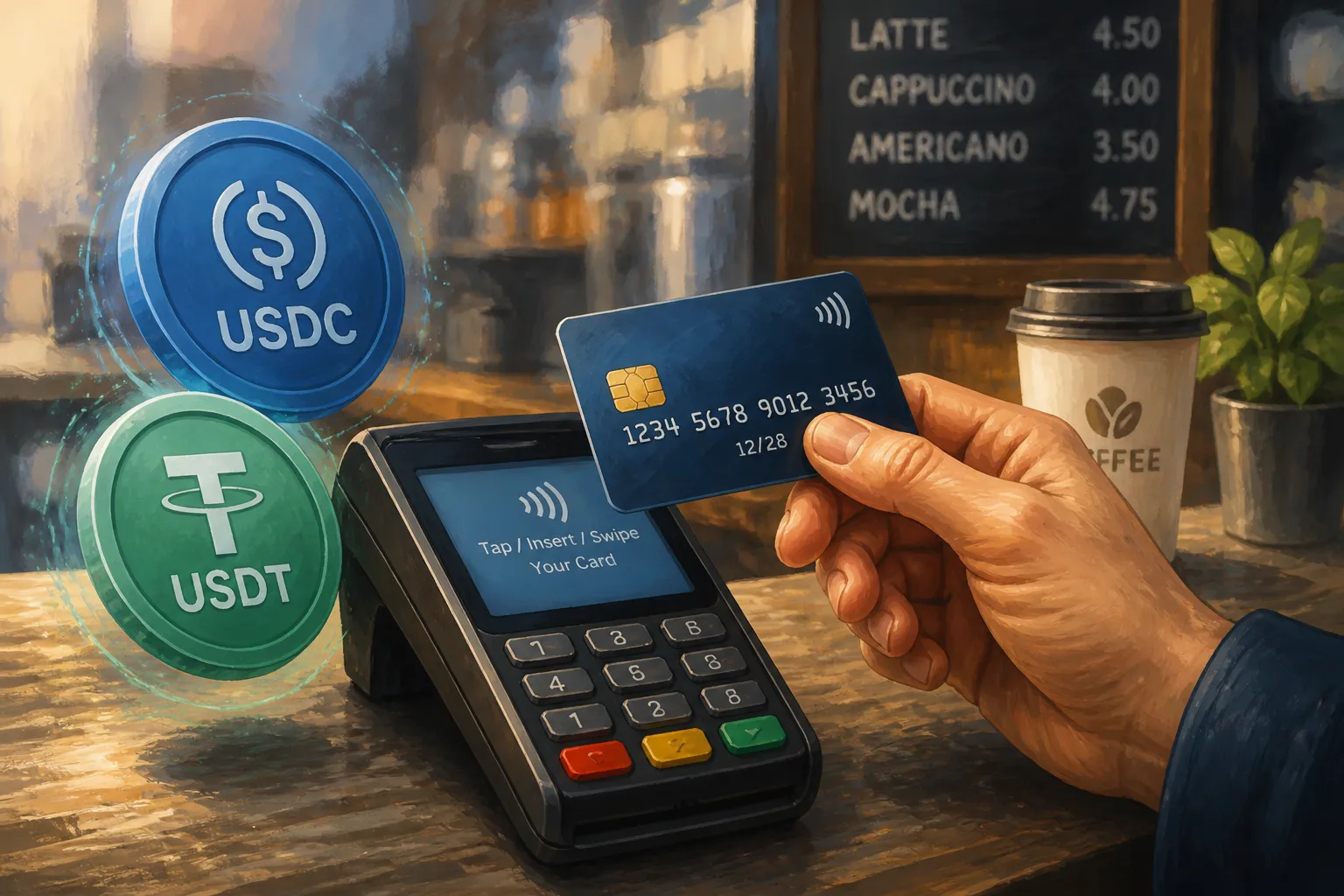
For everyday card spending, USDC generally suits most users better. It offers stronger regulatory compliance and lower conversion fees on major card networks. USDT fits better where merchant acceptance or specific card programs favor it. Everyday card spending means debit and prepaid cards funded by stablecoin balances. This USDC vs USDT comparison weighs four criteria: speed and reliability, merchant and card integration, regulatory clarity, and cost. Both stablecoins have real strengths.
Key Takeaways
USDC often works best for everyday card spending because it has clear rules and lower fees.
USDT fits well when your card program or merchants prefer it.
Always check which stablecoin your card program accepts before you add funds.
USDC vs USDT: Quick Comparison

Summary Table
The table below sets the two stablecoins side by side across the four criteria that matter for card spending. Read each row as a general tendency, not a guarantee for every card program.
Criterion | USDC | USDT |
|---|---|---|
Speed and reliability | Fast settlement on major networks; consistent performance at peak demand | Fast settlement on major networks; widely used, with heavy settlement volume |
Merchant and card integration | Accepted by many major card programs and wallets | Broad merchant acceptance and deep liquidity across exchanges |
Regulatory compliance | Strong licensing and reserve transparency; aligned with frameworks such as MiCA | Broad global reach; regulatory treatment varies by issuer and region |
Cost | Often lower conversion fees on major card networks | Conversion costs vary by program; some cards carry daily limits and minimums |
Both stablecoins are pegged 1:1 to the U.S. dollar. One dollar of either should be worth one dollar for everyday transactions. That peg keeps the comparison focused on practical factors rather than price.
How to Read It
Start with the row that matches your spending habits. If you spend mostly through one card program, check that program's supported stablecoins first. UUPAY-supported card programs may accept either stablecoin, so check your specific program before you fund a card. UUPAY holds a US MSB license and PCI DSS Level 1 certification, which gives you a named compliance baseline to compare against.
Treat the table as a starting point. A card program can change its fees, limits, or supported assets at any time. Confirm the current terms in your card agreement. The sections that follow unpack each row in turn, so you can see where USDC vs USDT differences actually affect your daily spending.
Speed and Reliability
Settlement and Network Availability
Both stablecoins settle quickly on major networks. The network you pick matters more than the asset itself. USDT runs on several chains, and each chain carries its own fee and speed profile.
Network / Asset | Fee | Reliability note |
|---|---|---|
USDT on Tron (TRC-20) | often under $1 per transaction | Combines stability with low fees |
USDT on Ethereum (ERC-20) | fee difference between the two networks can be $15-20 | Not every card program supports every network; sending on the wrong network can cause permanent loss of funds |
USDT on the TRON network (TRC-20) offers fast transactions, typically under 5 minutes, with cheap fees that often stay under $1. USDC also settles fast on major networks. Check which networks your card program accepts before you send funds.
Performance at Peak Demand
Congestion changes the picture. The Ethereum network saw several congestion events in 2021 after demand exceeded capacity. Gas fees surged and could spike to 300-400 Gwei, which pushed bridging costs over a few hundred dollars. Users also waited much longer for wrapped tokens to arrive on the target chain.
Fee gaps widen under load. During periods of high blockchain congestion, a Bitcoin withdrawal might cost $20, while a USDT (TRC-20) withdrawal might cost $1. That gap shows why network choice shapes your real cost. This USDC vs USDT reliability question comes down to the chain behind each transfer, so confirm your card program's supported networks and current fee terms before you fund a card.
Merchant and Card Integration
Supported Wallets and Card Programs
Most major wallets hold both stablecoins, so your wallet rarely limits your choice. The card program behind the wallet matters more. UUPAY supports stablecoin spending through virtual and physical cards. New users can open a virtual card for 1U and receive 1U cashback. All users enjoy fee-free card top-ups. UUPAY also launched physical cards with global acceptance, up to 50% cashback, security features, and instant settlement. Beyond cards, UUPAY offers hotel and flight booking, eSIM, and chat features. Its compliance base includes a US MSB license, Swiss and Canadian licenses, a pending Brazilian license, Hong Kong registration, and PCI DSS Level 1 certification, with 24/7 global support. A referral program raises rebate levels up to 50% commission when you invite friends.
Where Each Fits Best
USDT wins on raw merchant acceptance and settlement volume. Many exchanges and payment desks quote USDT first, so it fits spending patterns built around those venues. USDC fits card programs that prioritize regulatory clarity and predictable conversion. This USDC vs USDT split is practical, not absolute. Check your card program's supported assets before you fund a card, because acceptance varies by issuer and region. If your program accepts both, compare its conversion terms and daily limits, then pick the stablecoin that matches your spending habits.
Regulatory Clarity and Protections
Licensing and Reserve Transparency
Regulatory clarity separates the two assets most sharply. USDC's issuer operates under a licensing framework aligned with MiCA, the European Union's crypto rulebook. That alignment gives you a named standard to check against. USDC reserves also come with published transparency, so you can verify the backing rather than take it on faith.
USDT reaches a broader global market, and its regulatory treatment varies by issuer and region. That variation is not a flaw. It simply means you should confirm the rules that apply where you live and where your card program operates. This USDC vs USDT difference matters most if you value a clear, checkable compliance trail.
Your card provider's own licenses matter just as much as the stablecoin's. UUPAY holds a US MSB license and PCI DSS Level 1 certification. Its group also holds Swiss and Canadian licenses, a pending Brazilian license, and Hong Kong registration. Those credentials give you a concrete baseline for comparison.
Consumer Protections for Card Users
Consumer protections flow mainly from the card program, not the stablecoin. A licensed issuer typically applies identity checks, transaction monitoring, and dispute processes. Check your card agreement for the protections you actually receive.
Compliance depth varies by provider. UUPAY pairs its licensing base with 24/7 global support, so you have a channel for account or transaction questions at any hour. Confirm how your program handles disputes and unauthorized charges before you fund a card. A clear process protects your balance better than any single feature.
Fees and Conversion Costs
Network and Conversion Fees
Network choice drives most of your transfer cost. USDT on Tron (TRC-20) often costs under $1 per transaction. USDT on Ethereum (ERC-20) can differ from the Tron network by $15–20. That gap dwarfs any difference between the two assets themselves.
Congestion widens the spread further. During peak load, a Bitcoin withdrawal might cost $20 while a USDT (TRC-20) withdrawal costs $1. You control this cost by picking the right network before you send funds. Check which chains your card program accepts, because a cheap transfer on an unsupported network can cost you the entire balance.
Conversion fees add a second layer. Card programs convert your stablecoin to fiat at their own rate. Compare that rate across programs, not just across assets. The USDC vs USDT cost question often comes down to the issuer's conversion terms rather than the token.
Card Program Fees
Your card program sets the fees you actually pay. UUPAY charges no fee on card top-ups for all users, so funding a card costs you nothing extra. New users can open a virtual card for 1U and receive 1U cashback, which offsets the opening cost entirely.
Watch for limits and minimums. Some USDT cards set a daily limit around HKD 100,000 (roughly $12,500) and a minimum transaction of HKD 0.10. Coinbase Card charges no fee for USD/USDC spending, yet its card terms note a 2% fee. Read your card agreement for the exact numbers that apply to you.
Choosing USDC vs USDT by Scenario
Small Purchases and Subscriptions
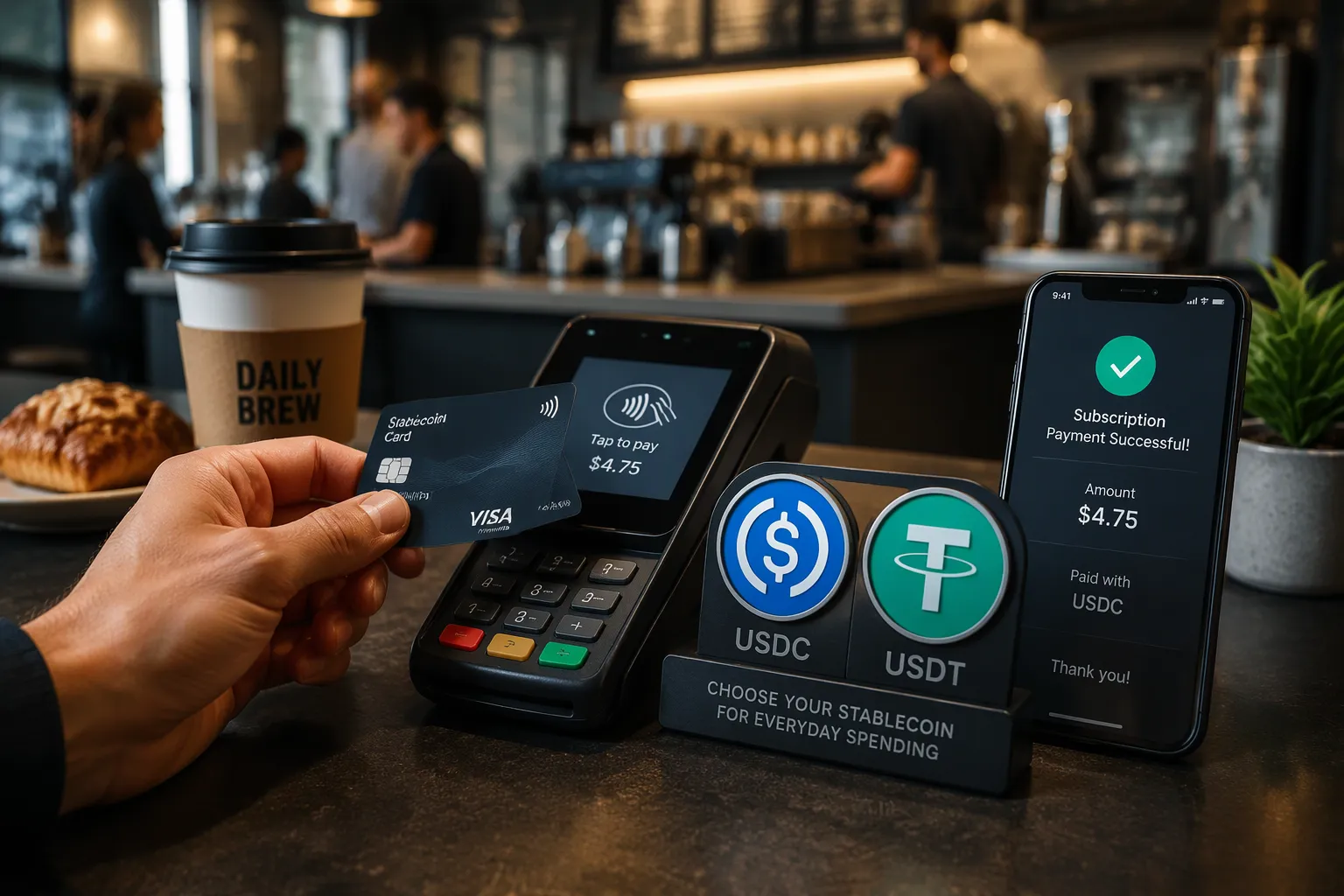
Your daily spending pattern should drive the choice. Groceries, food delivery orders, eBay purchases, and Netflix or Disney+ subscriptions all share one trait: small, frequent charges. For these, conversion cost matters more than anything else. USDC often carries lower conversion fees on major card networks, so frequent small charges keep more of your balance intact. Coinbase Card illustrates the structure well. It charges no fee for USD/USDC spending, yet its card terms note a 2% fee. Read your own card agreement to see which line applies to your stablecoin.
USDT also works for small purchases. Some USDT cards set a minimum transaction of HKD 0.10, which clears easily for a coffee or a subscription charge. Those same cards may cap daily spending around HKD 100,000 (roughly $12,500). That ceiling rarely binds on groceries or streaming bills. Check the minimum and the daily limit before you commit, because a low minimum keeps small charges smooth.
International Spending and Issuer Support
Travel and cross-border purchases shift the decision toward issuer support. Pick USDC when regulatory clarity tops your list. Its issuer operates under a framework aligned with MiCA, the European Union's crypto rulebook, and that gives you a checkable standard. Lower conversion fees on major card networks add a second reason. A card program built on USDC often converts your balance at a predictable rate, which helps when you pay in a foreign currency.
Pick USDT where merchant acceptance, settlement volume, or a specific card program favors it. Many exchanges and payment desks quote USDT first, so a USDT-funded card fits spending built around those venues. Neither option is wrong here. The USDC vs USDT decision for international spending comes down to which asset your issuer supports and how it prices conversion.
Your card provider's own credentials deserve equal weight. UUPAY holds a US MSB license and PCI DSS Level 1 certification, plus Swiss and Canadian licenses, a pending Brazilian license, and Hong Kong registration. New users open a virtual card for 1U and get 1U back as cashback. All users enjoy fee-free card top-ups. Physical cards now offer global acceptance with up to 50% cashback and instant settlement. Confirm which stablecoin your program accepts, then match it to how you actually spend.
USDC generally suits most everyday card spenders. Its compliance strength and lower conversion costs give it the edge. USDT remains a solid fit where card programs or merchant acceptance favor it. Weigh speed, integration, regulation, and cost against your own habits. Confirm which stablecoin your card program, including UUPAY-supported cards, accepts before you fund it.
FAQ
Which stablecoin should you fund your card with?
Start with your card program's supported assets. Choose USDC if you value MiCA-aligned compliance and lower conversion fees. Choose USDT if your program or merchants favor it. Confirm current terms before funding.
Do card programs accept both USDC and USDT?
Many do, including UUPAY-supported cards. Acceptance varies by issuer and region, so check your specific program. UUPAY holds a US MSB license and PCI DSS Level 1 certification, with 24/7 global support.
How do you keep card costs low?
Pick a low-fee network such as TRC-20 for transfers. Compare your issuer's conversion rate and daily limits. UUPAY charges no card top-up fees, and new users open a virtual card for 1U with 1U cashback.
See Also
Guide To Using USDT Debit Cards For Everyday Payments
Advanced USDT Visa Card Guide For Unbanked Users Daily Crypto Spending
Using USDT Visa Cards To Budget Daily Costs For Cross-Border Sellers
Discover The Advantages Of USDT Cards For Smooth Transactions
Advanced USDT Visa Card Guide For Digital Nomads Daily Budgeting
