Virtual card for crypto to US equities
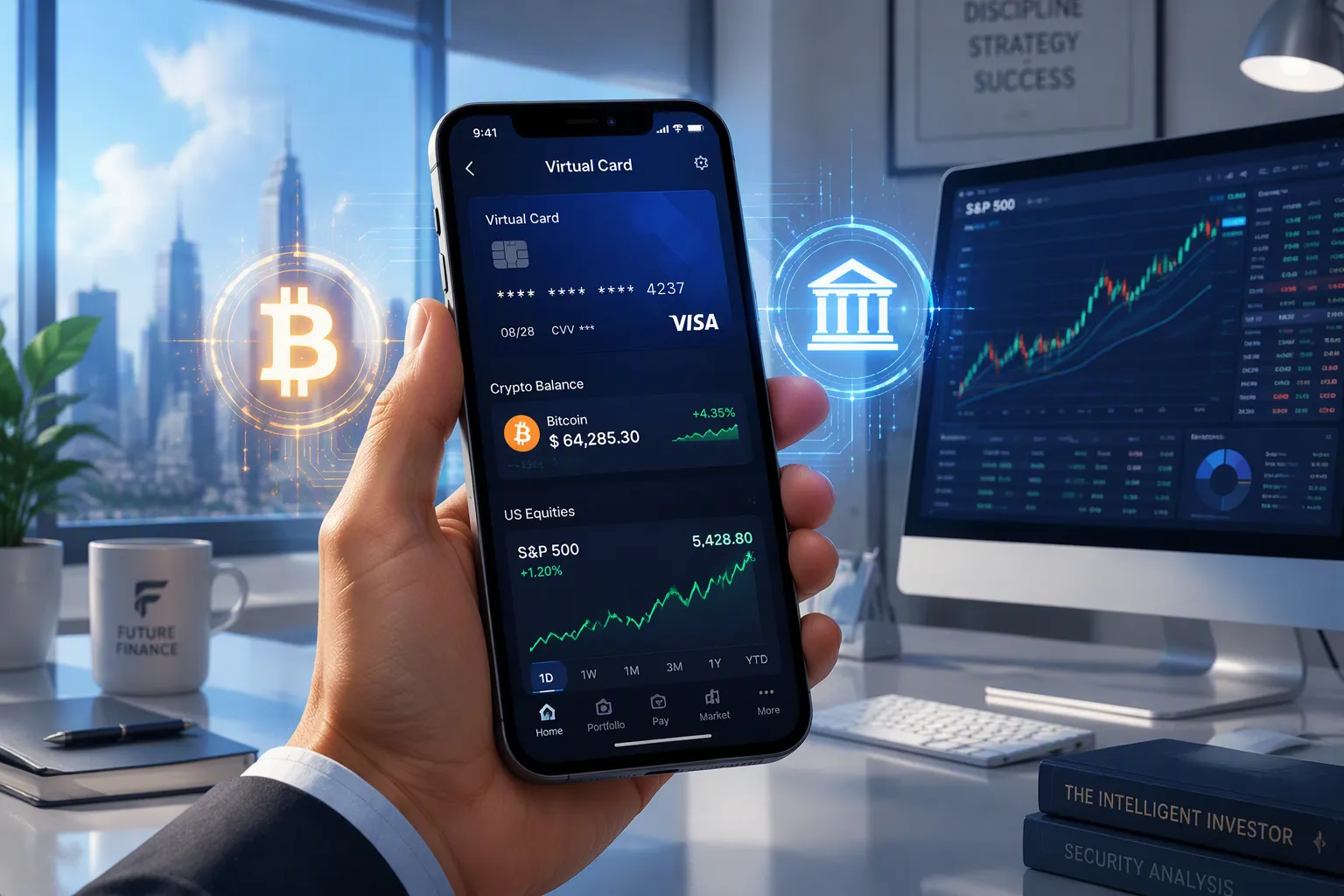
You can use a virtual card to spend crypto directly on US equities, bypassing traditional banking. Bank cash-outs bring delays and high wire fees. A virtual card offers instant conversion instead.
This guide covers practical steps, key benefits, and critical risks like tax implications. You will learn to invest efficiently and confidently.
Key Takeaways
Use a virtual card to turn crypto into dollars instantly for buying US stocks.
Choose a provider like UUPAY for low fees and fast setup.
Remember that crypto price swings and taxes can affect your investment.
Using a Virtual Card for US Equities

A virtual card functions as a prepaid debit tool, not a credit card. You load it with cryptocurrency such as BTC, ETH, or USDC. When you make a transaction, the card provider converts your crypto into fiat USD at the live market rate. The merchant receives USD, and your crypto balance decreases by the equivalent value plus any conversion spread. This mechanism eliminates manual exchange steps entirely.
Funding Your Brokerage Account
Follow this process to move crypto into a US brokerage account:
Choose a reputable provider. Major exchanges like Bybit, Plutus, Wirex, and Nexo offer virtual cards. UUPAY also provides competitive options.
Complete KYC verification. Providers require identity confirmation before issuing a card.
Fund the card with crypto. Transfer your chosen cryptocurrency to the card account.
Link the card to a US brokerage account. Platforms like Charles Schwab and Interactive Brokers accept card or ACH deposits.
Initiate a transfer. Move funds from your virtual card to your brokerage account to purchase stocks.
KYC verification typically requires several documents:
Government-issued photo ID: Passport works universally. National ID cards apply within EU/EEA regions. Driver's licenses vary by jurisdiction.
Proof of address: A utility bill or bank statement dated within three months works. It must show your full name and residential address.
Selfie or liveness check: Many providers require this to confirm you match your submitted ID in real time.
For example, if you want to purchase a cup of coffee worth $5 and you choose to pay with Bitcoin, the card provider will convert a small amount of Bitcoin to cover the $5 transaction. This process eliminates the need for you to manually exchange crypto before spending it.
Top Virtual Card Providers
Several providers stand out for crypto-to-equities funding. Coinbase offers a Visa prepaid debit card with no annual fee and instant conversions across multiple cryptocurrencies. Crypto.com provides virtual cards through its app ecosystem. Bybit and Plutus also issue virtual cards quickly, making setup efficient.
UUPAY deserves special attention for cost-conscious users. New users receive a virtual card for 1U with an instant 1U cashback, effectively making it free. The platform charges zero recharge fees for all users. UUPAY also plans a physical card launch with up to 50% cashback on purchases. Compliance credentials include a US MSB license, Hong Kong registration, a Swiss license, and a Brazil license pending approval. The company holds PCIDSS Level 1 certification, ensuring secure payment processing. Referral rewards reach up to 50% commission, and 24/7 global support assists users across time zones.
Exchange rates vary among providers, and sources do not disclose specific conversion spreads. You should compare rates before committing to one platform. Start with a small test transaction to understand the flow and fees. This approach minimizes risk while you learn the mechanics.
Weighing the Benefits and Risks

Key Advantages
Speed stands as the most compelling reason to use this approach. A virtual card converts your crypto to USD at the moment of transaction. You receive instant confirmation. Compare that to traditional bank wires, which take one to three business days for domestic transfers and up to five days internationally. The table below illustrates this difference clearly:
Method | Typical Speed |
|---|---|
Crypto Virtual Card (Debit) | Instant to 15 minutes |
Bank Wire Transfer | 1–3 business days (domestic same-day possible if initiated before cutoff; international 1–5 days) |
Cost efficiency also matters. Traditional crypto-to-fiat conversion routes often charge three to five percent in combined fees. Virtual card providers typically charge one to two percent. UUPAY currently eliminates recharge fees entirely, which reduces your overhead further. You also gain global access without needing a US bank account. Anyone with verified identity can participate in US equity markets from anywhere.
Security adds another layer of value. You receive a disposable card number that you can freeze instantly through your provider's app. If a merchant suffers a data breach, your main crypto holdings remain untouched. You control exactly how much sits on the card at any time.
Risks and Tax Implications
Volatility poses the first significant risk. Cryptocurrency prices fluctuate dramatically compared to traditional currencies. Historical data from 2018 to 2022 shows Bitcoin moving an average of 2.87 percent daily. Ethereum moves even more at 3.76 percent. Traditional currencies like the Euro, Pound, and Yen move only 0.34 to 0.43 percent daily.

This volatility creates exchange rate risk during short periods. When you initiate a transaction, the USD value of your crypto may shift before conversion completes. Either you or the merchant absorbs that difference. The result can increase your effective purchase cost unexpectedly.
Security risks extend beyond market movements. Phishing attacks target crypto users constantly. Exchange hacks have stolen billions over the years. You should enable two-factor authentication on every account. You should also avoid storing large amounts on your card. Treat it as a spending tool, not a savings account.
Tax implications demand serious attention. Using crypto to buy stocks constitutes a taxable event in the United States. The IRS can track crypto wallets through exchange reporting requirements. You must track the cost basis of every cryptocurrency you spend. You must report capital gains or losses on your tax return. Consult a tax professional before executing large transactions. Failure to report correctly can trigger penalties and interest charges.
The streamlined convenience of a virtual card does not exempt you from tax obligations. Proper record-keeping protects you from costly surprises during tax season.
Start with a small test transaction to understand the complete flow. This approach limits your exposure while you learn the mechanics of conversion, transfer, and stock purchase.
Virtual card bridges crypto holders to US equities with speed and efficiency. This virtual card bypasses traditional banking hurdles. However, volatility and tax reporting obligations remain real risks. Start with a small test transaction using UUPAY with zero recharge fees. You become an early adopter of the convergence between crypto and traditional finance.
FAQ
Is using a virtual card to buy stocks a taxable event?
Yes. The IRS treats crypto-to-fiat conversion as a sale. You must report capital gains or losses on your tax return.
How fast does the conversion complete?
The conversion happens instantly at the transaction moment. You receive confirmation within minutes, unlike bank wires that take days.
Can you lose money from crypto price changes during conversion?
Yes. Crypto prices move quickly. The USD value can shift before conversion completes, affecting your final purchase cost.
See Also
Steps To Acquire A Cryptocurrency Payment Card
Top Digital Cryptocurrency Card Services Reviewed For Advantages
Simple Methods For Getting A Digital Crypto Debit Card
Evaluation Of USDC Cards Versus Top Cryptocurrency Card Alternatives
