Virtual card for crypto to debit card conversion
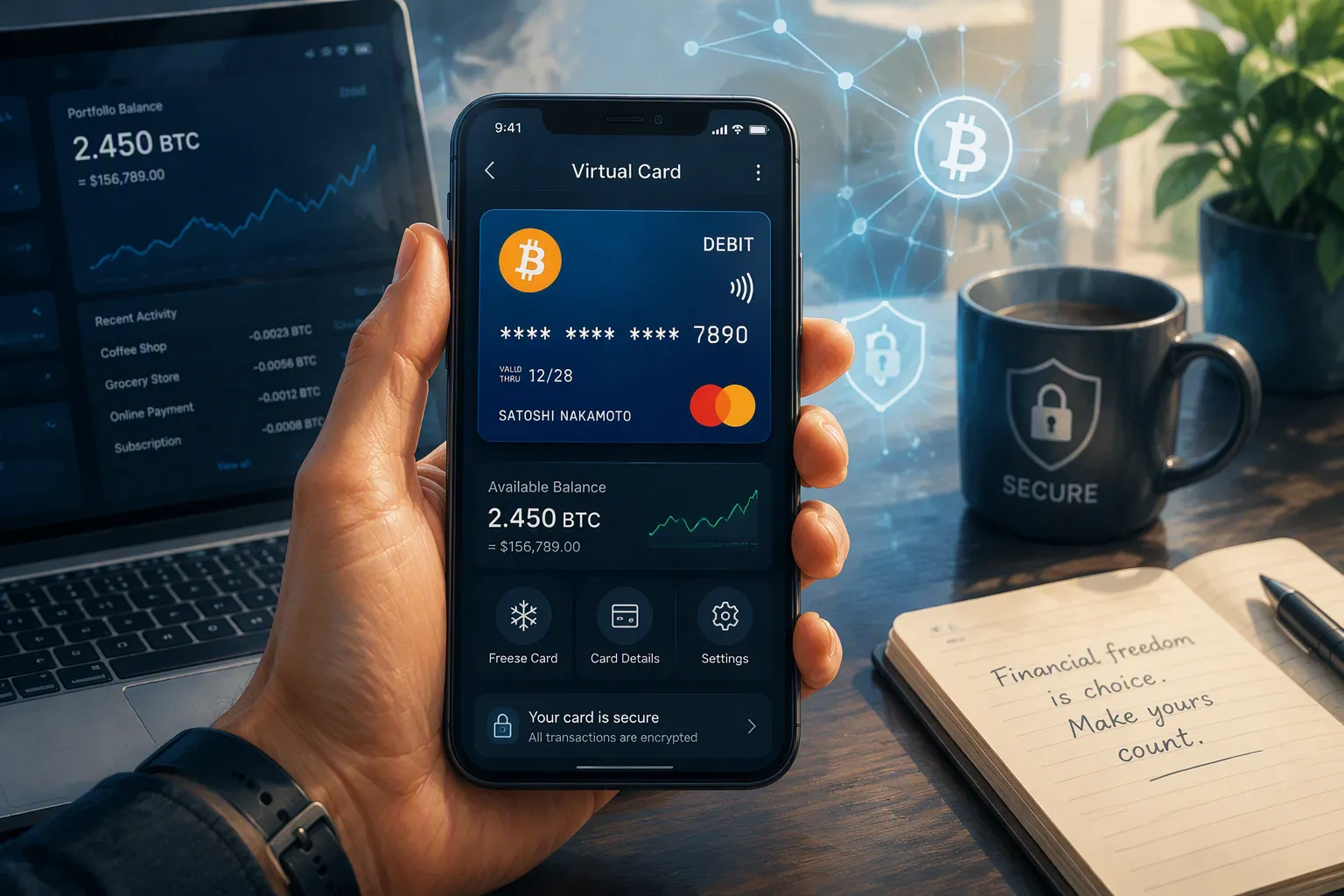
A virtual card for crypto converts your digital assets to fiat instantly at the point of sale. You can spend it anywhere debit cards work. These cards excel for online purchases. They also serve you while waiting for a physical card. This guide walks you through the setup process step by step.
Key Takeaways
A virtual card for crypto converts your digital money to regular money instantly when you pay.
Setting up a virtual card takes about 5-10 minutes. You choose a provider, fund your wallet, and create the card.
Check fees, security features, and spending limits before you choose a provider. Some cards work only for online purchases.
How a virtual card for crypto converts your funds
A virtual card for crypto operates differently than a prepaid debit card. You do not load fiat currency before spending. Instead, the card converts your digital assets at the exact moment of purchase. This distinction matters because it eliminates the need to predict when you will spend or how much you will need.
Real-time conversion at point of sale
The conversion process relies on a pre-funded fiat float. The card-issuing entity maintains a reserve of traditional currency with its acquiring bank partners. When you make a purchase, the merchant receives payment from this float instantly. The merchant never waits for a crypto transaction to confirm on-chain.
Behind the scenes, the exchange offsets its float exposure by converting your crypto balance. This happens through internal liquidity pools or a matching engine, not through external market trades. This internal netting makes the process faster and cheaper than executing separate trades for each card swipe.
The transaction flow follows a precise sequence. You tap or swipe your card at a merchant terminal. The terminal sends an authorization request through the Mastercard or Visa network to the card processor. The processor checks your account to verify sufficient crypto assets at current market rates. The platform calculates the crypto amount needed, applying the spot rate plus a conversion spread. The exchange sells your crypto internally and converts it to the fiat equivalent. The processor sends approval back through the network, and the transaction completes. Your crypto balance updates immediately.
Providers like UUPAY operate under a custodial model. UUPAY holds your cryptocurrency and automatically converts the required amount into local fiat at the point of sale. You never manually sell crypto or wait for a bank transfer. The merchant receives a standard card payment in local currency. UUPAY has also launched a physical card that offers global spending and secure instant conversion, extending the same functionality beyond online transactions.
Global acceptance and earning rewards
A virtual card for crypto works wherever debit cards are accepted. This includes millions of merchants worldwide. The crypto card market is worth $25 billion.
Rewards structures vary by provider. Some cards offer cashback in Bitcoin or stablecoins. Others pay rewards in platform tokens. Tier-based systems are common, where your reward rate increases with staked tokens or higher spending. Traditional credit cards typically offer 1-2% baseline cashback without capital lockup. Crypto cards may advertise higher rates, but staking requirements and token price volatility can reduce the net return.
One important limitation exists. Some virtual cards do not support point-of-sale transactions or ATM withdrawals. They work only for online purchases. Before choosing a provider, verify which transaction types your card supports.
Setting up your virtual card for crypto spending
The setup process for a virtual card for crypto is straightforward. Here is what you need to do to complete the process.
Choosing a provider and funding your card
Start by selecting a provider. Different platforms offer different features. Evaluate options based on the criteria below.
Criterion | Key Considerations |
|---|---|
Fees | Creation fees vary by provider (free or minimal). Transaction fees vary by provider (percentage or flat fee). Top-up fees may apply or be included in exchange rates. Monthly fees may apply. |
Supported Cryptocurrencies | Verify the platform accepts your specific coins. Sending unsupported crypto may result in permanent loss. |
Security | Funds are not insured. Choose platforms with multi-year track records. Enable two-factor authentication. Avoid holding large balances on no-KYC cards. |
KYC & Limits | No-KYC cards offer privacy but lower limits. Verified cards provide higher spending power. |
Card Network & Delivery | Choose Visa or Mastercard. Most virtual cards deliver instantly. |
Once you choose a provider, follow these steps to set up your card.
Download the provider's app from the official app store.
Create an account and set up security features like fingerprint or Face ID.
Write down your recovery phrase on paper. Store it safely. Never screenshot it.
Fund your wallet by buying crypto, transferring from another wallet, or receiving from someone.
Navigate to the virtual card section and create your card. The number, expiry, and CVV generate instantly.
Your crypto converts instantly into a spendable balance at the point of sale. You can use the card right after funding. A virtual card for crypto like UUPAY offers instant conversion at the point of sale.
Fees, security, and spending limits
Understanding fees protects your spending power. Some providers charge no monthly fees. Review the fee schedule before committing to a provider.
Security measures vary by provider. The table below lists common protections.
Security Measure | Description |
|---|---|
Encryption | Scrambles transaction data. |
Two-Factor Authentication (2FA) | Requires two verification steps to verify identity. |
Tokenization | Replaces sensitive card details with a unique, one-time token. |
Dynamic CVV | Changes the card verification code with each transaction. |
Biometric Authentication | Uses fingerprints or facial recognition. |
Fraud Detection Systems | Real-time monitoring to block suspicious activity. |
Virtual Card Number Generation | Creates temporary card numbers for single-use transactions. |
Spending limits depend on your verification level. Higher limits require complete KYC. A virtual card for crypto gives you flexibility. Check your provider's daily and monthly limits before making large purchases. Always verify your limit before spending.
Virtual cards bridge the gap between crypto and everyday spending. You gain instant conversion at the point of sale. However, consider fees, volatility, and transaction limitations. Some virtual cards do not support POS or ATM withdrawals.
A virtual card for crypto from providers like UUPAY offers a balanced solution with strong security measures. Evaluate your personal needs first.
