Virtual crypto cards vs bank debit: fees and approvals
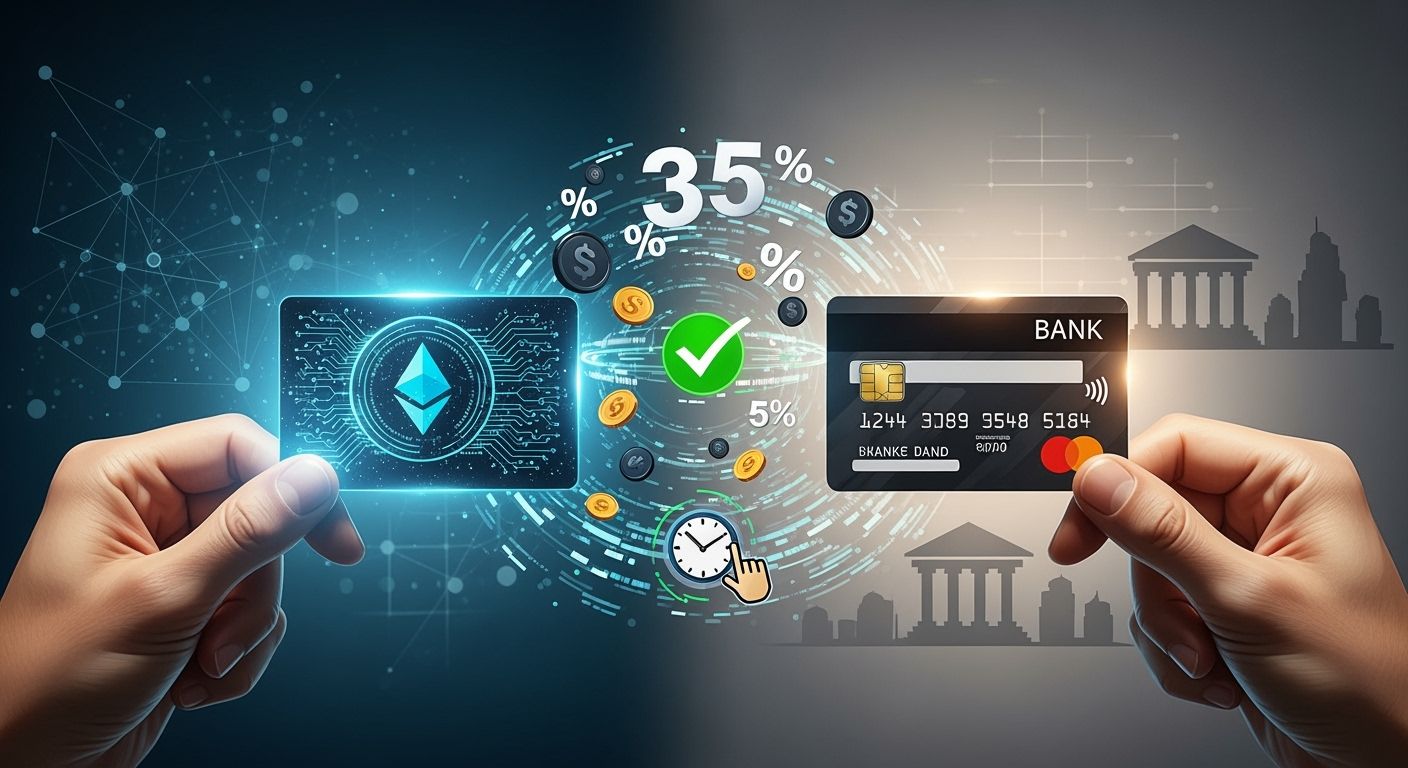
You usually find virtual crypto cards offer lower fees and faster approvals than traditional bank debit cards. Fees and approvals affect your everyday spending and financial control. Choosing the right card helps you manage spending, enjoy greater convenience, and reduce fraud risk.
Benefit | Description |
|---|---|
Enhanced Security | Reduces fraud risk |
Better Control | Manage spending limits |
Greater Convenience | No physical card needed |
Ease of Online Purchases | Streamlines transactions |
Key Takeaways
Virtual crypto cards offer faster approvals and lower fees compared to bank debit cards, making them a convenient choice for online shopping.
You can manage spending limits easily with virtual crypto cards, helping you control your budget and reduce the risk of overspending.
Virtual crypto cards enhance your privacy by not linking personal information to transactions, unlike bank debit cards that require personal details.
Quick Verdict
Main Differences
When you compare virtual crypto cards and bank debit cards, you notice several important differences. Virtual crypto cards often provide faster approval and lower upfront fees. You can usually get approved without a credit check, and the process is simple. Bank debit cards, on the other hand, require a bank account and sometimes more paperwork.
Here is a quick comparison to help you decide:
Feature | Virtual Crypto Cards | Bank Debit Cards |
|---|---|---|
Approval Speed | Instant or within minutes | 1-5 business days |
Credit Check | Rarely required | Sometimes required |
Fee Transparency | Varies, may have hidden fees | Usually clear |
Foreign Transaction Fees | Sometimes lower | Often higher |
ATM Access | Limited, with caps/fees | Broad, but may charge fees |
Virtual crypto cards may charge for card issuance, monthly maintenance, or inactivity. Some providers cap no-fee cash withdrawals each month, and hidden markups on exchange rates can affect your costs.
Bank debit cards usually have more predictable fees, but you may pay more for international use.
Everyday Use
You will find virtual crypto cards work best for online shopping, quick approvals, and spending control. You can set spending limits and avoid carrying a physical card. Bank debit cards suit you if you need easy ATM access or want to use your card in more places. For most users who value speed and lower approval barriers, virtual crypto cards offer a modern alternative, but always check the full fee schedule before you choose.
Virtual Crypto Cards and Bank Debit Cards
Virtual Crypto Cards
You can use virtual crypto cards to spend digital assets directly, without needing a traditional bank account. These cards let you pay at any merchant that accepts Visa or Mastercard. You gain flexibility for online purchases and enjoy fast approvals. Many virtual crypto cards do not charge exchange rate fees, so you save money when shopping internationally. You often receive cash-back rewards in cryptocurrency, which adds value to your spending.
UUPAY stands out as a global provider of virtual crypto cards. You benefit from its strong compliance credentials, including a US MSB license, PCIDSS Level 1 certification, Hong Kong registration, Swiss license, and a Brazil application. UUPAY supports users worldwide, making it easy for you to access secure and reliable payment solutions.
You do not need a bank account to use virtual crypto cards.
You can manage spending limits and enjoy enhanced privacy.
You avoid many traditional banking barriers.
Bank Debit Cards
Bank debit cards connect directly to your checking or savings account. You use them for everyday purchases and ATM withdrawals. These cards offer broad acceptance and predictable fees. You usually face currency conversion charges when shopping abroad. You do not receive crypto rewards, but you gain easy access to cash and in-person transactions.
You must open a bank account to get a debit card. Approval may take several days, and you provide personal information for verification. Bank debit cards suit you if you value ATM access and want to use your card in most physical stores.
Fees Comparison
Transaction Fees
You pay transaction fees every time you use a card for purchases. Virtual crypto cards usually charge between 2% and 4% per transaction. This includes top-up, conversion, and foreign exchange fees. If you optimize your usage, you can lower these fees to about 1% to 1.5%. Some providers offer $0 issuance and monthly fees, with only a 1% top-up and FX fee, and no per-transaction charge. Bank debit cards often have no transaction fee for domestic purchases, but you may face extra costs for international transactions or currency conversion.
Tip: UUPAY offers a special deal for new users. You can open a virtual card for only 1U and receive 1U back. All users enjoy zero card top-up fees, which helps you save on regular spending.
Virtual crypto cards: 2%–4% per transaction (can be as low as 1%–1.5% with optimization)
Bank debit cards: Usually $0 for domestic, but higher for international
ATM Withdrawal Fees
You may need cash sometimes, so ATM withdrawal fees matter. Virtual crypto cards charge between $2 and $5 per withdrawal. You also pay a foreign exchange spread if you withdraw in another currency. Bank debit cards usually let you withdraw cash for free at local ATMs, but you pay high fees for overseas transactions.
Card Type | Withdrawal Fees | Additional Notes |
|---|---|---|
Crypto Card | $2 - $5 | FX spread applies, works at most ATMs |
Bank Card | Usually free locally | High fees for overseas transactions |
You should check your provider’s fee schedule before using ATMs, especially when traveling.
FX and Top-Up Fees
Foreign exchange (FX) fees apply when you spend in a different currency. Virtual crypto cards often have lower FX fees compared to bank debit cards. For example, Tevau charges 1.2%, Crypto.com charges 0%–2%, Bitget and Bybit charge about 1%. Bank debit cards may charge higher FX fees, sometimes up to 3% per transaction.
Card | Forex Fee |
|---|---|
Tevau | 1.2% |
Crypto.com | 0%–2% |
Bitget | ~1% |
Bybit | ~1% |
Top-up fees can add to your costs. Many virtual crypto cards charge a 1% top-up fee, but UUPAY gives you zero card top-up fees for all users. This makes it easier to manage your spending without worrying about extra charges.
Hidden Charges
You should always look for hidden charges before choosing a card. Virtual crypto cards may charge a card creation fee between $1.49 and $2.99. Some providers add a 1% transaction fee with a minimum of $1 per transaction. You may also see extra charges when converting crypto to fiat currency.
Fee Type | Amount/Details |
|---|---|
Card Creation Fee | $1.49 - $2.99 |
Transaction Fee | 1% per transaction (minimum $1) |
Spread on Crypto-to-Fiat | Additional charges may apply |
Bank debit cards usually have fewer hidden fees, but you should still read the terms. Some banks charge for inactivity, replacement cards, or international ATM use.
Note: UUPAY’s transparent fee structure helps you avoid surprises. You can check all fees before you start using your card.
You should compare all fees before making a decision. Virtual crypto cards give you more control and lower FX and top-up fees, especially with providers like UUPAY. Bank debit cards offer predictable costs for local use, but you may pay more for international transactions.
Approval Process
Choosing a payment card means you need to understand how approval works. You want to know what documents you must provide, how long the process takes, and whether you face regional restrictions. This section explains the approval steps for both card types and shows you how UUPAY stands out.
KYC and Verification
You must complete a process called Know Your Customer (KYC) before you get most cards. Providers use a tiered system for verification. Each tier unlocks more features and higher spending limits.
Tier 1: You provide basic information, such as your email and phone number.
Tier 2: You submit a government-issued photo ID and proof of address, like a utility bill or bank statement.
Tier 3: You may need extra documents, such as a selfie or a real-time liveness check.
You usually finish Tier 1 in minutes. Automated systems speed up the process. Manual reviews take longer if you need higher limits or extra features. Bank debit cards require strict KYC checks. You must provide your ID, proof of address, and sometimes visit a branch. Virtual crypto cards often let you complete verification online. You can start with basic information and upgrade your account as needed.
Note: UUPAY uses advanced verification systems. You benefit from fast approvals and strong security. Its compliance includes a US MSB license, PCIDSS Level 1 certification, and regional regulatory adherence. You can trust UUPAY to protect your information and meet global standards.
Credit Checks
You may worry about credit checks when applying for a card. Virtual crypto cards usually do not require a credit check. You can get approved even if you have no credit history. Some providers offer no-KYC options for small limits, so you only need minimal verification.
Bank debit cards often require a credit check. Banks want to confirm your financial history and identity. You must provide documents and sometimes wait several days for approval. You face more barriers if you have limited credit or live in certain regions.
Virtual crypto cards: No credit check needed for most users.
Bank debit cards: Credit check required based on bank policy.
You save time and avoid stress with virtual crypto cards. You can start spending quickly and upgrade your account later.
Regional Restrictions
You must check regional restrictions before applying for a card. Some providers limit access based on your country or local regulations. Bank debit cards require you to open an account in your home country. You may not qualify if you live abroad or lack local documents.
Virtual crypto cards offer global access. You can apply from many countries and use your card worldwide. Providers like UUPAY follow strict regional compliance rules. You benefit from secure payments and reliable service in supported regions.
Card Type | Regional Access | Approval Barriers |
|---|---|---|
Virtual crypto cards | Global, wide coverage | Few regional restrictions |
Bank debit cards | Local, country-based | Many regional barriers |
Tip: Always check the provider’s list of supported countries. UUPAY’s global compliance means you can use your card in many regions, but you must follow local laws.
You gain flexibility and speed with virtual crypto cards. You avoid credit checks and enjoy fast online verification. UUPAY’s robust approval process and compliance make it a trusted choice for users worldwide.
User Scenarios
International Use
You often travel or make purchases abroad. Virtual crypto cards give you better cost-effectiveness for international transactions. You avoid high foreign exchange fees and enjoy global acceptance. Many crypto cards, such as Crypto.com Visa Card and BenPay Sigma Card, offer 0% FX fees and free ATM withdrawals up to certain limits. Traditional bank debit cards usually charge higher FX fees, ranging from 1.5% to 3%. You save money and gain flexibility with virtual crypto cards.
Card Name | FX Fee | Monthly Fee | Additional Features |
|---|---|---|---|
Crypto.com Visa Card | 0% | N/A | Global acceptance, free ATM withdrawals up to $200-$1,000/month |
BenPay Sigma Card | 0% | $1 | Supports Apple Pay, Google Pay, self-custodial |
Traditional Bank Cards | 1.5% - 3% | N/A | Standard acceptance, high FX markup on transactions |
Virtual crypto cards also help frequent travelers. You generate a card instantly, manage spending limits, and benefit from enhanced security.
Advantage | Description |
|---|---|
Instant Issuance | Generate a card in seconds for various online transactions, enhancing convenience for travelers. |
Enhanced Security | Secured by industry standards with real-time fraud protection, ensuring traveler safety. |
Effective Spending Control | Manage and configure spending limits and rules, allowing travelers to control their expenses. |
Online Shopping
You shop online frequently. Virtual crypto cards streamline your transactions. You set spending limits and avoid exposing your main bank account. You use your card at any merchant that accepts Visa or Mastercard. Bank debit cards work well for online shopping, but you may face higher fees and slower approval. Virtual crypto cards give you faster access and better control over your spending.
Tip: You can use virtual crypto cards for subscriptions, one-time purchases, and international stores. You reduce risk and manage your budget more easily.
Privacy Concerns
You value privacy when making purchases. Virtual crypto cards enhance anonymity because they do not directly link your personal information to transactions. This differs from bank debit cards, which require personal details for every purchase.
Virtual crypto cards do not directly link personal information to purchases, enhancing anonymity.
Bank debit cards require personal details for transactions.
You protect your identity and reduce the risk of fraud. Virtual crypto cards suit you if you want more privacy and security in your daily spending.
Pros and Cons
Virtual Crypto Cards
You gain several advantages when you use virtual crypto cards. You enjoy fast approval and easy access, even if you do not have a traditional bank account. You can set spending limits and manage your card online. Many providers, like UUPAY, offer zero top-up fees and instant card creation. You benefit from lower foreign exchange fees, which helps you save money when shopping internationally. Privacy stands out as a key benefit because your personal information stays protected.
However, you may face some drawbacks. Not all merchants accept virtual crypto cards, especially for in-person purchases. ATM access can be limited, and you might pay higher withdrawal fees. Some providers charge card issuance or inactivity fees. You need to check the fee schedule before you choose a card.
Pros:
Fast approval and easy setup
Enhanced privacy and security
Lower FX and top-up fees
No need for a bank account
Cons:
Limited ATM access
Possible card issuance or inactivity fees
Not always accepted for in-person payments
Bank Debit Cards
Bank debit cards offer convenience and broad acceptance. You can withdraw cash in local currency and use your card at most stores. Built-in security features, such as PIN codes and chip technology, help protect your funds. You find it easy to access your money and manage your spending.
Pros | Cons |
|---|---|
Potential fees for transactions | |
Ability to withdraw cash in local currency | Less fraud protection compared to credit cards |
Built-in security features like PIN codes and chip technology | Fees and unfavorable exchange rates for currency exchange |
You may face transaction fees, especially for international use. Bank debit cards often have less fraud protection than credit cards. Currency exchange rates can be unfavorable, and extra fees may apply when you travel or shop abroad.
Tip: Always review your card’s fee schedule and security features before you decide which option fits your needs best.
You benefit from choosing the right card for your needs. The table below shows how different user profiles gain advantages from each card type.
User Profile | Virtual Crypto Cards Benefit | Bank Debit Cards Benefit |
|---|---|---|
Frequent Travelers | Lower FX fees, cost-efficient payments | May face high FX fees |
Online Shoppers | Cashback, lower transaction fees | Standard fees |
Privacy-Conscious Users | Enhanced privacy, no personal info needed | Personal info required |
Merchants | Lower processing fees | Higher fees |
Consider these factors when selecting a payment card:
Identify your purpose for using the card.
Match your card choice to your spending habits.
You can explore UUPAY for flexible payment solutions. You also earn up to 50% commission with their referral program when you invite friends.
FAQ
What are the main benefits of using a virtual crypto card?
You enjoy fast approval, enhanced privacy, and lower foreign exchange fees. You do not need a bank account. You manage spending limits easily.
How does UUPAY ensure compliance and security?
UUPAY holds a US MSB license, PCIDSS Level 1 certification, and Hong Kong registration. You receive 24/7 global support and strong security for your transactions.
Are there any special offers for UUPAY users?
New users open a virtual card for only 1U and get 1U back.
All users pay zero card top-up fees.
Invite friends and earn up to 50% commission.
See Also
Simple Methods for Acquiring a Virtual Crypto Debit Card
Top Virtual Crypto Card Services Evaluated for Advantages
Grasping the Functionality of Crypto Debit Cards
Essential Tips for Crypto Debit Cards to Prevent Payment Issues
