Crypto Card Compliance 101: AML/KYC, Travel Rule, Audits
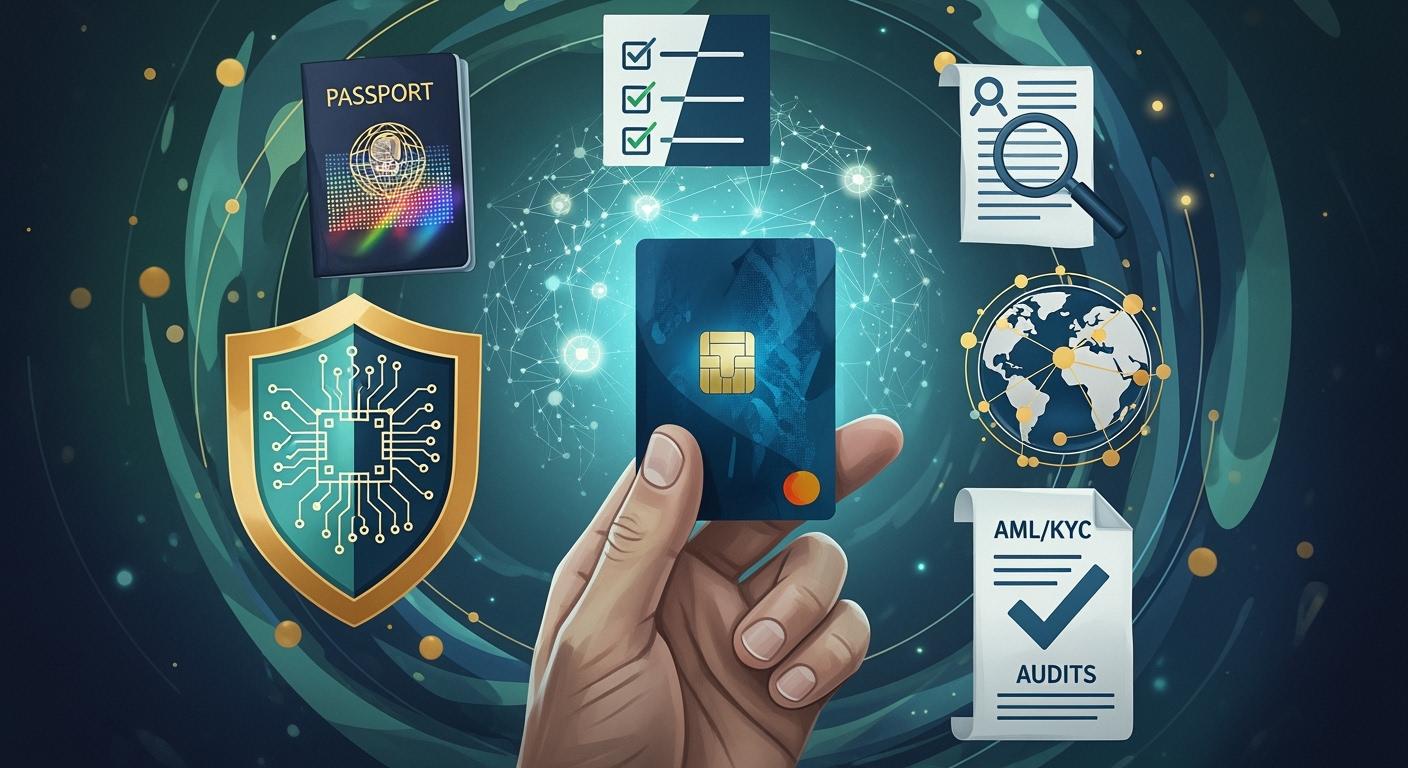
Crypto Card Compliance means you must follow strict rules when offering crypto payment cards. You need to focus on anti-money laundering, customer verification, and regular audits. > If you ignore these rules, you risk legal trouble and losing trust. Strong compliance processes keep your business safe and respected.
Key Takeaways
Understand the importance of Crypto Card Compliance to avoid legal issues and build customer trust.
Implement strong AML/KYC procedures to verify customer identities and monitor transactions effectively.
Regularly update your compliance program to adapt to changing regulations and protect your business.
Crypto Card Compliance Overview
What Compliance Means
You need to understand Crypto Card Compliance before you offer crypto payment cards. This term covers all the rules and standards you must follow as a Virtual Asset Service Provider (VASP). You must check customer identities, monitor transactions, and report suspicious activity. Providers like UUPAY must meet requirements from different countries and regions. You handle sensitive financial data, so you must protect your users and your business.
Crypto Card Compliance helps you build trust with your customers and regulators.
Why It Matters
You must follow compliance rules to operate legally. If you ignore these rules, you risk fines, shutdowns, or even criminal charges. Regulators expect you to prevent money laundering and fraud. You also protect your reputation by showing you care about security and transparency.
Legal operation keeps your business running.
Strong compliance attracts more users.
Good reputation helps you grow and succeed.
Benefit | Impact on Your Business |
|---|---|
Legal Protection | Avoids penalties and bans |
Customer Trust | Increases user confidence |
Market Access | Expands business opportunities |
You must treat compliance as a core part of your crypto card program. This approach helps you stay ahead of risks and changes in the industry.
AML/KYC Essentials
AML/KYC Explained
You need to understand Anti-Money Laundering (AML) and Know Your Customer (KYC) rules to meet Crypto Card Compliance standards. These rules help you stop illegal activities like money laundering and terrorist financing. You must follow strict procedures to identify your customers, monitor their transactions, and report anything suspicious.
Here are the key components you must address as a crypto card provider:
Component | Description |
|---|---|
Registration | Register with FinCEN as a Money Services Business (MSB). |
AML Programme | Create a written AML program with internal controls, a compliance officer, training, and testing. |
Customer Identification Programme | Set up a Customer Identification Programme (CIP) under 31 CFR 1020.220. |
CDD Rule | Apply the Customer Due Diligence (CDD) Rule for legal entity customers. |
Suspicious Activity Reports | File reports for transactions above $5,000 that seem suspicious. |
Travel Rule | Follow the US Travel Rule for transfers at or above $3,000. |
State Regulations | Meet state-level rules, such as New York’s BitLicense, which require approved KYC/AML procedures and audits. |
Tip: UUPAY holds a US MSB license and meets strict AML/KYC standards in multiple regions. This helps you trust their Crypto Card Compliance process.
Customer Onboarding
You must build a strong onboarding process to meet AML/KYC requirements. This process helps you verify each customer’s identity and assess their risk level. You protect your business and your users by following these steps:
Identity Verification: Collect personal or business data and check it against government-issued documents. Use biometric checks when possible.
Sanctions and PEP Screening: Screen each customer against global sanctions lists. Identify Politically Exposed Persons (PEPs) who may need extra checks.
Risk Scoring and Due Diligence: Assign a risk score to each customer. Decide if you need standard or enhanced due diligence based on their profile.
Ongoing Monitoring and KYC Refresh: Keep monitoring customer activity. Update KYC profiles when you spot changes or risks.
Note: UUPAY uses advanced onboarding tools and global compliance checks. This ensures you get a secure and smooth experience from the start.
Transaction Monitoring
You must monitor all transactions to detect suspicious activity and meet Crypto Card Compliance standards. This means you track patterns, flag unusual behavior, and report anything that looks risky.
Set up automated systems to watch for large or unusual transactions.
Review transactions that cross certain thresholds, such as $5,000 for suspicious activity reports or $3,000 for the Travel Rule.
Update customer risk profiles when you see new patterns.
File reports quickly if you spot anything suspicious.
Step | What You Do |
|---|---|
Automated Monitoring | Use software to scan for red flags in real time. |
Manual Review | Investigate alerts and decide on next steps. |
Reporting | File Suspicious Activity Reports (SARs) as needed. |
Record Keeping | Keep detailed records for audits and regulators. |
Reminder: UUPAY’s compliance team works around the clock. They use certified systems and global support to keep your transactions safe.
Crypto Card Compliance depends on your ability to follow these AML/KYC essentials. You build trust, avoid penalties, and support a safer crypto ecosystem by following these steps.
The Travel Rule for Crypto Cards

Travel Rule Basics
You must understand the Travel Rule if you want to meet Crypto Card Compliance standards. The Travel Rule requires you to collect and share specific information when you send or receive crypto transactions. Regulators want you to help stop money laundering and terrorist financing. You need to know who sends and receives funds. You must also screen these parties against sanctions lists. This rule applies to Virtual Asset Service Providers (VASPs) like UUPAY.
Thresholds and Data Sharing
You must follow the Travel Rule for transactions at or above certain amounts. In the United States, the threshold is $3,000. When you process a transaction that meets or exceeds this amount, you must collect the sender’s and recipient’s names, account numbers, and addresses. You must share this data with the other VASP involved in the transaction. If you do not follow these steps, you risk penalties and damage to your reputation.
Requirement | What You Must Do |
|---|---|
Transaction Amount | Check if it meets the threshold |
Data Collection | Gather sender and recipient info |
Data Sharing | Send info to the other VASP |
Sanction Screening | Check both parties for restrictions |
Tip: Always keep records of the data you collect and share. Auditors may ask for proof during compliance checks.
Role of AML Software
You need strong AML software to meet Travel Rule requirements. Good software helps you automate data collection, screening, and reporting. You can use these tools to flag risky transactions and keep your records organized. Regular audits help you check if your software and processes work as required. This approach keeps your business safe and supports a strong compliance program.
Audit Requirements
Types of Audits
You must understand the different types of audits that apply to crypto card providers. Internal audits check your own compliance processes and help you spot gaps. External audits involve independent experts who review your systems and controls. Regulatory audits happen when authorities inspect your records and procedures.
Tip: UUPAY holds a US MSB license and meets PCIDSS Level 1 standards. These certifications require regular audits and strict controls.
Audit Type | Purpose |
|---|---|
Internal | Improve your own processes |
External | Validate compliance |
Regulatory | Meet legal requirements |
Audit Preparation
You need to prepare for audits by organizing your documents and reviewing your compliance program. Make sure your policies match current regulations. Train your staff so they know what to expect. Test your systems for weaknesses and fix any issues before the audit.
Gather all transaction records and customer files.
Review your AML/KYC procedures.
Check your Travel Rule compliance.
Update your risk assessments.
Note: UUPAY’s global support team helps you stay ready for audits at any time.
Maintaining Records
You must keep detailed records to pass audits and meet compliance standards. Store customer data, transaction logs, and reports securely. Keep records for at least five years, as most regulators require. Use digital tools to organize files and make retrieval easy.
Save onboarding documents and verification checks.
Keep logs of suspicious activity reports.
Record all data shared under the Travel Rule.
🗂️ Good recordkeeping protects your business and proves your compliance. UUPAY follows strict standards in the US, Asia, and Europe to ensure records stay safe and accessible.
Regulatory Frameworks
Key Regulations
You must understand the main regulations that shape crypto card compliance. These rules set the standards for how you verify customers, monitor transactions, and report suspicious activity. In the United States, you follow the Bank Secrecy Act (BSA) and must register as a Money Services Business (MSB). You also need to comply with the Financial Crimes Enforcement Network (FinCEN) guidelines. In Europe, the Markets in Crypto-Assets regulation (MiCA) started on December 30. MiCA creates a clear framework for crypto providers and sets strict requirements for transparency and consumer protection.
Bank Secrecy Act (BSA)
FinCEN guidelines
Markets in Crypto-Assets (MiCA) in the European Union
Note: UUPAY holds a US MSB license and meets MiCA standards in Europe. This shows you that UUPAY follows the latest regulations.
Major Authorities
You must know which authorities enforce crypto card compliance. These organizations create the rules and check if you follow them. In the United States, FinCEN oversees MSBs and enforces AML/KYC standards. The Securities and Exchange Commission (SEC) and the Commodity Futures Trading Commission (CFTC) also play roles in regulating crypto assets. In Europe, the European Securities and Markets Authority (ESMA) enforces MiCA and supervises crypto providers.
Authority | Region | Role |
|---|---|---|
FinCEN | United States | AML/KYC enforcement |
SEC | United States | Securities regulation |
CFTC | United States | Commodity regulation |
ESMA | Europe | MiCA enforcement |
🛡️ You build trust by following rules from these authorities. UUPAY meets strict standards in the US, Europe, and Asia, which helps you stay compliant and secure.
Compliance Process Steps
Due Diligence
You must perform due diligence before you allow anyone to use your crypto card services. This process helps you understand who your customers are and how they plan to use your platform. You collect information, check documents, and assess risk. You screen users against sanctions lists and look for red flags. UUPAY uses advanced tools and follows strict rules in the US, Europe, and Asia. This approach keeps your business safe and builds trust with regulators.
Tip: Strong due diligence stops bad actors from entering your system.
Reporting Suspicious Activity
You must report any suspicious activity you find. If you see a transaction above $5,000 that looks unusual or risky, you file a Suspicious Activity Report (SAR). You also follow the US Travel Rule for transfers at or above $3,000. The table below shows the main requirements for reporting:
Requirement | Description |
|---|---|
Registration | MSBs must register with FinCEN. |
AML Programme | Create a written AML program with controls and training. |
Customer Identification | Set up a Customer Identification Programme under 31 CFR 1020.220. |
CDD Rule | Apply the CDD Rule for legal entity customers. |
Suspicious Activity Reports | File SARs on transactions above $5,000 that appear suspicious. |
US Travel Rule | Comply for transmittals at or above $3,000. |
You keep records of all reports and share them with regulators when asked. UUPAY’s compliance team works 24/7 to help you meet these rules.
Program Updates
You must update your compliance program often. Laws and risks change quickly in the crypto world. Review your policies, train your staff, and test your systems. Use feedback from audits and regulators to improve. UUPAY holds a US MSB license, PCIDSS Level 1 certification, and meets standards in multiple regions. This commitment helps you stay ahead of new threats and rules.
Regular updates keep your compliance program strong and effective. 🛡️
Challenges and Risks
Cross-Border Issues
You face unique challenges when you offer crypto cards across different countries. Each region has its own rules for AML, KYC, and data privacy. You must keep up with changing regulations in the US, Europe, Asia, and beyond. If you miss a new rule, you risk fines or losing your license.
Tip: UUPAY holds a US MSB license, follows Asian regulations, and has a Swiss license. This strong compliance helps you avoid cross-border risks.
Fraud Prevention
Fraudsters target crypto cards because they move money quickly. You need to watch for fake identities, stolen cards, and unusual spending patterns. Use automated tools to flag suspicious activity. Train your team to spot red flags.
Set transaction limits for new users
Require extra checks for large transfers
Review accounts with sudden changes
Risk Type | Prevention Step |
|---|---|
Fake Accounts | |
Stolen Cards | Real-time monitoring |
Money Laundering | Automated alerts |
Adapting to Change
Crypto rules change fast. You must update your compliance program often. Review your policies, test your systems, and train your staff. Stay alert for new threats and scams.
Note: UUPAY offers 24/7 global support and updates its systems to meet the latest standards. This helps you stay compliant and secure as the industry evolves.
Best Practices for Crypto Card Compliance
Building a Program
You need a clear plan to meet Crypto Card Compliance standards. Start by creating written policies for AML, KYC, and the Travel Rule. Assign a compliance officer to oversee your program. Use regular reviews to update your procedures. UUPAY sets a strong example. The company holds a US MSB license, registers in Hong Kong, applies for a Brazil license, and operates with a Swiss license. UUPAY also meets PCIDSS Level 1 certification, which shows its commitment to security.
Training and Awareness
You must train your staff to spot risks and follow compliance rules. Hold workshops and provide online courses. Update your team when laws change. Encourage employees to ask questions and report concerns. UUPAY offers 24/7 global support, so you always have help when you need it. This support keeps your team ready for new challenges.
Using Technology
You should use advanced tools to automate compliance checks. Choose software that monitors transactions and flags suspicious activity. Store records securely and make them easy to access for audits. UUPAY uses certified systems and offers a referral program with up to 50% commission. New users can get a virtual card and enjoy free card recharge fees. These features help you stay compliant and attract more customers.
Tip: Follow UUPAY’s example to build a strong compliance program and protect your business.
You need to treat Crypto Card Compliance as a priority. You protect your business by monitoring transactions and updating your program. You build trust when you follow best practices and seek expert support.
Stay alert for new rules and keep your compliance strong. 🛡️
FAQ
What makes UUPAY’s crypto card compliance strong?
Feature | Details |
|---|---|
US MSB License | Legal in the US |
PCIDSS Level 1 | Highest security level |
24/7 Global Support | Help anytime |
How do you benefit from UUPAY’s current promotions?
You get a virtual card for only 1U. You receive 1U back after activation. All users enjoy zero card recharge fees.
Can you earn rewards by inviting friends to UUPAY?
Invite friends to UUPAY.
Your commission rate increases with more successful referrals.
You can earn up to 50% commission.
See Also
Key Insights on Malaysia's Crypto Card Regulations for 2026
Evaluating KYC Versus No KYC Crypto Cards for Safety
Essential Tips for Crypto Debit Cards to Prevent Declines
