Hoi An Digital Nomad Crypto Spending Guide
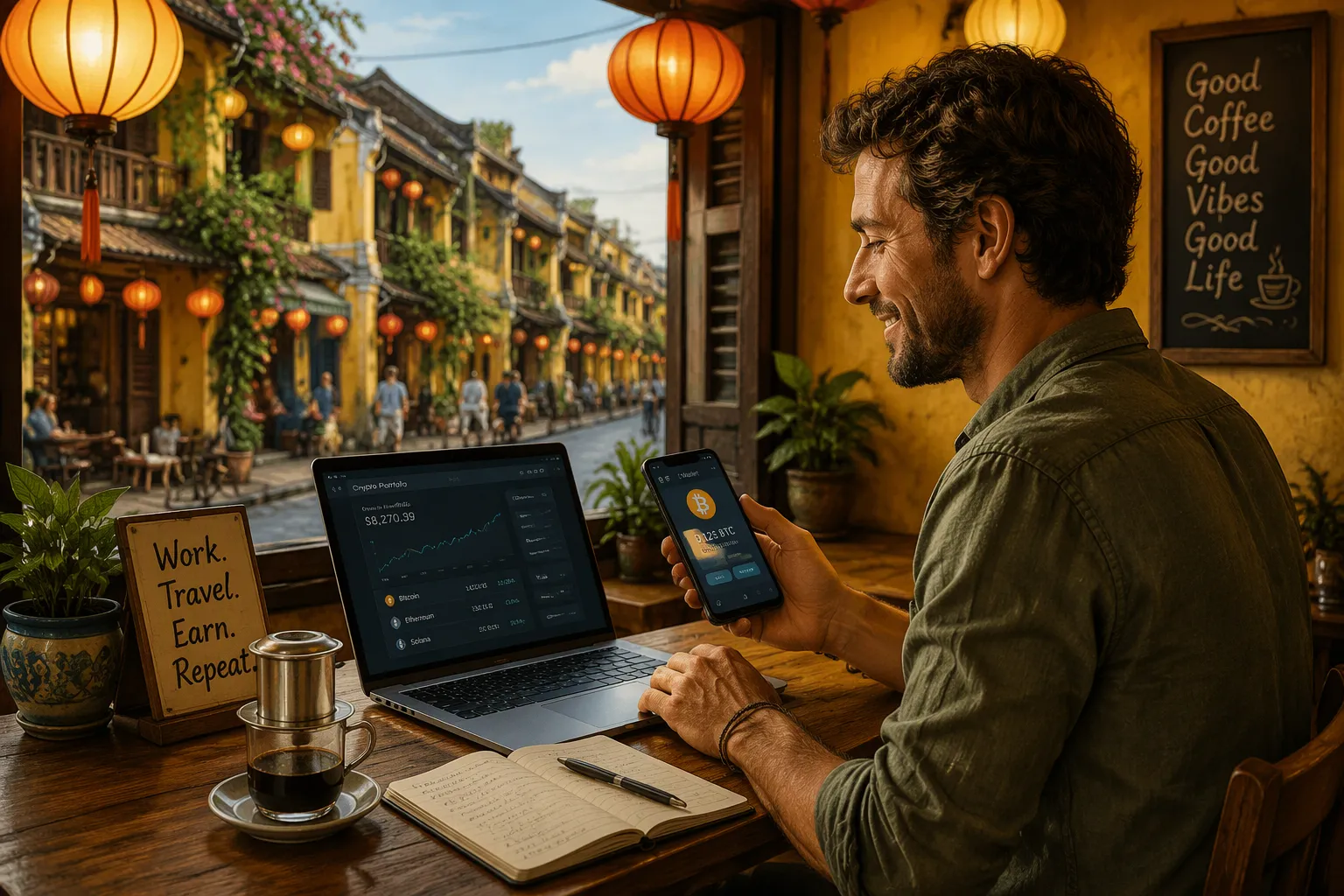
Yes, you can spend crypto in Hoi An without a local bank account, but only through specific routes. This guide answers three practical questions: how QR Pay works, where it fails, and what cash fallback costs. You'll learn daily-life spending, not trading or investing. Crypto-to-QR settlement tools like UUPAY are the main bridge between your crypto balance and local merchants, so a Hoi An Digital Nomad can pay in minutes.
Key Takeaways
Use QR Pay to spend crypto in Hoi An without a local bank account. Scan the merchant's VietQR code and pay from your USDT balance.
Keep cash as a backup for small stalls and places without QR codes. Budget for ATM fees and carry small VND notes.
Set up your phone data and wallet before you arrive. Complete KYC and test a small payment early to ensure smooth spending.
Can a Hoi An Digital Nomad Pay Without a Local Bank Account?
The Short Answer
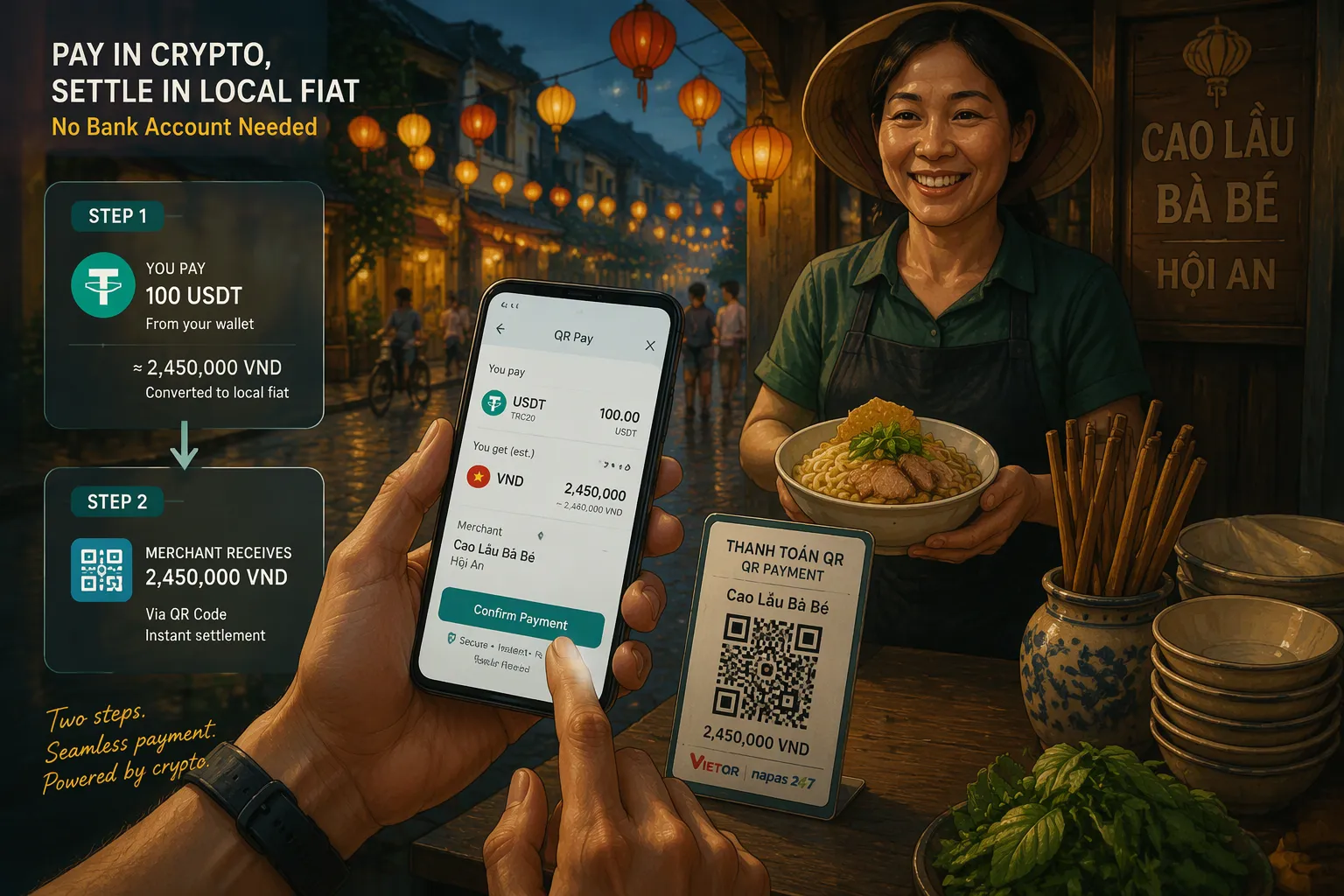
Yes. You can pay your way around Hoi An without opening a Vietnamese bank account. The catch is that crypto spending here works as a hybrid system, not a pure one. You cannot hand a merchant USDT directly for a bowl of cao lau. Rules require you to convert digital assets into Vietnamese dong before the money reaches the seller. So your crypto balance funds the payment, and local fiat settles it. That two-step structure is what makes everyday spending possible for a Hoi An Digital Nomad.
What You Actually Need
Crypto-based QR payment solutions do the heavy lifting. They let you pay merchants without a Vietnamese bank account, because the settlement happens behind the QR code. UUPAY is one settlement route that connects a stablecoin balance to local merchants. Here is how a typical QR Pay flow runs:
Open the QR Pay scanner in the Fizen app, scan the merchant's Vietnamese QR code, check the merchant name and the VND amount on screen, and confirm.
The money comes from a USDT balance moved into QR Pay from the Fizen wallet.
The merchant receives local fiat through the local payment channel and never handles stablecoins.
No Vietnamese bank account is needed, since QR Pay works with VietQR codes and is funded from a USDT balance. You still need to pass KYC and have data on your phone to scan.
Limits sit at US$800 per payment and US$1,000 per week, with no daily limit.
QR Pay serves foreign visitors only, not Vietnamese residents, as of 16 November 2026, and it is funded only with USDT on Solana or BNB Chain moved from the Fizen wallet.
Conversion rules add a second layer. You may not pay directly for goods and services with cryptocurrency. Conversions stay under 1,000 USDT per transaction and 30,000 USDT per account per month, and Hoi An counts among the expanded conversion locations. For a Hoi An Digital Nomad, that means small, frequent top-ups beat one large transfer. Keep your passport handy for KYC, keep your wallet funded, and treat the weekly cap as your planning ceiling rather than a surprise.
Why Foreign Cards Often Fail
Common Decline Triggers
Your card can fail for reasons that have nothing to do with your balance. Many Vietnamese merchants run their card terminals through local acquiring banks. Those banks often flag foreign-issued cards as higher risk, so the terminal simply refuses the charge. You see a decline, the cashier sees an error, and nobody can explain it.
Currency and verification rules add friction. Your bank may block a transaction it reads as unusual, especially a small VND charge from a new country. Travel notices help, but they do not fix every case. Some terminals also require a PIN path your card does not support, or they time out before the approval returns. Expect at least one failed attempt somewhere in your first week.
What Merchants Accept Instead
Most Hoi An merchants already display a Vietnamese QR code at the counter. That code works with local banking apps, and it also works with crypto-funded QR Pay. You scan, confirm the VND amount, and the seller receives local fiat. No foreign card enters the chain, so the decline triggers above never apply.
This is where a settlement route like UUPAY earns its place. It moves value from your stablecoin balance into the merchant's local payment channel, and the seller never touches crypto. Keep both options ready: a card for larger venues that accept it smoothly, and QR Pay for the small shops, cafes, and market stalls where cards routinely stumble. Cash stays your third layer for the exceptions.
How QR Pay Works
Step-by-Step Payment Flow
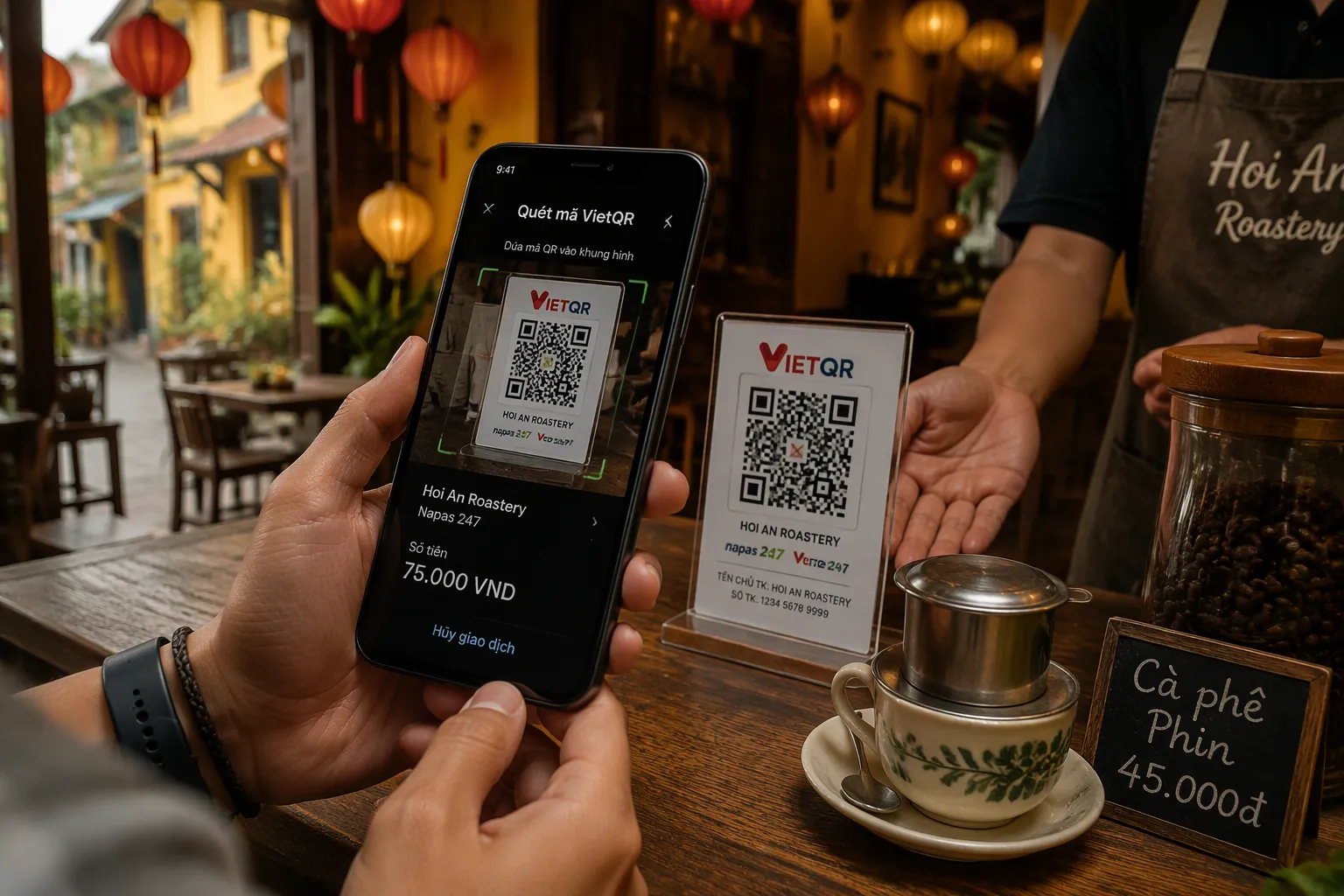
QR Pay turns your stablecoin balance into a merchant payment in under a minute. The process runs through a Vietnamese VietQR code, the same code local banking apps use. You scan it, confirm the amount, and the seller receives Vietnamese dong. Your crypto never touches the merchant's hands.
Here is the flow you follow:
Open the QR Pay scanner inside the Fizen app on your phone.
Scan the merchant's VietQR code displayed at the counter.
Check the merchant name and the VND amount on your screen.
Confirm the payment from your USDT balance.
The settlement route, such as UUPAY, moves value into the local payment channel.
The merchant receives local fiat and hands you your goods.
The money comes from a USDT balance you move into QR Pay from your Fizen wallet. You need to pass KYC and have mobile data active to scan. No Vietnamese bank account enters the picture. For a Hoi An Digital Nomad, this means you can pay for coffee, meals, and market purchases with the same phone you already carry.
Limits and Caps
QR Pay keeps your spending bounded, and those bounds matter for planning. The table below shows the caps that apply when you pay without a local bank account.
Limit type | Value |
|---|---|
Per payment | US$800 |
Per week | US$1,000 |
Daily limit | No daily limit |
KYC | Applies |
The per-payment cap of US$800 covers most daily purchases with room to spare. A week of cafes, meals, and small shopping trips rarely approaches US$1,000. You face no daily limit, so you can split larger needs across several payments on the same day. KYC still applies, so complete that step before you rely on QR Pay for everyday spending.
Conversion rules add a second layer. You may not pay directly for goods and services with cryptocurrency. Conversions stay under 1,000 USDT per transaction and 30,000 USDT per account per month. Hoi An counts among the expanded conversion locations. Small, frequent top-ups beat one large transfer. Treat the weekly cap as your planning ceiling, not a surprise. Keep your passport handy for KYC, keep your wallet funded, and test a small payment early to confirm everything works.
Phone Data and Setup Basics
Data and eSIM Needs
Your QR Pay scanner needs a live connection, so sort out data before you land. A 30-day carrier plan starts at $13, or $15 for genuinely unlimited data, and you can arrange it before you fly. Airport counters start at around $12 for the cheapest plan, but they mean a second queue after immigration. Pick the pre-arranged route if you want to scan your first coffee the same day.
Choose between a physical SIM and an eSIM based on your habits. A physical SIM is generally cheaper for local packages and works in any unlocked GSM phone, though it needs an ejector tool and careful storage. An eSIM activates through a QR code or app settings, keeps your home SIM safe, and suits newer eSIM-compatible devices. Long-stay nomads often prefer the eSIM for convenience. UUPAY also offers eSIM service inside its app, which keeps your data and wallet in one place.
Carrier choice matters once you leave the city center. Viettel covers roughly 95% of Vietnam's territory, including rural areas and islands. Vinaphone is strong in Da Nang and other urban centers. Grab a combo package with local minutes if you plan to call hotels or Grab drivers.
Wallet Readiness Checklist
Set up your wallet before you rely on it at a counter. Work through these steps in order:
Complete KYC with your passport.
Move USDT on Solana or BNB Chain into your Fizen wallet.
Fund QR Pay from that balance.
Test one small payment.
Keep a backup card and some cash.
Check the compliance side too. UUPAY holds a US MSB license and PCI DSS Level 1 certification, with 24/7 global support. That matters when a payment stalls at dinner.
Where QR Pay Fails
Cash-Only Situations
Some Hoi An vendors simply do not display a VietQR code. You will find them at small street stalls, family-run food carts, and countryside markets. These sellers run on cash alone. No QR code means no scan, no settlement, and no sale. Keep small VND notes in your pocket for these moments.
Rural areas tighten the squeeze. A vendor outside the city center may lack the local payment channel that QR Pay depends on. You can hold a funded wallet and still walk away empty-handed. Cash covers the gap without friction. Treat it as your quiet backup, not a sign that your setup failed.
Merchant and Network Gaps
A merchant may display a QR code that your app cannot read. Some codes belong to a local bank outside the supported VietQR network. Others sit behind a terminal that rejects foreign-linked settlement. You scan, the app stalls, and the cashier waits. A backup card or cash resolves the moment.
Network coverage drops in alleys, basements, and riverside spots. Your scanner needs live data to confirm a payment. Without a signal, the transaction cannot complete. UUPAY holds a US MSB license and PCI DSS Level 1 certification, with 24/7 global support. That helps when a payment stalls, but no app fixes a dead zone. Carry cash for connectivity gaps and keep your eSIM active.
Cash Fallback Costs
ATM and Conversion Fees
Cash is your buffer, not a failure. Every payment option has a place, and cash covers the moments when a QR code or a card simply will not work. Budget for it the same way you budget for data.
Vietnamese ATMs charge withdrawal fees, and your home bank may add its own foreign transaction fee on top. Rates vary by bank and machine, so check the screen before you confirm. Withdraw larger amounts less often to spread the fixed fee across more dong. A fee-free card option helps here. UUPAY's card top-up fees are currently waived for all users, and new users can open a virtual card for 1U with a 1U rebate, which keeps your cash-access costs predictable.
Hoi An Digital Nomad Budget Benchmarks
Numbers make the buffer easy to size. One published breakdown puts overall monthly costs at $840, with accommodation at $248 and groceries unlikely to exceed $150. A bowl of pho costs less than $2. A three-month stay in Vietnam runs $2,520, against $2,961 for one month in Tokyo and $4,233 for one month in Singapore.
Item | Cost |
|---|---|
Overall monthly cost | $840 a month |
Accommodation | $248 |
Groceries | under $150 per month |
Bowl of pho | less than $2 |
Three-month stay in Vietnam | $2,520 |
Other nomads report a comfortable, simple life at roughly $800–$1,000 per month, with a one-bedroom apartment at around $250–$500+ and a motorbike rental at around $40–$50. For a Hoi An Digital Nomad, QR Pay fits daily cafes and shops, a card fits larger venues, and cash fits the stalls in between. Keep a cash buffer sized to your weekly QR cap, and test a small scan early.
Crypto spending in Hoi An works as a hybrid system. Start with QR Pay, set up data and your wallet next, then budget cash as backup. Test a small scan early. Keep a buffer sized to the $800 and $1,000 caps. UUPAY streamlines settlement, with top-up fees waived and a physical card.
FAQ
Do you need a Vietnamese bank account for QR Pay?
No. You scan a VietQR code and pay from your USDT balance. The merchant receives local dong, so no local bank account enters the picture.
What are the spending caps?
You can pay up to US$800 per transaction and US$1,000 per week. No daily limit applies, but KYC still applies.
Which wallet setup works best?
Complete KYC with your passport, then move USDT on Solana or BNB Chain into your Fizen wallet. Fund QR Pay from that balance.
What happens when a merchant only takes cash?
Small stalls and countryside markets often skip QR codes entirely. Keep small VND notes handy for those moments.
Does UUPAY offer anything beyond settlement?
Yes. UUPAY now provides eSIM, chat, and flight and hotel services. Its physical card is live, with top-up fees waived and up to 50% rebates.
See Also
Virtual Crypto Cards Beginner Guide For Digital Nomads Paying Overseas Rent
Advanced USDT Visa Card Guide For Digital Nomads Daily Expense Budgeting
Crypto Debit Cards Beginner Guide For Global Travelers Daily Spending Conversion
Advanced Web3 Payment Cards Guide For Southeast Asia Users Daily Crypto Conversion
Advanced USDT Visa Cards Guide For Unbanked Users Daily Crypto Spending Conversion
