How Overseas Vietnamese in Australia Send Money Home for Less

You can send money home for less. Compare the total cost, pick the right transfer service, and avoid hidden fees. For many overseas Vietnamese in Australia, remittances are a regular part of life. You support family, and sometimes you invest back home. Small savings add up fast. This post covers three cost levers: fees, exchange rates, and transfer method.
Key Takeaways
Compare the total cost, not just the fee. Check how much money your family actually receives after all charges.
Choose a transfer service that fits your needs. Consider cost, speed, and safety. Start with a small test transfer.
Build simple habits to save money. Watch exchange rates. Combine smaller transfers into one larger transfer.
What a Transfer Really Costs
Fees, Exchange Rates, and Hidden Charges
Total cost has three parts: the transfer fee, the exchange rate margin, and any hidden charges. The fee is what the provider charges upfront. The margin is the gap between the rate you actually get and the mid-market rate — the midpoint between global buy and sell prices. Hidden charges can include receiving bank fees, card funding fees, or charges from intermediary banks on wire transfers.
A "zero fee" offer can still cost you more. Picture two providers. One charges no upfront fee but applies a rate a few percent weaker than mid-market. The other charges a small fee but converts close to mid-market. The second can deliver more dong, even though its headline looks worse. The fee you saved quietly disappears in the rate.
Why Total Cost Beats the Headline Fee
Headline fees are easy to advertise and easy to misread. They tell you what the provider charges, not what your family receives. A low fee paired with a weak rate can beat a high fee paired with a strong rate — or lose to it. You cannot tell from the fee alone.
The fairest comparison is the amount that actually lands in Vietnam. Ask each provider one question: how many dong will my family get after every deduction? Compare that number side by side. This single figure captures fees, rate margins, and hidden charges at once. It also reflects the receiving method, since some channels deduct their own charges. Compare the landed amount, and the cheaper option becomes clear.
Compare Transfer Options for Overseas Vietnamese in Australia
Banks, Money Transfer Operators, and Online Services
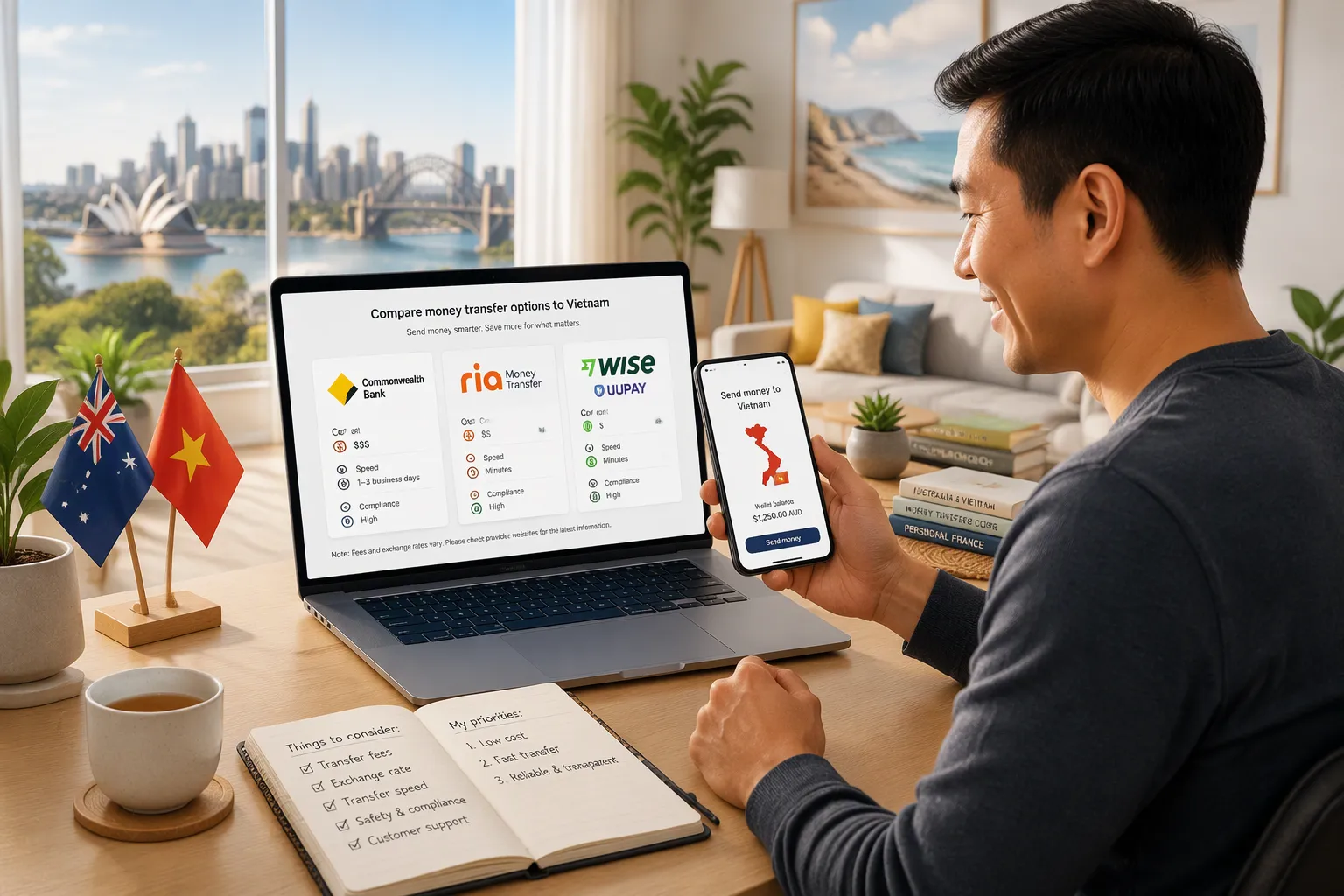
Australian banks and international wire transfers through SWIFT suit large or complex transfers. You get branch support and a familiar process. Banks work well when you send a significant sum for a property purchase or a big family expense. Money transfer operators such as Ria Money Transfer sit in the middle. They offer agent networks and cash pickup in Vietnam, which helps if your family prefers collecting cash in person. Online services such as Wise and UUPAY focus on low cost and speed. You manage everything from your phone, and the money often moves within a day or two.
UUPAY is one online option worth a look. New users can get a virtual card for 1U with 1U cashback, plus fee-free card top-up. A physical card is launching with global spending and up to 50% cashback. The app also bundles hotel and flight booking, an eSIM, and chat support. On compliance, UUPAY holds a US MSB license, Swiss and Canadian licenses, a pending Brazil application, Hong Kong registration, and PCIDSS Level 1 certification. It offers 24/7 global support and a referral commission of up to 50%. Treat these as features to weigh, not a reason to skip comparing.
Receiving options in Vietnam include Vietnamese banks, MoMo, and other channels. Availability varies by provider, so confirm your family's preferred method before you send.
Weighing Cost, Speed, and Compliance
Cost, speed, and compliance pull in different directions. A bank may cost more but handle a complex transfer with paperwork you trust. An online service may cost less and arrive faster, yet you should still check its licensing and reviews. Speed varies by provider and receiving method. A transfer to a Vietnamese bank account may land on a different timeline than a MoMo wallet.
For overseas Vietnamese in Australia, compliance deserves a quick check. Confirm the provider holds a valid license, uses encryption, and verifies your identity properly. Read recent reviews from other overseas Vietnamese in Australia. Start with a small test transfer. You learn the real speed, the actual landed amount, and the receiving experience without risking much. That habit keeps your choices grounded in evidence.
Tips for Overseas Vietnamese in Australia to Send for Less
Compare Total Cost, Time Transfers, and Consolidate
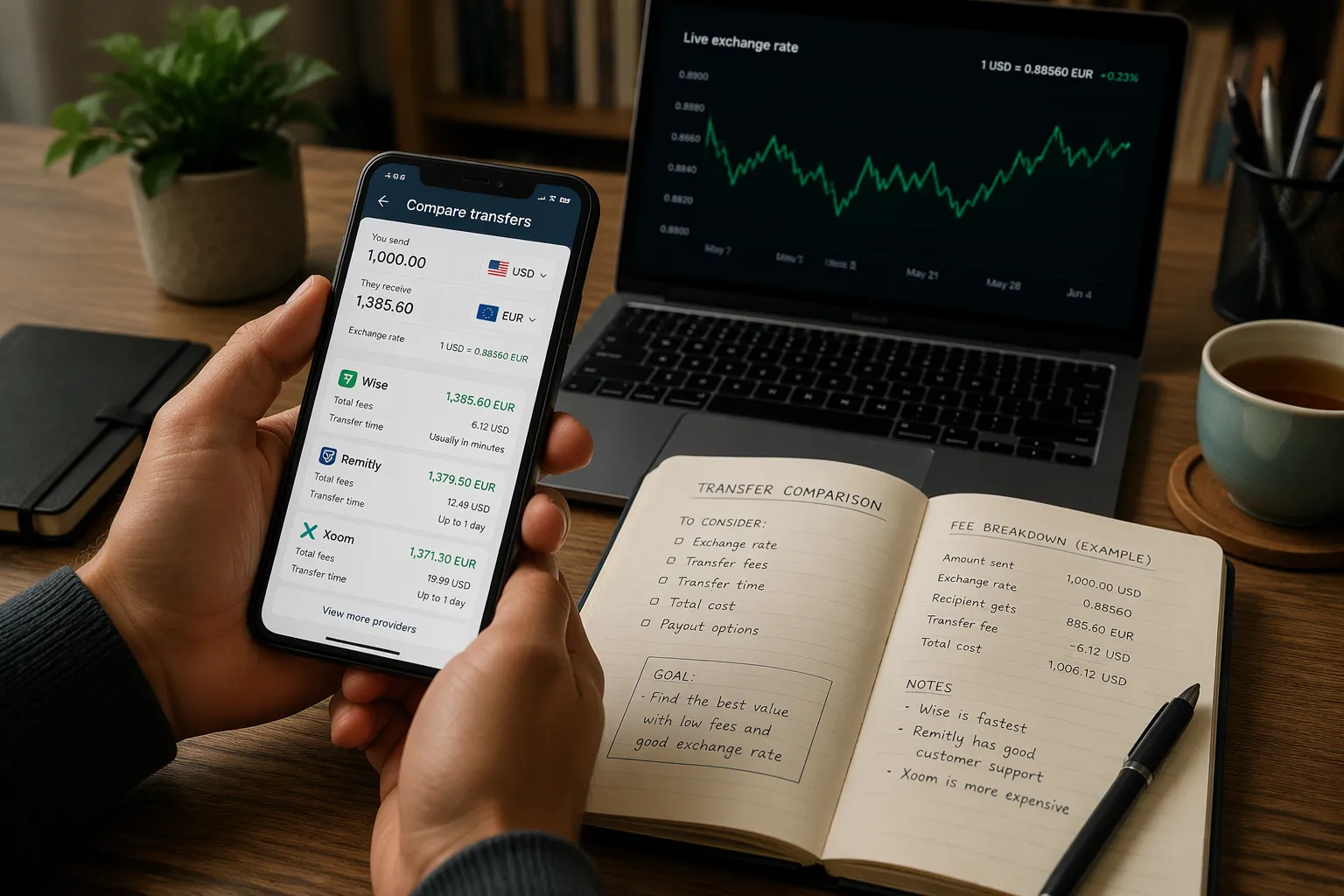
Build one habit first: compare the received amount across providers before every transfer. Pull up two or three services, enter the same amount, and check how many dong your family gets after all deductions. This takes a few minutes and keeps the cheapest option honest.
Next, watch exchange rates for a week or two. Rates move daily, and a favorable window can stretch your money further. You do not need to predict the market. A simple check before you send often beats sending on impulse. Consolidating also helps. Three small transfers can mean three sets of fees and three rate margins. One larger transfer usually costs less overall.
Some readers send money home to invest as well as to support family. Keeping more per transfer matters either way. A stronger landed amount grows your family's budget and your investment contribution at the same time.
Use Low-Cost Services and Avoid Repeat Mistakes
Start with a small test transfer. Send a modest sum through a new provider and confirm the real speed, the actual landed amount, and how your family receives it. This one step catches surprises early, before you commit a large amount.
Low-cost online services such as UUPAY are one option to test. The app handles transfers from your phone, and new users can open a virtual card for 1U with 1U cashback plus fee-free card top-up. Weigh the features against your needs, then compare the landed amount with other providers.
Avoid repeat mistakes by saving notes on each transfer: the provider, the fee, the rate, and what arrived. Over time, these notes show which service truly costs less for your family. Many overseas Vietnamese in Australia settle on two providers — one for regular support, one for larger transfers.
Compare the total cost, pick the provider that fits your needs, and build simple habits. Consolidate transfers. Watch rates. Try a small test transfer first. For overseas Vietnamese in Australia, online services such as UUPAY offer a low-cost, compliant option. Keep more of each dollar for family.
FAQ
How do I compare two providers fairly?
Enter the same amount with each one and check how many dong your family receives after every deduction. That landed figure captures fees, rate margins, and receiving charges in one number.
Is a small test transfer really worth the effort?
Yes. Send a modest sum first and confirm the real speed, the actual landed amount, and how your family collects it. You catch surprises early, before a large transfer is on the line.
What should I check before trusting a new service?
Look for a valid license, proper identity verification, and encryption. UUPAY, for example, holds a US MSB license and PCIDSS Level 1 certification. Read recent reviews from other overseas Vietnamese in Australia too.
See Also
Simple Steps Using USDT Visa Cards To Pay Utility Bills In Vietnam
Top Methods Using USDT Mastercard Cards To Send Money To Overseas Students
Top Ways To Use Virtual Crypto Cards For Booking International Flights In Vietnam
How Southeast Asia Users Benefit From Virtual Crypto Cards To Pay Marketplace Fees
How To Use Web3 Payment Cards To Pay Tuition Fees Abroad In Vietnam
