Reloadable virtual USDT debit cards
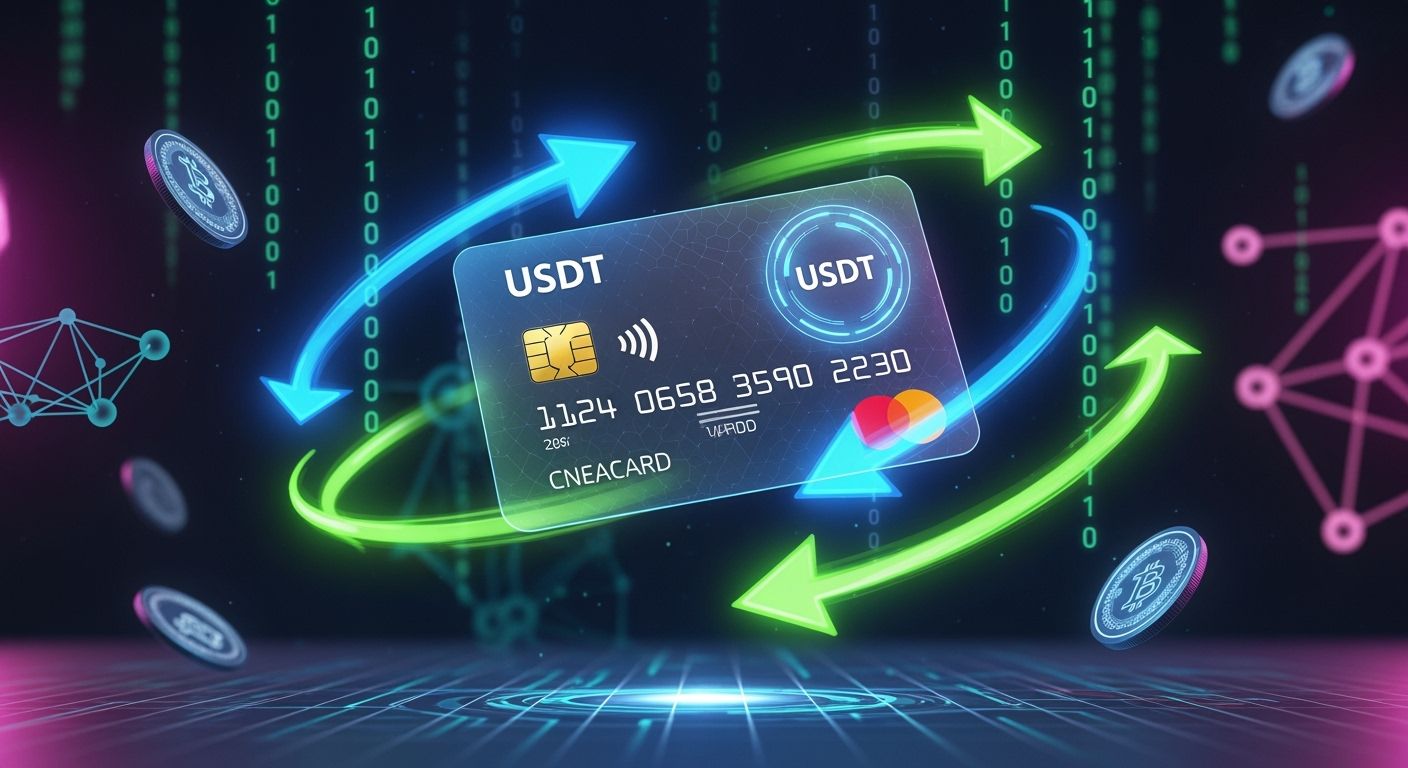
A reloadable virtual USDT debit card converts your Tether balance into spendable fiat currency instantly on major payment networks like Visa and Mastercard. You gain immediate online purchasing power, total spending control, and enhanced wallet privacy without banking bottlenecks. The Tron network processed $7.9 trillion in USDT transfers during 2025 across TRC20, ERC20, and Solana.
Key Takeaways
Reloadable virtual USDT cards turn your Tether balance into spendable dollars for online shopping.
You can choose private No-KYC cards for quick purchases or high-limit cards for larger payments.
Platforms like UUPAY offer instant card setup with zero top-up fees and strong global security.
What Is a Virtual USDT Debit Card?

A reloadable virtual USDT debit card gives you a digital payment card equipped with a card number, expiration date, and security code. You load funds onto the card prior to spending. The prepaid system manages balance updates dynamically, so you can top up your balance whenever funds run low. Platforms like UUPAY issue these cards instantly without physical delivery delays. UUPAY maintains strong compliance through a US MSB license, PCI DSS Level 1 certification, and a Swiss license. UUPAY currently offers new users a card issuance deal for 1 U with a 1 U rebate, alongside zero top-up fees for all users.
How USDT to Fiat Conversion Works
The conversion process bridges digital tokens and traditional currency rails during payment execution.
You present your card details at checkout, and the online merchant sends a purchase authorization request in local fiat currency.
The payment issuer receives this fiat request through the Visa or Mastercard payment network.
The processing system automatically converts the required USDT amount to fiat at the live market rate while applying a small spread between 0% and 1%.
The merchant receives fiat currency immediately, while your account balance reflects the deducted amount.
This mechanism removes manual off-ramping steps entirely. Because Tether retains a direct peg to the US dollar, payment processing remains reliable across worldwide online merchants. Maintaining a reloadable USDT debit card ensures continuous purchasing power whenever you shop internationally.
Multi-BIN Features and Global Acceptance
Virtual cards provide distinct operational advantages over traditional physical payment cards for online purchases.
Aspect | Reloadable Virtual Card | Physical Crypto Card |
|---|---|---|
Online Overseas Purchases | Supports global checkout, Google Pay, and online services via instant Visa networks | Focuses primarily on physical store terminals and direct ATM withdrawals |
Security Features | Hides main wallet data; generates fresh online card credentials to isolate merchant risk | Uses static plastic card details; exposed numbers require full card re-issuance |
Fee Structure | $0 issuance options, $1 monthly fee, 1% crypto conversion, 1% FX fee | Involves higher physical card delivery costs, re-issuance fees, and potential inactivity charges |
UUPAY supports multiple BIN configurations to boost merchant approval rates across international payment gateways. Multi-BIN options prevent checkout declines by routing transactions through appropriate card issuing regions. You register your account, select a supported blockchain network like TRC20, and deposit Tether. The platform generates your card credentials including the primary account number, expiration date, and CVV code instantly. You can add these details directly to mobile wallets like Google Pay or payment platforms like PayPal for seamless recurring subscriptions. You can also invite friends to earn up to 50% commission on platform fees.
KYC vs. No-KYC Virtual Cards
No-KYC Cards for Instant Privacy
You can choose between non-custodial No-KYC cards and full-KYC options when you configure your payment account. No-KYC cards provide maximum privacy for everyday online checkout. You complete registration using only your email address. You do not submit your legal name, residential address, passport copy, or personal selfie. This setup keeps your digital transactions isolated from your personal financial records.
No-KYC options deliver immediate accessibility for quick online payments. You avoid bank checks, credit score reviews, and verification approval delays. Platforms set clear spending boundaries for these tiers to minimize system risk.
Verification tier | Typical monthly spending limit |
|---|---|
No KYC (zero-document, email+phone) | $150–$500 |
No KYC (lowest tier) | $200–$1,000 |
Soft KYC (email+phone+selfie) | $1,000–$10,000 |
High-Limit KYC Options
High-limit reloadable cards accommodate larger online spenders, business software tools, and recurring merchant subscriptions. You unlock significantly higher spending power by completing standard identity verification steps. Elevated thresholds prevent checkout failures when you fund large balances or maintain high monthly spending.
Verification tier | Typical monthly spending limit |
|---|---|
Standard KYC (government ID+selfie) | $10,000–$50,000 |
Full KYC (ID+proof of address+source of funds) | Unlimited |
Standard identity verification requires a valid government photo ID such as a passport, driver's license, or national identity card. You also submit proof of address through a recent utility bill or bank statement. Automated compliance platforms verify your documents through biometric liveness checks and database cross-referencing. Completing full KYC verification enables seamless high-volume transactions on your USDT debit card.
Fee Structure and Spending Limits
Managing payment costs requires understanding card fees and dynamic blockchain gas rates. Card issuers often market zero-cost funding while separate network charges apply.
Top-Up Rates and FX Conversion
Top-up fees usually cost 0% at the card level across major providers. You pay separate blockchain gas fees to transfer Tether from your Web3 wallet. TRC20 and Solana routes offer cheaper transfers than Ethereum mainnet. Ethereum gas costs often reach $5–$15 per transaction.
Card / Issuer | Card Top-Up Fee | Recommended Low-Cost Blockchain Routes |
|---|---|---|
KAST | 0% | TRC20, Solana, Polygon, Arbitrum |
RedotPay | 0% | TRC20, BEP20 |
Bybit | 0% | TRC20, BSC, Polygon |
For small USDT top-ups, TRC20 tends to be the recommended starting point: it is widely accepted and usually has lower network costs than ERC20. Solana, Polygon, and BSC may be cheaper in certain card flows, but only after the card app confirms that exact USDT route is supported. At the card level, top-up fees are usually 0%; network fees are charged separately by the sender's wallet or the underlying chain.
Foreign exchange conversion rates affect your overall purchasing power during international checkout. Providers charge a conversion spread between 0.5% and 2% above live mid-market exchange rates. You save money by selecting card BINs matching your local checkout currency.
Fees for Every USDT Debit Card
Virtual card providers apply minor operational fees that can reduce your active balance over time. You avoid unexpected charges by reviewing individual fee schedules carefully.
Decline fees: Merchants charge roughly $0.25–$1 each time a transaction fails due to insufficient card balance.
Inactivity fees: Platforms charge an inactivity fee of about $0–$10 monthly after six consecutive months without spending.
Network gas fees: Senders pay blockchain execution costs directly during every wallet deposit.
A reliable USDT debit card provides predictable costs for routine online purchases. Keeping a small balance cushion helps you prevent accidental decline fees on automated subscription billings.
How to Get a USDT Debit Card with UUPAY
UUPAY provides secure crypto payment services globally. The platform operates under a US MSB license, Hong Kong registration, and a Swiss license while pursuing a pending Brazil license. PCI DSS Level 1 certification safeguards your sensitive card data, while 24/7 global support assists you anytime. New users enjoy a $1 card issuance deal with a $1 rebate, while all users benefit from zero top-up fees. You can also join the referral program to earn up to 50% commission based on your invite volume. Securing a reloadable USDT debit card gives you immediate global spending power straight from your crypto balance.
Choosing Supported Blockchain Networks
You must select a compatible blockchain network to deposit funds into your card wallet. UUPAY supports direct Tether deposits across TRC20 and ERC20 networks. Follow these simple steps to complete your initial transfer:
Open the UUPAY application and tap the Deposit option.
Select USDT as your preferred deposit cryptocurrency.
Choose your desired network rail, such as TRC20 or ERC20.
Copy the displayed wallet address or scan the provided QR code.
Transfer Tether or BTC from your external Web3 wallet to the destination address.
Track the transaction status until the platform credits your account balance.
TRC20 transfers process quickly with low network gas costs. Selecting the correct network rail prevents lost funds during wallet transfers.
Card Issuance and Reloading Steps
Creating and managing your virtual card requires simple setup actions:
Register your account on the UUPAY website or app using your email address and password.
Select UUPAY's $1 virtual card option from the card issuance dashboard.
Complete identity verification by uploading your MyKad or passport alongside a selfie.
Load your virtual card balance directly using your deposited crypto funds.
Generate your full virtual card details instantly for online shopping or link them to local payment systems like Touch 'n Go and DuitNow.
You should follow key operational practices to protect your active balance and avoid payment declines:
Choose card options with multi-BIN support to switch BINs easily if a payment gateway blocks a specific card range.
Copy primary account numbers, expiration dates, and security codes directly from your account dashboard to eliminate manual entry errors.
Maintain a sufficient balance buffer above your planned purchase price to prevent automatic decline charges.
Review restricted merchant category codes before checkout, as platforms block payments for gambling, peer-to-peer transfers, and unregulated crypto services.
Contact customer support before attempting large international purchases to prevent false security blocks on your card.
Selecting a reloadable virtual card balances low transaction costs, total privacy, and payment flexibility. Established platforms like UUPAY unlock global purchasing power directly from your crypto wallet.
You should test your card workflow before committing larger balances:
Deposit $30 USDT on Solana to verify network speed, conversion rates, and merchant compatibility.
FAQ
How fast can you get a virtual USDT debit card on UUPAY?
You can generate your virtual card credentials instantly on the UUPAY platform. New users currently enjoy a 1 U card issuance deal with a 1 U rebate.
Are there any card top-up fees on UUPAY?
UUPAY offers zero top-up fees for all users. You only pay separate network gas fees when you transfer Tether directly from your external wallet.
Is UUPAY a fully compliant payment platform?
Yes. UUPAY holds a US MSB license alongside a Swiss license. The platform also maintains PCI DSS Level 1 certification to secure your card data 24/7.
See Also
Top Tether Debit Cards For Effortless Daily Crypto Payments
Simple Strategies To Secure Your Digital Crypto Virtual Card
Discover How Stablecoin Cards Deliver Completely Frictionless Financial Transactions
