How OFWs Can Send Money to the Philippines With a Stablecoin Card
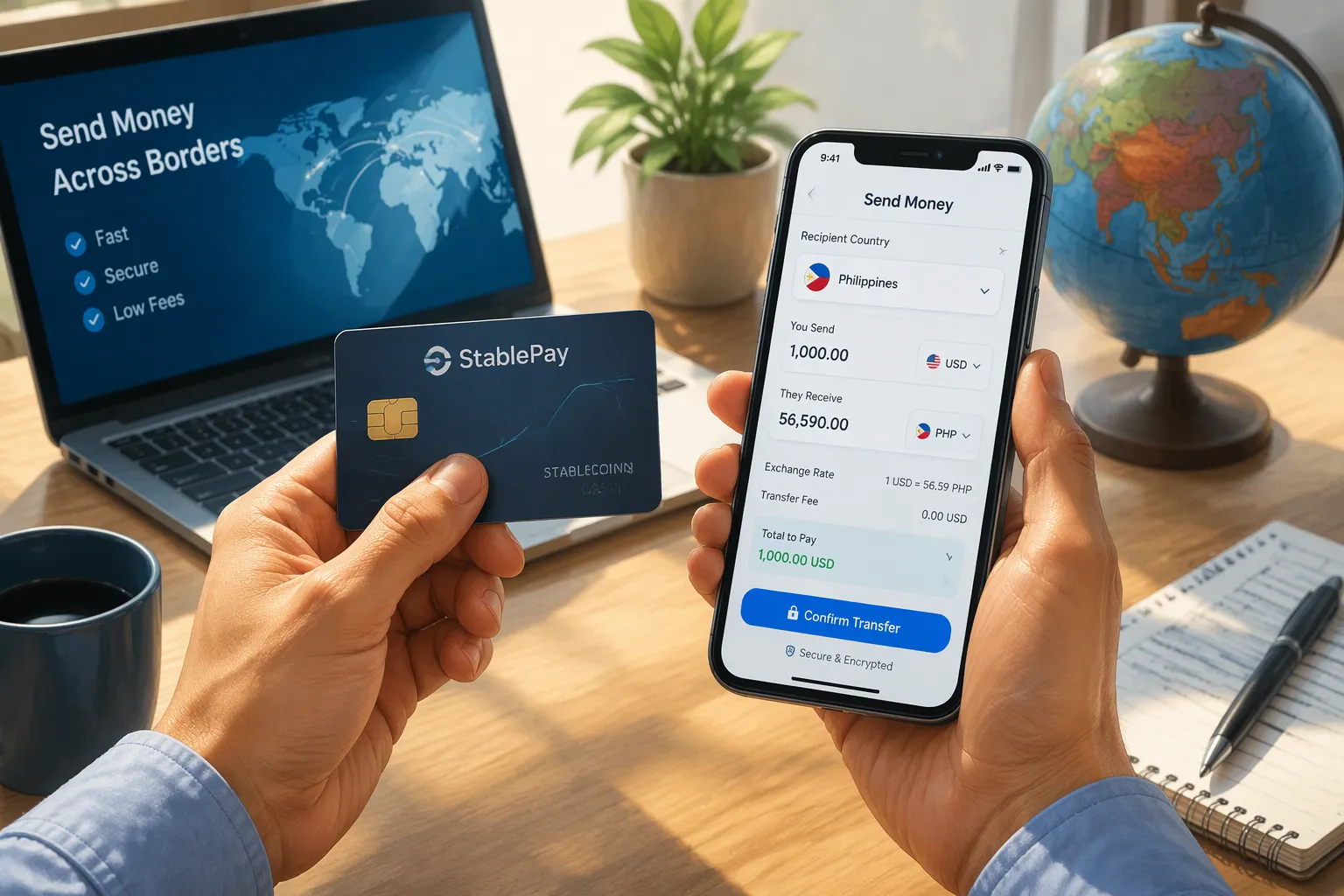
It's payday, and your family back home is waiting. With a stablecoin card like UUPAY, you can send money to the Philippines in four simple steps: load your balance, convert to stablecoins, send, and let your family cash out.
That's the whole process. Stick around, and you'll learn the fees, setup, safety, and legal rules behind each step.
About the Author
Will is a senior Web3 payments specialist and SEO Content Lead at UUPAY. He has extensive experience in the global decentralized finance (DeFi) and payments ecosystem, with a focus on developing seamless crypto-to-fiat retail payment solutions. Will regularly analyzes digital wallet integrations, international compliance frameworks, and virtual card payment optimization, with the goal of providing users worldwide with secure, simple, and borderless payment guidance.
Key Takeaways
Send money home in four simple steps: load your card, convert to stablecoins, send, and let your family cash out.
Stablecoin transfers cost very little—often under $0.01—and you see all fees upfront.
Always start with a small test transfer to make sure everything works before sending larger amounts.
What Is a Stablecoin Card?
Stablecoins in Plain Language
A stablecoin is a digital token designed to hold a steady value. The two you'll see most often are USDT and USDC, and each one aims to track the US dollar, so one token is meant to equal one dollar. That steadiness matters. You don't have to watch a price chart or worry that your balance will swing before your family picks it up.
A stablecoin card connects that dollar-pegged balance to something you can actually use. You hold the funds, and the card lets you spend or send them. On low-fee networks, a stablecoin transfer can cost under $0.01, which sits far below what traditional remittance channels typically charge.
Why OFWs Use Them
The Philippines collected $38 billion in remittances in 2022, and that flow keeps growing. Stablecoin rails are emerging to serve it, because they move value directly between wallets instead of routing through several intermediaries.
For you, that means speed and visibility. You see the amount you send, the network fee, and the moment your recipient's wallet receives it. Your family then cashes out through a channel that works for them.
Think of a stablecoin card as one more tool in your remittance toolkit. It complements banks, remittance centers, and mobile money rather than replacing them. Some transfers suit a card, and others suit an agent down the street. Knowing both keeps your options open.
Getting Your UUPAY Card
Sign-Up Requirements
You start in the UUPAY app. Sign-up follows the standard know-your-customer (KYC) path most regulated fintechs use: you enter your basic details, upload a government-issued ID such as a passport or Philippine ID, and take a quick selfie or liveness check. Approval usually comes through in the app, and you'll get a notification once your account is verified.
Have your documents ready before you begin. A clear photo of your ID and good lighting for the selfie check will save you a retry. If you plan to fund the card from a self-custody wallet, keep that wallet's recovery phrase somewhere safe and offline — you'll need access to it during setup.
Wallet and Card Setup
Next, you connect a funding source. UUPAY lets you link a self-custody wallet or use your in-app balance, so you can top up from stablecoins you already hold or from funds inside the app. New users can grab a virtual card for 1U and get 1U cashback, and card top-up fees are currently waived — a low-risk way to test the flow before you send anything large.
A physical card is also on the way, with up to 50% cashback at launch. Beyond spending, the app bundles extras like hotel and flight booking, eSIM, and chat support, which helps when you're managing life across two countries. Set your card up, run a small top-up, and confirm everything works before your first real transfer home.
How to Send Money to the Philippines With UUPAY
Load, Convert, and Send
The flow is short, and you can finish it in one sitting. Here is the sequence:
Get USDT or USDC. Buy stablecoins on an exchange, or move them from a wallet you already hold. Keep them on a low-fee network so the transfer stays cheap.
Load your UUPAY balance. Top up from your linked self-custody wallet or your in-app balance. Card top-up fees are currently waived, so this step costs you nothing extra.
Enter the recipient details. Add your family member's wallet address or their registered service account. Double-check every character before you confirm.
Send and confirm. Submit the transfer, then watch for the confirmation. You'll see the amount leave and the network fee applied.
That's it. You now know the basic path to send money to the Philippines without a trip to a remittance counter.
How Family Receives Funds
Your recipient has several ways to turn stablecoins into pesos. A bank account deposit works well for larger amounts and keeps a clean record. Mobile money like GCash suits everyday needs and reaches most households quickly. A local exchange such as Coins.ph lets them convert and withdraw at their own pace. An agent with a float handles cash pickups for family members who prefer physical money.
Your family can also load the funds onto a card and spend directly. This Oobit-style approach lets them pay in stores and online straight from a self-custody wallet, so the money never sits idle. The physical UUPAY card is now live, with up to 50% cashback, and it works globally.
Pick the cash-out method together before you send. A quick chat about which channel your family trusts most saves confusion later. When you send money to the Philippines this way, the last mile belongs to them, and their comfort matters as much as your speed.
Fees for Sending Money to the Philippines
Stablecoin Card vs. Traditional Channels
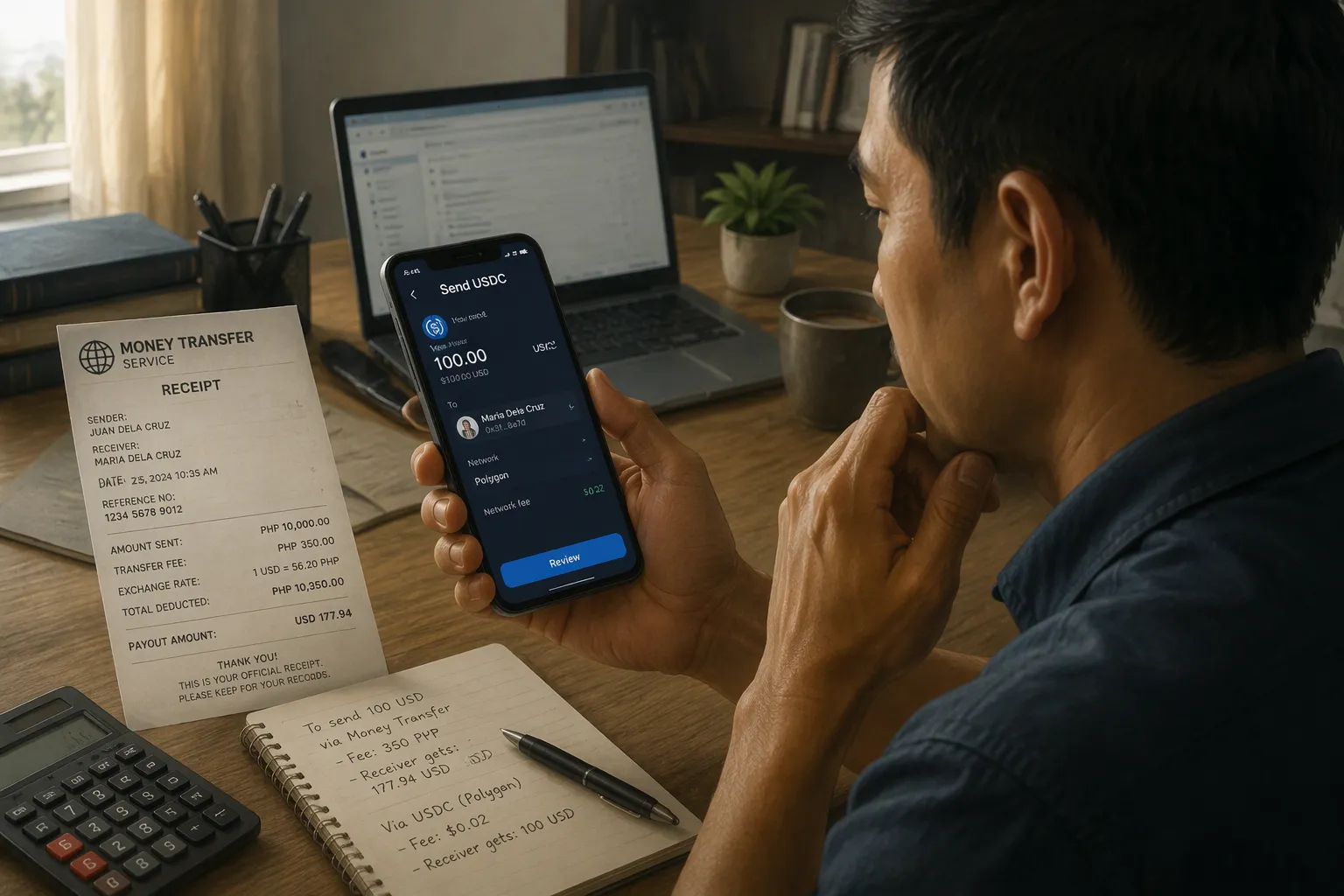
Cost breaks into three parts: the network fee, the conversion spread, and the cash-out charge. On a low-fee network, the stablecoin transfer itself can cost under $0.01. That number stays tiny no matter how much you send, which is the real difference from a percentage-based remittance fee.
The conversion spread is where you should look closely. Turning USDT or USDC into pesos involves a rate, and that rate carries a small margin. Compare the quoted rate against the market rate before you confirm. A spread of a fraction of a percent on a large send adds up fast.
Cash-out costs depend on your family's channel. A bank deposit, GCash, Coins.ph, or an agent with a float each carries its own charge. Ask your recipient what their channel deducts, then add it to your side of the math. Traditional remittance centers bundle these costs into one visible fee, which makes them easy to compare at a glance.
The market is moving here. BPI has run a stablecoin cross-border pilot, Coins.ph works with BCRemit and TransFi rails, GCash keeps expanding cross-border, and Visa is pushing stablecoin remittances. More rails mean more price competition, and that favors you.
Where Each Option Fits Best
Neither option wins everywhere. Match the channel to the job.
Situation | Better fit |
|---|---|
Small, frequent sends | Stablecoin card, since the network fee stays flat |
Large one-time send | Compare the conversion spread carefully on both sides |
Family without a bank account | Agent with a float or mobile money |
Urgent same-day need | Stablecoin transfer, confirmed in minutes |
Family prefers cash in hand | Traditional remittance center |
A remittance center still wins on familiarity and reach. Your family knows the counter, the staff know them, and cash arrives without a smartphone. A stablecoin card wins on transparency and control, because you see every cost before you commit.
Many providers, including ours, offer both paths. Use the card when speed and low network fees matter. Use a traditional channel when your recipient values a familiar pickup point. The smart move is knowing the cost of each before you send money to the Philippines, not picking a favorite out of habit.
Is It Legal and Safe?
Philippine Rules and Compliance
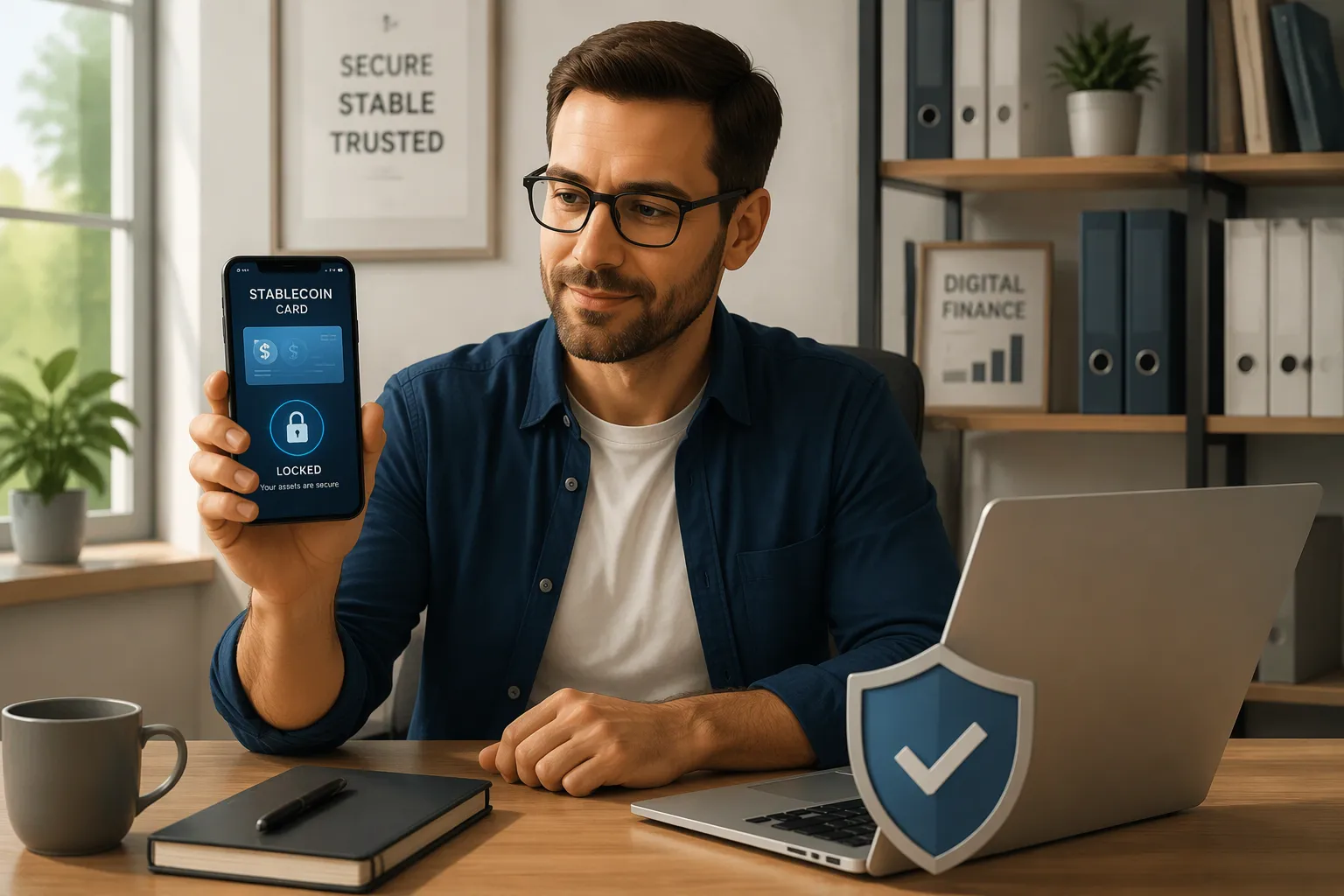
Stablecoin remittances sit inside a regulated space, and that's good news for you. Licensed providers must verify who you are through KYC, keep records of transfers, and report activity as required. The Bangko Sentral ng Pilipinas oversees virtual asset service providers, so the exchanges and cash-out points your family uses should be registered. Check that your recipient's channel holds a proper license before you rely on it.
UUPAY backs this up with real credentials. The company holds a US MSB license, Swiss and Canadian licenses, a Hong Kong registration that meets Asian regulatory requirements, and a Brazil license that is pending. It also carries PCI DSS Level 1 certification, the highest card-data security standard, and offers 24/7 global support. Those pieces give you a paper trail and a place to turn when something goes wrong.
Trust is still catching up. A 2026 survey found low awareness and trust in stablecoin remittances among Filipino households. That gap is normal for a young technology. Start with a small transfer, show your family how the cash-out works, and let experience build confidence.
Protecting Your Funds
Self-custody puts you in charge, and that cuts both ways. Nobody can freeze your wallet, but nobody can recover it either. Lose your recovery phrase, and the funds are gone.
Guard it well. Store the phrase offline, use a strong unique password, and turn on two-factor authentication wherever it's offered. Verify your recipient's wallet address character by character before every send — a single wrong digit sends money into nowhere.
Run a small test transfer first. Confirm it lands, then send the rest.
Keep records of each transfer for your own tracking and for any reporting needs. Safety here is mostly habit, and good habits cost you nothing.
Tips to Maximize Value
Timing and Fee-Saving Habits
Watch the network you use, not just the clock. A low-fee network keeps your transfer cost under $0.01, and that flat fee rewards you for batching. Save up two or three smaller sends and move them together. You pay once instead of three times, and your family gets one clean deposit.
Compare cash-out methods before every large send. Ask your recipient what their bank, GCash, Coins.ph, or local agent deducts that week. Rates shift, so last month's cheapest channel may not win today. A quick message saves real pesos.
The UUPAY referral program adds another layer. Invite friends and family who also send money home, and your commission level rises with each successful invite, up to 50% commission. That income offsets your own transfer costs over time.
Avoiding Common Mistakes
Keep a record of every transfer. Note the date, the amount, the network fee, and the cash-out charge. These notes help you spot a channel that quietly got expensive, and they give you a paper trail if a question ever comes up.
Start small. Send a test amount first, confirm your family can cash it out, then scale up. Skipping this step is the mistake people regret most, because a wrong wallet address cannot be undone.
Finally, verify the recipient's details every single time. Copy the address fresh instead of reusing an old one. When you send money to the Philippines, a calm two-minute check beats a stressful week of chasing lost funds.
A stablecoin card turns payday into a short routine. You load, convert, send, and your family cashes out. You get speed, clear costs, and full control over every peso. Start with a small test transfer, check that your cash-out channel is licensed, and let UUPAY's tools track your fees. Download UUPAY and send money to the Philippines today.
FAQ
How much does it cost to start with UUPAY?
New users open a virtual card for 1U and get 1U back right away. Card top-up fees are currently waived for everyone, so your first transfer costs you almost nothing.
Can my family spend the money instead of cashing out?
Yes. They can load funds onto a card and pay in stores or online worldwide. The physical UUPAY card is live now, with up to 50% cashback.
Is UUPAY regulated?
It holds a US MSB license, plus Swiss and Canadian licenses and a Hong Kong registration. A Brazil license is pending. It also carries PCI DSS Level 1 certification and offers 24/7 global support.
See Also
Managing Cross-Border Purchases In The Philippines With Multi-Currency Crypto Cards
Buying And Using A USDT Card In The Philippines
Using Bitcoin Debit Cards To Book International Flights In The Philippines
Paying Marketplace Fees In The Philippines With Low-Fee Crypto Cards
Troubleshooting Stablecoin Cards For Cash Withdrawals At Thai ATMs
