Year-End Spending in Vietnam: USDT Card Guide for Tet 2027
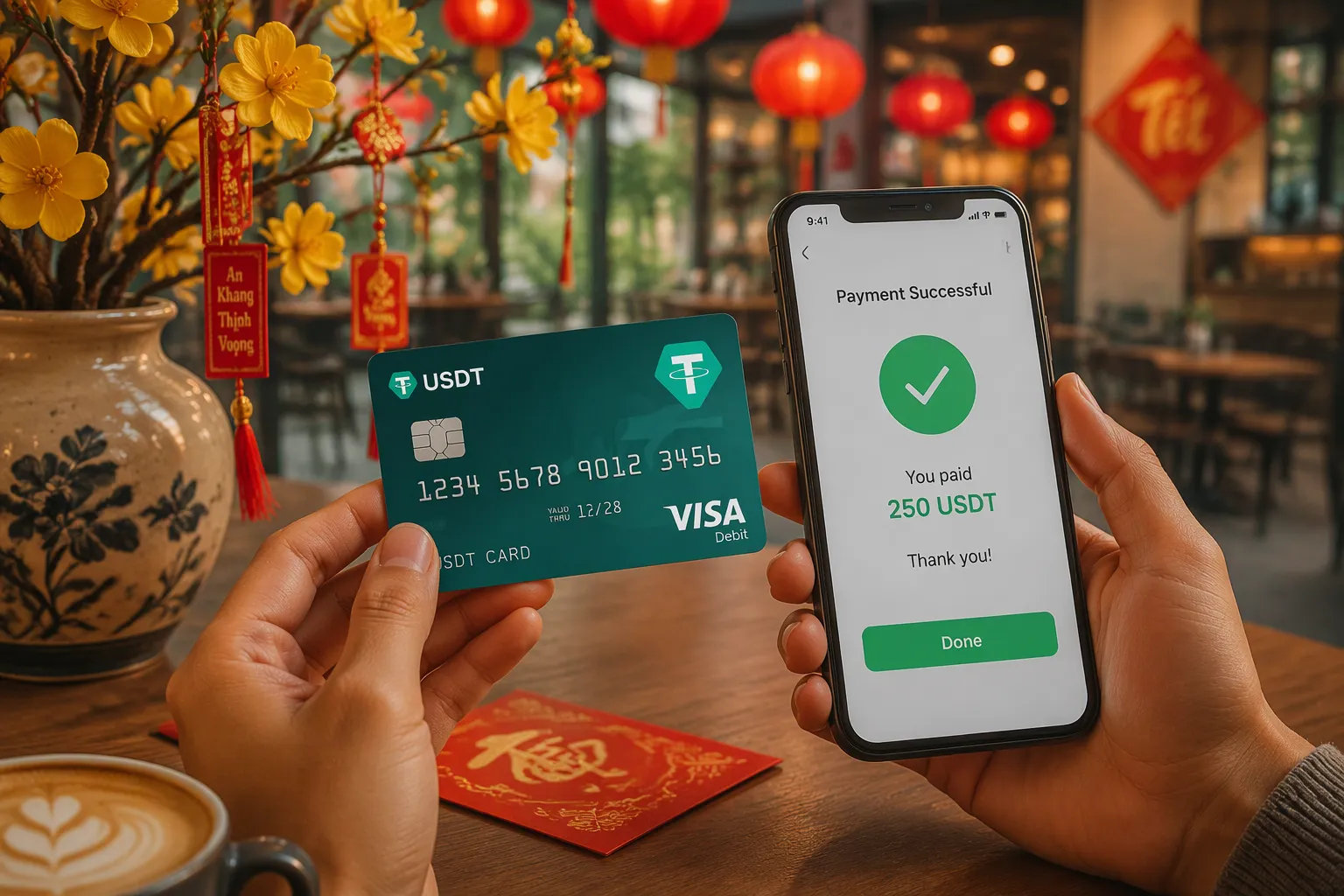
A USDT card lets you fund everyday spending straight from your stablecoin balance, so year-end shopping and Tet 2027 travel in Vietnam stay simple. You get fast setup, real fee savings, and compliant usage you can trust. This USDT Card Guide walks you through setup steps, card comparisons, and Tet-specific tips.
Key Takeaways
Set up your USDT card early. Top up before February 4, 2027. This avoids holiday delays.
Compare card fees and features. Choose a card that fits your spending style. This saves money.
Check the card provider's licenses. A compliant card protects your money. You get support when needed.
USDT Cards and Tet Spending
How USDT Cards Work
Think of a USDT card as a bridge between your stablecoin balance and the ordinary places you already shop. You load USDT onto the card, and the provider converts it into local currency when you pay. Then you swipe or tap at merchants, check out online, or pull cash from an ATM, just like any bank card.
The numbers show this habit is growing fast. Crypto card spending reached $759 million in July 2026 across 9 million purchases, averaging $86 per transaction. USDT's share of that spending climbed from 7% to 26%, so stablecoins now carry real weight at checkout.
Why Tet 2027 Fits
Tet 2027 lands on February 6, 2027. The main holiday runs roughly February 4–10, when many businesses close and prices climb. You need money that moves quickly and holds steady value during that window.
A USDT card handles both jobs. Your balance stays pegged to the dollar, so rising prices don't erode it. You also avoid scrambling for cash while shops shut their doors. Load funds early, and you can pay for travel, gifts, and meals without hunting for an open bank.
USDT Card Guide: Setup and Usage
Setting Up Your Card
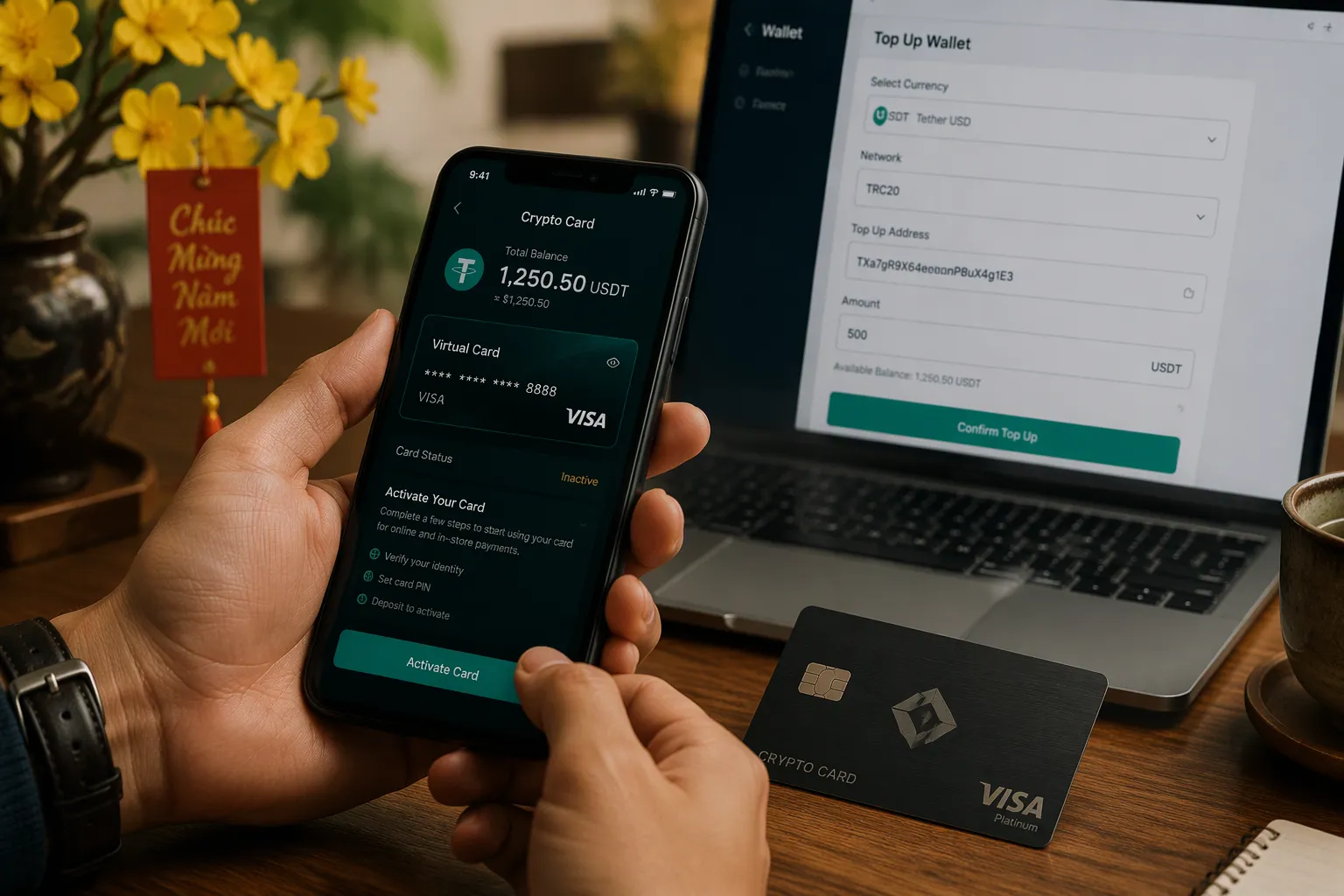
Getting started takes minutes, not days. Follow these steps and you'll be ready to spend before the holiday crowds arrive.
Pick a provider and complete identity verification with your passport or national ID.
Load USDT from your wallet to the card balance.
Choose virtual or physical delivery, then activate the card in the provider's app.
Set spending limits and link the card to your phone wallet for tap-to-pay.
UUPAY is one option you can use here. New users can open a virtual card for 1U and get 1U cashback, and all users enjoy free top-up fees. The company has also launched a physical card with global spending, up to 50% rebate, and secure instant transactions. Extra services include hotel and flight booking, eSIM, and chat features, plus a referral program with commission tiers that rise to 50% as more friends join.
Costs vary by provider, so compare before you commit. One 2026 Vietnam crypto card example charges $49.99 for a one-time virtual card and $459.99 for a physical card, with a 3% top-up fee and no monthly or annual fees. That structure suits light spenders who want a virtual card only.
Paying During Tet Rush
Timing matters more than anything else during the holiday. Peak travel demand hits the week of February 4–10, 2027, and payment networks feel the strain. Top up at least several days before that window opens. Keep a small cash buffer for stalls and drivers who prefer bills.
Watch your balance during the rush. A failed top-up at the wrong moment leaves you stuck at a counter. Split large payments across two cards if you can, and confirm each transaction in the app before you walk away. This USDT Card Guide tip alone saves plenty of stress.
Comparing USDT Cards in Vietnam
Fees, Speed, and Acceptance
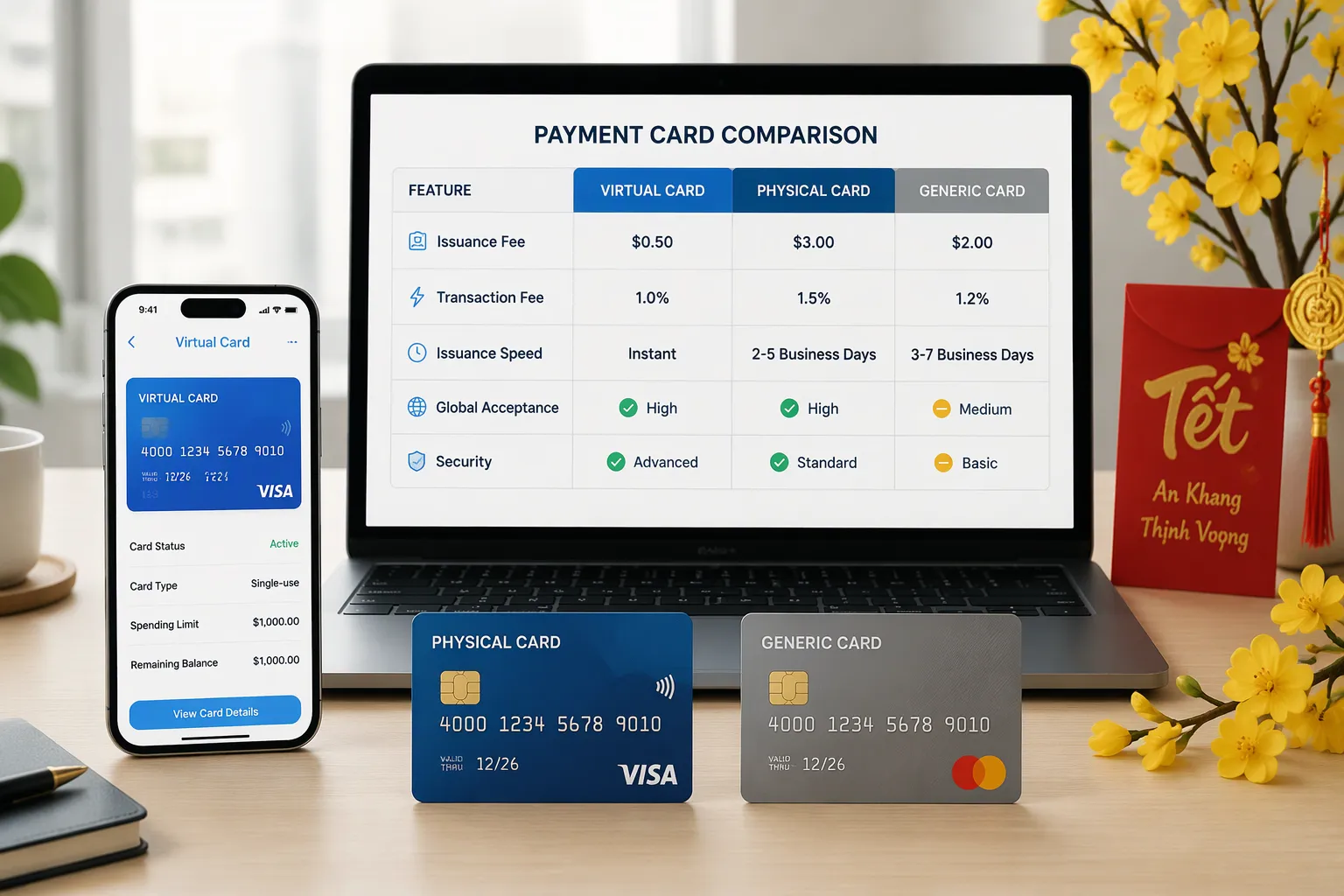
Fees, speed, and acceptance decide which card earns a spot in your wallet. Line up the options side by side, and the differences become clear.
Option | Fee profile | Speed | Best fit |
|---|---|---|---|
UUPAY | 1U virtual card, 1U cashback, free top-up fees | Instant transactions | Frequent small spenders who want low entry cost |
Flat-fee virtual card (2026 Vietnam example) | $49.99 one-time, 3% top-up, no monthly or annual fees | Standard processing | Light users who only need online payments |
Flat-fee physical card (same example) | $459.99 one-time, 3% top-up, no monthly or annual fees | Standard processing | Travelers who need ATM cash and in-store taps |
Merchant acceptance varies too. Check that your card works at Vietnamese POS terminals, local e-commerce sites, and the airlines or hotels you plan to book. A card with global reach covers more ground during Tet travel.
UUPAY suits a high-frequency, low-value style. You pay 1U to start, earn 1U back, and top up without fees. The physical version adds global spending, up to 50% rebate, and instant secure transactions. That fits readers who want rewards on everyday purchases.
Compliance and Safety
Regulatory standing matters most when something goes wrong abroad. UUPAY holds a US MSB license, plus Swiss and Canadian licenses. Its Brazil license is pending, and its Hong Kong registration meets Asian regulatory requirements. Run this compliance check before you commit: US MSB Licensed, PCIDSS Level 1 Certified, 24/7 Global Support.
Other providers publish their own licensing details. Read them carefully. A card backed by a recognized license gives you recourse if a transaction fails. Round-the-clock support matters during the February 4–10 holiday window, when local bank desks close.
This USDT Card Guide comparison isn't about picking a winner. Match the card to your spending style. Light online shoppers do fine with a cheap virtual card. Cash-heavy travelers benefit from a physical card with broad acceptance. Rewards chasers lean toward UUPAY. Verify compliance first, then choose.
Tet Savings and Pitfall Tips
Saving on Fees
A 3% top-up fee looks small until you add it up. Load a larger batch once instead of topping up five times, and you pay that percentage fewer times. Check whether your provider waives top-up fees entirely, as UUPAY does for all users, and the math changes again.
Time your travel bookings to the February 15–28, 2027 value window. Demand eases after the February 4–10 rush, and fares and hotel rates often settle. Book then with a card that charges no monthly or annual fee, and you keep more of your balance for actual spending.
Before you buy a Vietnam gift card with USDT, run three checks. Confirm where the card works, what it covers, and how the provider handles unused value. A gift card that only works at one chain may leave you stuck. One that expires quickly wastes money you already loaded.
Avoiding Common Issues
Transaction failures spike during the February 4–10 rush. Networks get busy, and a declined payment at a checkout counter ruins the moment. Top up several days early, keep a small cash buffer, and confirm each payment in the app before you leave the counter.
Watch for these common Tet pitfalls:
Topping up on the day you travel, when networks are slowest.
Relying on a single card for every purchase.
Skipping the app confirmation and walking away from a failed charge.
Split large payments across two cards when you can. Save your provider's support contact before the holiday, since local bank desks close. A little prep now keeps your Tet spending smooth.
Pick a compliant card, set it up well before the Tet 2027 rush, and plan your spending around fee structures. UUPAY and similar options each fit different needs, so match the card to how you actually spend. Use this USDT Card Guide as your starting point for year-round stablecoin spending in Vietnam.
FAQ
Does a USDT card work for Tet travel and ATM cash?
Yes. A physical card covers in-store taps and ATM withdrawals, and a virtual card handles online bookings. Check merchant acceptance before you travel, since coverage varies by provider.
How early should you set up and fund your card?
Finish verification and your first top-up at least several days before February 4, 2027. Networks slow down during the holiday rush, and an early balance keeps payments moving.
How do you check whether a card provider is compliant?
Look for a named license and published security certification. UUPAY, for example, holds a US MSB license, Swiss and Canadian licenses, Hong Kong registration, and PCI DSS Level 1 certification, with 24/7 support.
See Also
Top Methods For Using USDT Cards On Google Play In Vietnam
Simple Steps For Paying Overseas Utility Bills With USDT Visa Cards In Vietnam
Using Web3 Payment Cards To Cover Foreign Tuition Fees From Vietnam
Full Guide To Making Payments With USDT Cards In Thailand
Top Ways To Book International Flights With Virtual Crypto Cards In Vietnam
